Daegu
Where traditional medicine, modern independence history and mountain temples meet
Discover Daegu’s modern-history alleys, centuries-old herbal medicine market, independence heritage and mountain temples, where the story of inland Korea unfolds from Joseon commerce to the twentieth century.
INTRODUCTION
Introduction
Daegu lies in a broad inland basin in south-eastern South Korea, historically positioned on routes linking the peninsula’s central and southern regions. Known in earlier periods as Dalgubeol, the city grew into an important administrative, commercial and market centre of the Yeongnam region.
Daegu’s historic centre preserves unusually rich traces of Korea’s transition into the modern era. Missionary buildings, Gyesan Cathedral, Yangnyeongsi medicine market, independence sites and the 1907 National Debt Repayment Movement reveal a city shaped by commerce, reform and civic activism, while Palgongsan and Donghwasa preserve a much older Buddhist landscape.
WHY VISIT
Why Visit Daegu?
Daegu is one of South Korea’s best cities for exploring modern urban history on foot. Its preserved alleyways connect missionary compounds, churches, medicine markets, independence sites and early twentieth-century buildings, while Seomun Market and Donghwasa add commercial and religious layers stretching much further back.
01
Modern History in the Old City
Central Daegu retains a dense network of streets associated with the late Joseon period, foreign missionaries, Japanese colonial rule and Korea’s independence movements. The Daegu Modern History Streets make these layers unusually easy to explore on foot.
02
A 350-Year Herbal Medicine Tradition
Yangnyeongsi has been associated with medicinal-herb trading for more than three centuries. Its market streets and Museum of Oriental Medicine preserve a commercial tradition that once connected Daegu with traders from across Korea and neighbouring regions.
03
Independence & Civic Activism
Daegu played an important role in Korea’s modern civic movements. The National Debt Repayment Movement began here in 1907, while the March First Independence Movement of 1919 is remembered along the city’s historic streets and memorial routes.
04
Temples, Mountains & Regional Culture
Beyond the urban centre, Palgongsan and Donghwasa connect Daegu with a much older Buddhist landscape. The surrounding mountain routes, temples and regional traditions offer an important counterpoint to the modern-history streets downtown.
HISTORY
A Short History of Daegu
Daegu’s history reaches back through the ancient kingdoms of the Korean Peninsula, and the area was long known by names including Dalgubeol. Its inland location helped it develop as a regional administrative and trading centre, especially for the surrounding agricultural districts of the Yeongnam region.
During the Joseon period, Daegu became the administrative centre of Gyeongsang Province and a major market city. Seomun Market developed into one of the country’s important traditional markets, while Yangnyeongsi became a leading centre for the trade and distribution of medicinal herbs.
In the late nineteenth and early twentieth centuries, missionaries, new schools and Western-style architecture transformed parts of the city centre. Daegu became a centre of civic activism: the National Debt Repayment Movement began here in 1907, and residents later joined the March First Independence Movement. The Korean War caused less physical destruction here than in many other major cities, helping parts of the older urban fabric survive.
KEY HISTORICAL MOMENT
1907
In 1907, the National Debt Repayment Movement began in Daegu. Citizens sought to repay Korea’s national debt through voluntary contributions and personal sacrifice, turning a local campaign into a nationwide expression of civic resistance and economic independence.
TOP SIGHTS
Top Sights in Daegu
Daegu’s strongest historical sights cluster in Jung-gu, where the Modern History Streets connect churches, missionary houses, independence sites, traditional markets and museums. Donghwasa and Palgongsan add a separate day of Buddhist and mountain heritage outside the centre.
1
Daegu Modern History Streets
The Modern History Streets weave through central Daegu’s preserved alleys and historic buildings. The most popular route links Cheongna Hill, missionary houses, Gyesan Cathedral, independence sites, old residences and Yangnyeongsi in a compact walking circuit.
2
Gyesan Cathedral
Established after the port opened, Gyesan Cathedral reflects the growth of a Chinese merchant community beside the foreign settlement zones. Its streets combine food culture, migration history and late nineteenth-century urban heritage.
3
Daegu Yangnyeongsi
Daegu Yangnyeongsi preserves more than three centuries of medicinal-herb trade. The surrounding market streets and Museum of Oriental Medicine explain how the city became one of Korea’s most important centres for traditional medicine.
4
Seomun Market
Seomun Market developed into one of the great traditional markets of late Joseon Korea and remains one of Daegu’s busiest commercial districts. Its food stalls, textiles and market lanes preserve the city’s long role as a regional trading centre.
5
National Debt Repayment Movement Memorial Museum
The museum documents the citizen-led National Debt Repayment Movement that began in Daegu in 1907. Exhibitions explain its origins, nationwide expansion, participants and later significance in Korea’s history of civic activism.
6
Daegu Modern History Museum
Housed in a former colonial-era bank building completed in 1932, the Daegu Modern History Museum traces the city’s social, commercial and urban transformation from the late nineteenth century into the modern era.
7
Dalseong Park
Dalseong Park occupies a low historic hill within the city and preserves the footprint of an old earthen fortification. Although the present park has later additions, the site offers a useful reminder that Daegu’s urban history extends far beyond the modern period.
8
Donghwasa Temple
Set on the slopes of Palgongsan, Donghwasa is one of the Daegu region’s most important Buddhist temples. Its long religious history, mountain setting and surviving temple architecture make it the strongest historical excursion beyond the city centre.
THINGS TO DO
Things to Do in Daegu
Daegu rewards slow exploration. A compact historic core makes it easy to connect modern-history alleys, traditional markets and independence heritage on foot, while Palgongsan and Donghwasa provide a contrasting mountain day outside the city.
Walk the Modern History Streets
Follow Daegu’s Modern History Streets through Cheongna Hill, the missionary houses, March First Independence Movement Road, Gyesan Cathedral and the old central alleys. The route is the best single introduction to the city’s modern transformation.
Explore Yangnyeongsi & Traditional Medicine
Walk through Yangnyeongsi’s medicinal-herb streets and visit the Museum of Oriental Medicine. The district is one of Daegu’s most distinctive historic commercial landscapes and remains closely tied to traditional medicine culture.
Follow Daegu’s Independence History
Connect the House of Seo Sang-don, National Debt Repayment Movement memorials and March First Independence Movement Road. Together they show how civic activism and anti-colonial resistance became embedded in Daegu’s modern identity.
Take a Temple Day at Palgongsan
Leave the city centre for Palgongsan and Donghwasa. Temple halls, mountain paths and regional Buddhist heritage provide a slower historical experience after the dense urban storytelling of central Daegu.
SUGGESTED ITINERARY
3 Days in Daegu
Three days allow enough time to explore Daegu’s modern-history streets, traditional markets, independence heritage and Palgongsan without rushing. Travellers with only one day should focus on Jung-gu, Yangnyeongsi and Seomun Market.
DAY 1
Modern Daegu & the Historic Alleys
MORNING
Begin at Cheongna Hill and the missionary houses, then descend along March First Independence Movement Road towards Gyesan Cathedral. This sequence introduces Daegu’s missionary, independence and early modern history in one compact route.
AFTERNOON
Continue through the Modern History Streets to the House of Yi Sang-hwa and nearby historic alleys. Finish the afternoon in Yangnyeongsi, where the medicine market and museum add Daegu’s older commercial traditions to the story.
EVENING
Finish at Seomun Market for dinner and an evening walk through one of Daegu’s most important traditional commercial districts.
DAY 2
Civic Movements, Museums & Old Daegu
MORNING
Start at the National Debt Repayment Movement Memorial Museum and nearby memorial park. The exhibitions explain why the 1907 campaign began in Daegu and how it spread across Korea.
AFTERNOON
Continue to the Daegu Modern History Museum, then walk through the older administrative and commercial streets around Jung-gu. If time allows, add Dalseong Park for an earlier layer of the city’s history.
EVENING
Return to Dongseong-ro or central Jung-gu for dinner. The evening works well for a relaxed walk through the modern city after a museum-focused day.
DAY 3
Palgongsan & Donghwasa
MORNING
Begin at Dalseong Park and the nearby Independence Gate area. The exhibitions provide essential context for Japanese colonial rule and the independence movement.
AFTERNOON
Continue to Deoksugung and the Jeong-dong district, where royal, diplomatic and Western-style architecture reflects the political upheavals of the late nineteenth and early twentieth centuries. Alternatively, spend the afternoon at the Donghwasa Temple.
EVENING
Return to central Daegu for a final evening, or continue from Dongdaegu Station towards Gyeongju, Busan or another destination in south-eastern Korea.
WHERE TO STAY
Where to Stay in Daegu
Daegu is easier to navigate than Seoul or Busan, and most history-focused visitors are best based in or near Jung-gu. Staying around Dongseong-ro, Banwoldang or the old centre keeps the Modern History Streets, markets and museums within easy reach.
01
Jung-gu & Dongseong-ro
The best base for most first-time visitors. The Modern History Streets, Yangnyeongsi, Gyesan Cathedral, National Debt Repayment sites and central restaurants are all close, with excellent subway access.
FIND HOTELS IN JUNG-GU →
02
Dongdaegu Station Area
This practical area suits travellers arriving by KTX or continuing quickly to other Korean cities. It has strong transport connections, though less historic atmosphere than Jung-gu.
BROWSE STAYS NEAR DONGDAEGU STATION →
03
Suseong-gu
Suseong-gu offers a quieter, more residential base with lakeside walks, cafés and good local transport. It suits travellers who want a calmer stay while remaining within easy reach of central Daegu.
FIND STAYS IN SUSEONG-GU →
04
Palgongsan Area
Staying near Palgongsan suits travellers prioritising Donghwasa, mountain scenery and a slower pace. It is less convenient for central sightseeing but ideal for a nature-and-temple-focused stay.
FIND STAYS NEAR PALGONGSAN →
GETTING AROUND
Getting Around Daegu
Daegu’s central historical districts are easy to explore without a car. Subway lines connect the main urban areas, while buses and taxis are more useful for Palgongsan, Donghwasa and attractions beyond the centre.
On Foot
Walking is the best way to experience central Daegu. Gyesan Cathedral, Cheongna Hill, Yangnyeongsi, the Modern History Streets, Seomun Market and several museums can be linked through compact urban routes.
By Bus
City buses fill gaps between subway stations and outer districts and are especially useful for Palgongsan and Donghwasa. They are economical, though route planning may take more effort for first-time visitors.
By Taxi
Taxis are practical for short cross-city trips and for reaching hill or mountain areas when public transport is less direct. They can be particularly useful when combining several outer attractions in one day.
By Subway & Rail
Daegu’s subway connects the main central districts, markets and transport hubs. Dongdaegu Station is the city’s principal high-speed rail gateway, with KTX and SRT services linking Daegu to Seoul, Busan and other major cities.
BEST TIME TO VISIT
Best Time to Visit Daegu
Daegu can be visited year-round, but spring and autumn provide the most comfortable conditions for walking the historic alleys and exploring Palgongsan. Summer is hot and humid, while winter is cold, dry and generally quieter.
Spring
APRIL TO MAY
Spring brings milder temperatures, flowering trees and comfortable conditions for the long outdoor walks required at the Temple and Daegu Yangnyeongsi. April and May are particularly pleasant, although public holidays can bring noticeably larger domestic visitor numbers.
Summer
JUNE TO AUGUST
June to August is hot, humid and affected by seasonal rainfall. Daegu is known for particularly warm summers, so early starts work best for outdoor routes while museums and markets provide useful midday breaks.
Autumn & Winter
SEPTEMBER TO MARCH
September through early November brings cooler air and excellent conditions for Palgongsan, markets and city walks. Winter is cold and dry, but central museums and historic streets remain rewarding with fewer visitors.
BEST OVERALL TIME
April to May & September to October
Mid-spring and early autumn provide the best balance of mild weather, daylight and comfortable conditions for walking, market visits and mountain heritage without the heat of midsummer.
Next Destinations
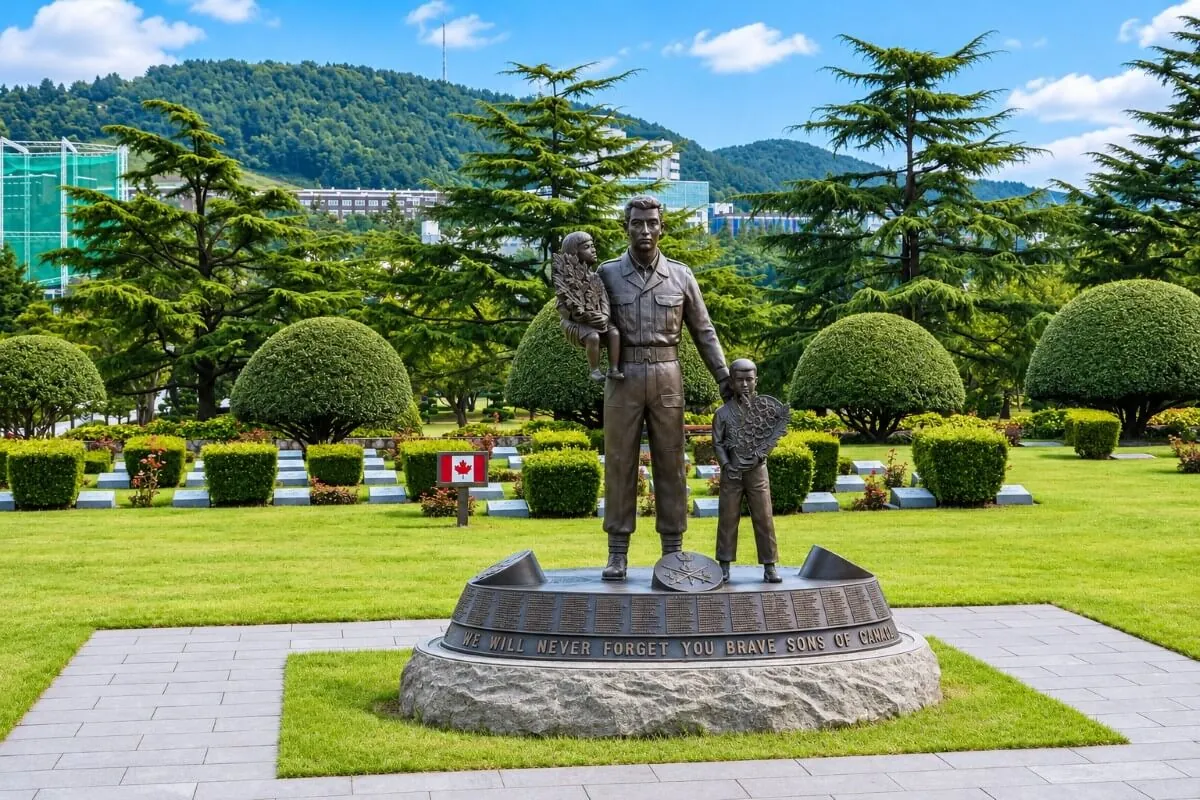
Busan
South Korea’s great southern port adds maritime history, colonial-era development, temples and major Korean War heritage. Fast rail connections make Busan an easy continuation from Daegu.

Gyeongju
The former Silla capital is one of the strongest historical continuations from Daegu. Royal tombs, Buddhist temples and palace remains reveal the kingdom that dominated south-eastern Korea for centuries.
Gimhae
Gimhae adds the archaeology and royal tombs of Geumgwan Gaya, offering a useful contrast with Daegu’s modern urban history and the neighbouring Silla landscape.
Andong
Andong offers a deeper look at Joseon-era Confucian culture through academies, traditional villages and regional ritual heritage, providing a strong cultural contrast with Daegu’s modern-history streets.