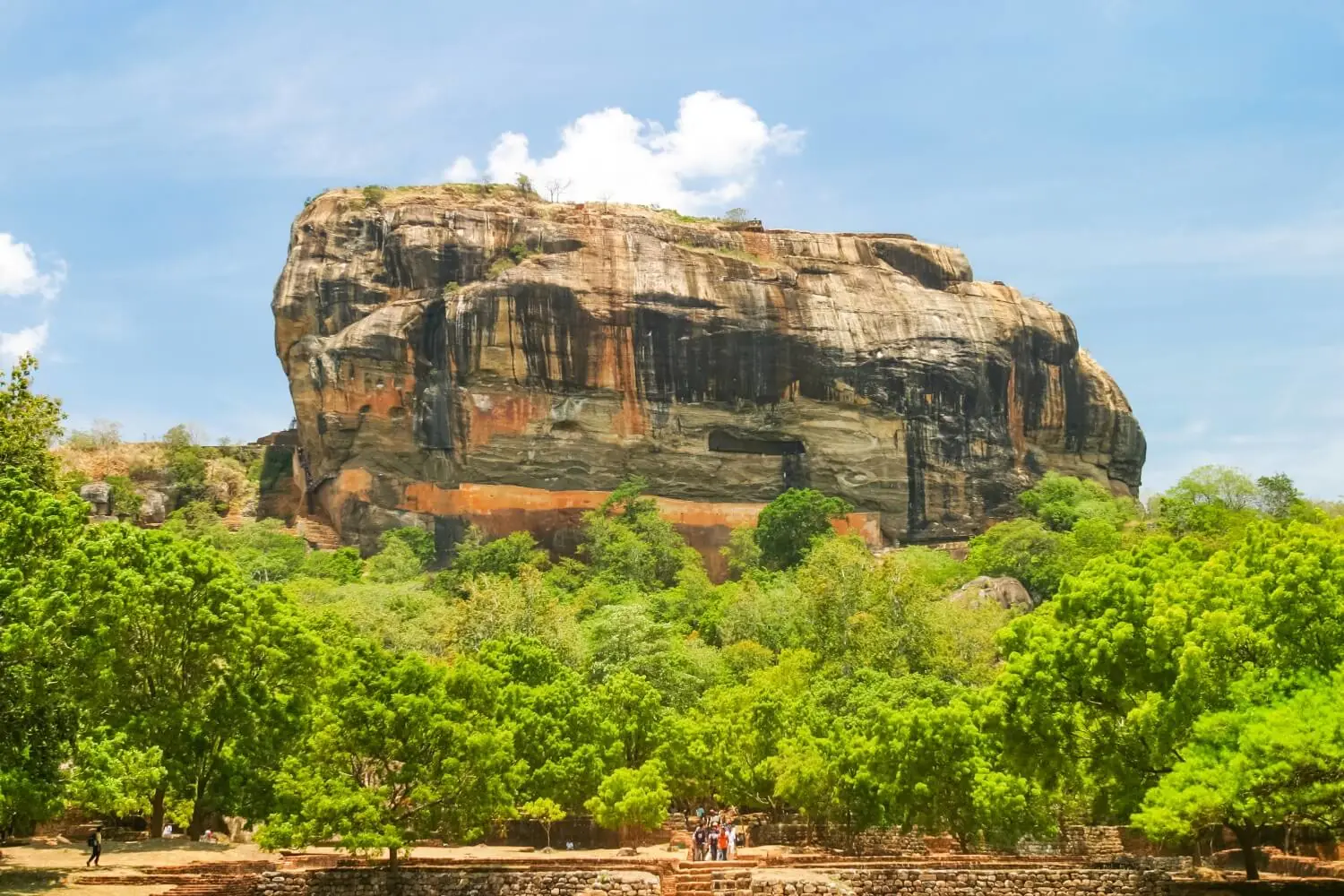
Sigiriya
Ancient citadel, rock fortress and royal gardens
Discover Sigiriya through its fifth-century rock fortress, palace ruins, frescoes, water gardens and dramatic landscape, with a practical three-day itinerary connecting the citadel, Pidurangala, Dambulla and Sri Lanka’s Cultural Triangle.
INTRODUCTION
Welcome to Sigiriya
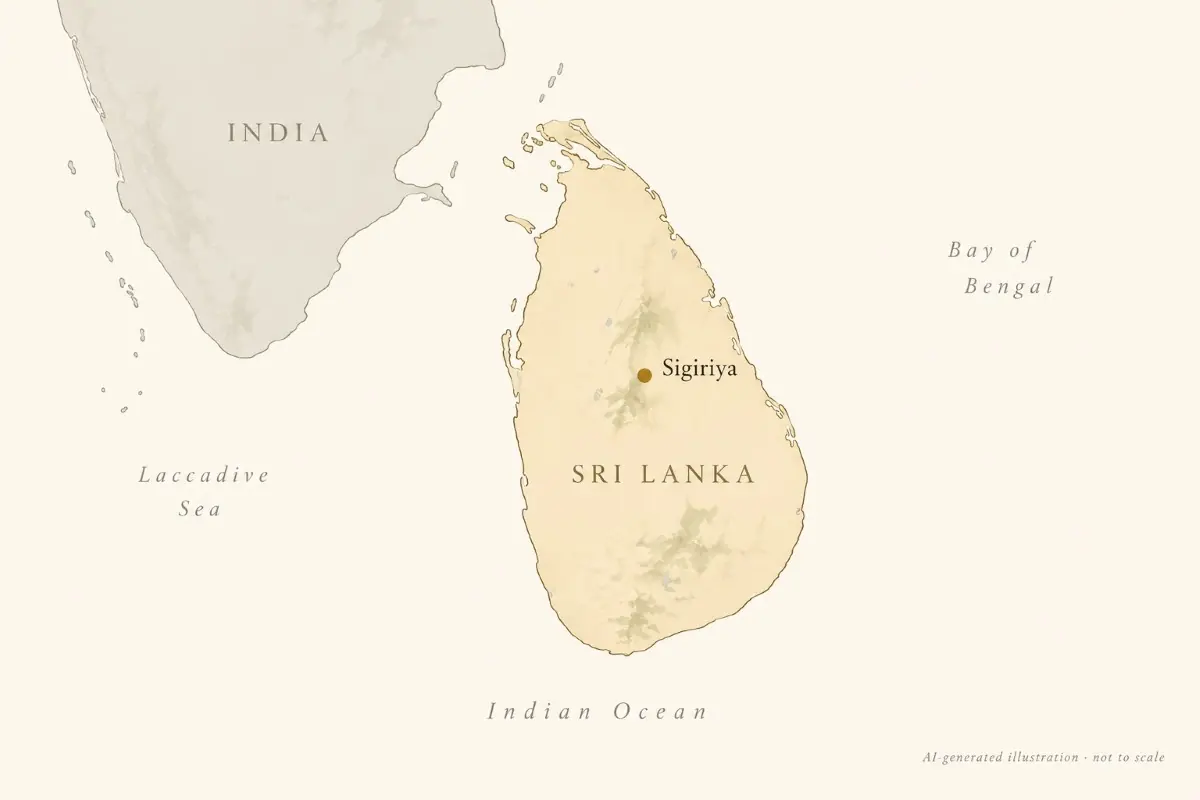
Sigiriya is one of Sri Lanka’s most remarkable archaeological sites: a fifth-century royal citadel built around a towering rock rising above the central plains. Palace remains, water gardens, frescoes, defensive works and carefully planned approaches reveal an extraordinary combination of engineering, art and royal ambition.
One full day covers the essential Sigiriya Rock Fortress complex, but two or three days allow time for Pidurangala, Dambulla, local villages and nearby archaeological sites. Staying nearby also makes it easier to climb early, before the strongest heat and busiest visiting hours.
WHY VISIT
Why Visit Sigiriya?
Sigiriya combines archaeology, royal history, landscape design and dramatic scenery in one compact site. Its rock-top palace, gardens, frescoes and defensive architecture make it one of the strongest places in Sri Lanka to understand the ambition and symbolism of early historic kingship.
01
The Rock Fortress & Royal Citadel
The summit and terraces of Sigiriya were transformed under King Kashyapa I into a fortified royal complex. Palace foundations, cisterns and defensive approaches reveal how the natural rock was integrated into an ambitious political and architectural statement.
02
Water Gardens & Landscape Design
Sigiriya’s symmetrical water gardens, pools, channels and fountains are among the site’s most sophisticated features. Their design shows how hydraulic engineering and ceremonial landscape planning were used to shape the approach to the rock.
03
Frescoes, Mirror Wall & Courtly Art
The surviving frescoes and the polished Mirror Wall preserve important evidence of Sigiriya’s artistic history. Later graffiti scratched into the wall also record centuries of admiration from visitors to the site.
04
Views Across the Cultural Triangle
From the summit, Sigiriya overlooks forests, reservoirs and distant hills across Sri Lanka’s Cultural Triangle. The panoramic setting helps explain why the rock was both strategically powerful and visually symbolic.
HISTORY
A Short History of Sigiriya
The Sigiriya rock and surrounding area were used before the famous royal citadel was created, with evidence of earlier monastic occupation in the region. The site’s most dramatic transformation came in the late fifth century CE under King Kashyapa I.
Kashyapa seized the throne and established his royal residence at Sigiriya, where he reshaped the rock and surrounding plain into a fortified palace complex. The project included landscaped gardens, monumental gateways, frescoes and palace structures on the summit.
After Kashyapa’s defeat and death in 495 CE, Sigiriya lost its role as a royal capital and later returned to monastic use. The site survived as a powerful archaeological landscape and was inscribed on the UNESCO World Heritage List in 1982.
KEY HISTORICAL MOMENT
477–495 CE
Between 477 and 495 CE, King Kashyapa I transformed Sigiriya into a fortified royal citadel. The brief period of royal occupation produced the rock palace, water gardens, frescoes and Lion Gate that define the site today.
TOP SIGHTS
Top Sights in Sigiriya
These eight sights connect Sigiriya’s royal architecture, landscape design, defensive planning and artistic heritage. The summit is the headline attraction, but the site becomes far more rewarding when you slow down for the gardens, frescoes, gateways and museum.
1
Sigiriya Rock Fortress
The rock fortress is the centrepiece of Sigiriya and the reason most travellers come. The ascent passes through gardens, terraces and gateways before reaching palace ruins on the summit more than 180 metres above the surrounding plain.
2
Water Gardens
The water gardens form the ceremonial approach to the rock and include pools, channels, islands and fountains. Their geometric layout is one of the clearest examples of ancient landscape design at the site.
3
Boulder Gardens
The boulder gardens use enormous natural rocks as walls, shelters, pathways and foundations. They mark the transition from the formal lower gardens to the steeper defensive ascent towards the rock.
4
Sigiriya Frescoes
The surviving frescoes depict richly adorned female figures and are among the most famous works of ancient Sri Lankan painting. Their location high on the rock adds to their visual and historical impact.
5
Mirror Wall
The Mirror Wall was once polished to a reflective finish and later became covered with historic graffiti. Many inscriptions were written by visitors centuries ago and provide rare evidence of how Sigiriya was experienced long after the royal period.
6
Lion Gate
The Lion Gate marks the final monumental approach to the summit. Visitors once passed between enormous lion paws and beneath a larger lion form, making the entrance one of Sigiriya’s most powerful pieces of royal symbolism.
7
Summit Palace Ruins
The summit preserves foundations, terraces, rock-cut pools and traces of the royal palace complex. The panoramic views reveal the extraordinary scale of the landscape planning below.
8
Sigiriya Museum
The site museum presents archaeological finds, reconstructions and explanations of Sigiriya’s architecture, gardens and history. Visiting it before or after the climb adds useful context to the ruins.
THINGS TO DO
Things to Do in Sigiriya
Sigiriya works best when the climb is combined with the landscape and archaeology around it. Explore the rock early, then add the museum, gardens, Pidurangala and nearby cultural sites rather than treating the visit as a single summit photo stop.
Climb Sigiriya with Historical Context
Climb the rock with a history-focused guide to connect the water gardens, frescoes, Lion Gate and summit palace. The best tours explain how architecture and landscape were used to project royal authority.
EXPLORE SIGIRIYA HISTORY TOURS →
Explore the Gardens & Archaeology
Spend time in the lower gardens, boulder gardens and museum instead of rushing directly to the summit. These areas reveal the planning, engineering and everyday archaeology of the royal complex.
BROWSE SIGIRIYA CULTURAL TOURS →
Climb Pidurangala Rock
Pidurangala rises just north of Sigiriya and offers one of the best viewpoints of the fortress rock. The climb is less formal and more rugged, but sunrise or early morning can be especially rewarding.
DISCOVER PIDURANGALA & SIGIRIYA →
Visit Dambulla Cave Temple
Combine Sigiriya with nearby Dambulla, where a major cave-temple complex preserves centuries of Buddhist sculpture and painting. The two sites complement one another and are easy to pair over two or three days.
EXPLORE DAMBULLA & SIGIRIYA TOURS →
SUGGESTED ITINERARY
3 Days in Sigiriya
Three days allow you to experience Sigiriya beyond the summit climb. Use the first day for the fortress and gardens, the second for Pidurangala and village landscapes, and the third for Dambulla or another Cultural Triangle excursion.
DAY 1
Sigiriya Rock, Gardens & Summit Palace
MORNING
Begin at Sigiriya Rock Fortress as early as possible, when temperatures are lower and the stairways are quieter. Walk through the water gardens and boulder gardens before starting the main ascent.
AFTERNOON
After the climb, spend time in the Sigiriya Museum and revisit the lower gardens at a slower pace. The museum helps place the palace, frescoes and hydraulic system in context.
EVENING
Spend the evening in Sigiriya village or return to a viewpoint near the rock as the light softens. The surrounding countryside becomes especially atmospheric after the main day visitors leave.
DAY 2
Pidurangala, Village Life & Wider Landscape
MORNING
Climb Pidurangala early for views back towards Sigiriya. The route is steeper and rougher than the main fortress climb, but the summit perspective is one of the best in the area.
AFTERNOON
Spend the afternoon exploring the surrounding rural landscape, local villages or a small-scale cultural experience. This gives useful contrast to the monumental royal site.
EVENING
Spend the evening at your accommodation or take a short sunset walk through the surrounding countryside, keeping the rock visible on the horizon.
DAY 3
Dambulla & the Cultural Triangle
MORNING
Travel to Dambulla in the morning and visit the cave-temple complex, allowing time for the painted interiors, statues and hilltop setting.
AFTERNOON
In the afternoon, return to Sigiriya or continue to another nearby Cultural Triangle site depending on your route, such as Polonnaruwa or Minneriya.
EVENING
Return to Sigiriya for a final evening meal and a last view of the rock. If you stayed locally all day, use the cooler evening for a relaxed village walk.
WHERE TO STAY
Where to Stay in Sigiriya
Sigiriya has a wide range of small hotels, guesthouses and resorts spread through the surrounding countryside. Stay close to the rock for an early start, in Sigiriya village for convenience, or in Dambulla or Habarana for easier regional transport.
01
Near Sigiriya Rock
Stay close to the fortress entrance for the easiest possible early-morning climb. This is the best choice if Sigiriya Rock is the main focus of your visit.
FIND HOTELS NEAR SIGIRIYA ROCK →
02
Sigiriya Village
Sigiriya village offers guesthouses, restaurants and easy tuk-tuk access to both the fortress and Pidurangala. It is a practical base for travellers who want a local atmosphere rather than a large resort.
BROWSE STAYS IN SIGIRIYA VILLAGE →
03
Habarana
Habarana is a useful transport base for Sigiriya, Polonnaruwa and nearby national parks. It has a broader range of resorts and works well for travellers covering several Cultural Triangle destinations.
FIND STAYS IN HABARANA →
04
Dambulla
Dambulla is farther from the rock but offers better bus connections and easy access to the cave temples. It works well for travellers combining Sigiriya with other destinations by public transport.
EXPLORE STAYS IN DAMBULLA →
GETTING AROUND
Getting Around Sigiriya
Sigiriya itself is compact, but nearby sights such as Pidurangala, Dambulla and Habarana require local transport. Walking, tuk-tuks and private cars are the most practical options for most visitors.
On Foot
The fortress complex is explored entirely on foot, including a long staircase to the summit. Comfortable shoes, water and an early start make the climb much easier.
By Bus
Local buses connect central Sigiriya with Dambulla, outer neighbourhoods and nearby towns. They are inexpensive but can be crowded and less intuitive for first-time visitors.
By Train
Sigiriya has no railway station. Habarana is the nearest useful rail stop, while Dambulla is the more important regional bus hub; from either place, continue by tuk-tuk, taxi or private transfer.
From Colombo & Bandaranaike International Airport
From Colombo, Sigiriya is usually reached by road via Dambulla or Habarana. Travellers arriving at Bandaranaike International Airport can continue by private transfer, bus connections or a combination of rail and road.
By Tuk-Tuk, Bicycle & Car
Tuk-tuks are ideal for short trips between Sigiriya, Pidurangala and nearby hotels. Bicycles suit confident riders on local roads, while a car or driver is useful for combining Sigiriya with Dambulla, Polonnaruwa or national parks.
BEST TIME TO VISIT
Best Time to Visit Sigiriya
Sigiriya is warm year-round, and the exposed climb can feel intense in the middle of the day. December to March is usually one of the most comfortable periods, while April and May are hotter and October to November can be wetter.
December–March
DRIER SEASON
December to March usually offers comfortable conditions for the climb, with cooler mornings and generally lower rainfall. Start early even in this period to avoid stronger midday heat.
April–May
HOT & DRY
April and May are often very hot, making an early climb especially important. Carry plenty of water and use the museum or shaded areas during the strongest afternoon heat.
June–November
VARIABLE & WETTER LATE SEASON
June to September can work well for travel, while October and November are often wetter. Conditions vary, so plan the fortress climb around the coolest and driest part of the day.
BEST OVERALL TIME
January–March
January to March usually offers the best balance of lower rainfall, comfortable mornings and good conditions for climbing Sigiriya and exploring nearby sites.
Next Destinations
Dambulla
Travel to nearby Dambulla for its historic cave temples, Buddhist murals and hilltop sacred complex.
EXPLORE DAMBULLA →
Polonnaruwa
Continue east to Polonnaruwa for royal palaces, monumental Buddha images and the history of Sri Lanka’s later medieval capital.
EXPLORE POLONNARUWA →
Anuradhapura
Travel north-west to Anuradhapura for ancient stupas, monastic ruins and one of Sri Lanka’s most important sacred cities.
Kandy
Travel south to Kandy for the Temple of the Sacred Tooth Relic, Kandyan royal history and the cultural traditions of Sri Lanka’s central highlands.