Taipei
Where Qing temples, Japanese-era streets and modern democracy meet
Taipei’s history stretches from indigenous settlement and Qing-era market towns to Japanese colonial urban planning, post-war authoritarian rule and Taiwan’s transformation into a modern democracy.
INTRODUCTION
Introduction
Taipei occupies the northern Taipei Basin, a landscape long inhabited by Indigenous peoples including the Ketagalan. Large-scale Han Chinese settlement expanded during the eighteenth century, and trading communities such as Bangka — today’s Wanhua — and later Dadaocheng developed along routes connected with the Tamsui River.
Taipei became a formal walled administrative city under Qing rule in the late nineteenth century. Japanese colonial authorities later reshaped it with broad avenues, railways and monumental public buildings. After 1945, Taipei became the centre of the Republic of China government in Taiwan, and its streets now preserve layers of authoritarian rule, political violence and democratic transformation.
WHY VISIT
Why visit Taipei?
Taipei brings together several defining chapters of Taiwanese history within one highly accessible city: Qing temples and merchant districts, Japanese colonial architecture, post-war political memory and the institutions that shaped Taiwan’s democratic transformation.
01
Qing-Era Temples & Old Districts
Longshan Temple, Bopiliao and the lanes of Wanhua preserve the world of old Bangka, one of Taipei’s earliest urban centres. Temple courtyards, traditional streets and market culture reveal how religion, trade and migration shaped the city before modern redevelopment.
02
Japanese Colonial Taipei
Between 1895 and 1945, Japanese rule transformed Taipei into a planned colonial capital. Government offices, museums, banks, schools, railway buildings and boulevards from this period remain among the city’s most prominent architectural landmarks.
03
Political Memory & Democracy
The February 28 Incident of 1947, decades of martial law and the later democracy movement are central to Taipei’s twentieth-century story. Memorial museums and civic spaces allow visitors to trace how authoritarian institutions were challenged and reinterpreted.
04
Museums & Cultural Collections
Taipei contains some of Taiwan’s most important historical collections. The National Taiwan Museum explores the island’s natural and cultural history, while the National Palace Museum preserves an exceptional collection of Chinese imperial art and historical objects.
HISTORY
A short history of Taipei
The Taipei Basin was home to Indigenous communities long before large-scale Han Chinese migration. From the early eighteenth century, settlers developed farming communities and river trade. Bangka grew into an important market settlement, followed by Dadaocheng, whose tea and commercial networks brought increasing prosperity during the nineteenth century.
Qing authorities established Taipei Prefecture in 1875 and completed Taipei’s walled city in 1884. After Taiwan became a province, the new administrative centre gained political importance. Following the transfer of Taiwan to Japan in 1895, colonial authorities demolished much of the wall and introduced new roads, railways, public buildings and urban planning.
After Japan’s surrender in 1945, Taiwan came under Republic of China administration. The February 28 Incident of 1947 and the martial-law era left deep marks on Taipei. After the ROC government relocated to Taiwan in 1949, the city became its political centre. From the late twentieth century, democratisation reshaped both civic life and the meaning of many former authoritarian spaces.
KEY HISTORICAL MOMENT
1884
Construction of the Qing walled city was completed in 1884, creating a formal administrative centre between the older settlements of Bangka and Dadaocheng. Although most of the walls were later demolished, the North Gate survives in its original form and remains a rare physical link with late-Qing Taipei.
TOP SIGHTS
Top sights in Taipei
Taipei’s strongest historical sights are spread across several compact districts connected by the MRT. Together they reveal the city’s Qing foundations, Japanese colonial transformation, religious traditions and the political struggles that shaped modern Taiwan.
1
Longshan Temple
Founded in the eighteenth century and rebuilt several times after fire, earthquake and wartime damage, Longshan Temple remains one of Taipei’s most important religious sites. Its richly decorated halls reflect Buddhist, Daoist and folk-religious traditions in historic Bangka.
2
Bopiliao Historic Block
Beside Longshan Temple, Bopiliao preserves a rare historic streetscape with Qing-period roots, brick arcades and later Japanese-era details. The restored block provides a useful window into the everyday urban fabric of old Bangka.
3
Dihua Street & Dadaocheng
Dihua Street runs through Dadaocheng, the commercial district that flourished through tea exports, medicine, textiles and river trade from the late Qing period onward. Narrow shophouses, ornate facades and traditional businesses preserve one of Taipei’s richest historic streetscapes.
4
North Gate (Beimen)
Completed with the Qing city walls in 1884, the North Gate — Cheng’en Gate — is the only one of Taipei’s historic gates that retains its original Qing appearance. Nearby railway and machinery sites reveal how this edge of the old city changed under Japanese rule.
5
National Taiwan Museum
Taiwan’s oldest museum was founded under Japanese rule in 1908, while its present neoclassical building opened in 1915. Collections and exhibitions introduce Taiwan’s natural history, Indigenous cultures and changing interpretations of the island’s past.
6
National Palace Museum
Opened in Taipei in 1965, the National Palace Museum houses an extraordinary collection of paintings, calligraphy, bronzes, ceramics, jades, rare books and imperial objects whose institutional history reaches back to the Palace Museum established in Beijing in 1925.
7
228 Peace Memorial Park & Taipei 228 Memorial Museum
The former Taipei New Park became a major site of remembrance for the February 28 Incident of 1947. The Taipei 228 Memorial Museum and memorial landscape connect the violence of the post-war transition with later efforts at historical reckoning and democratic reform.
8
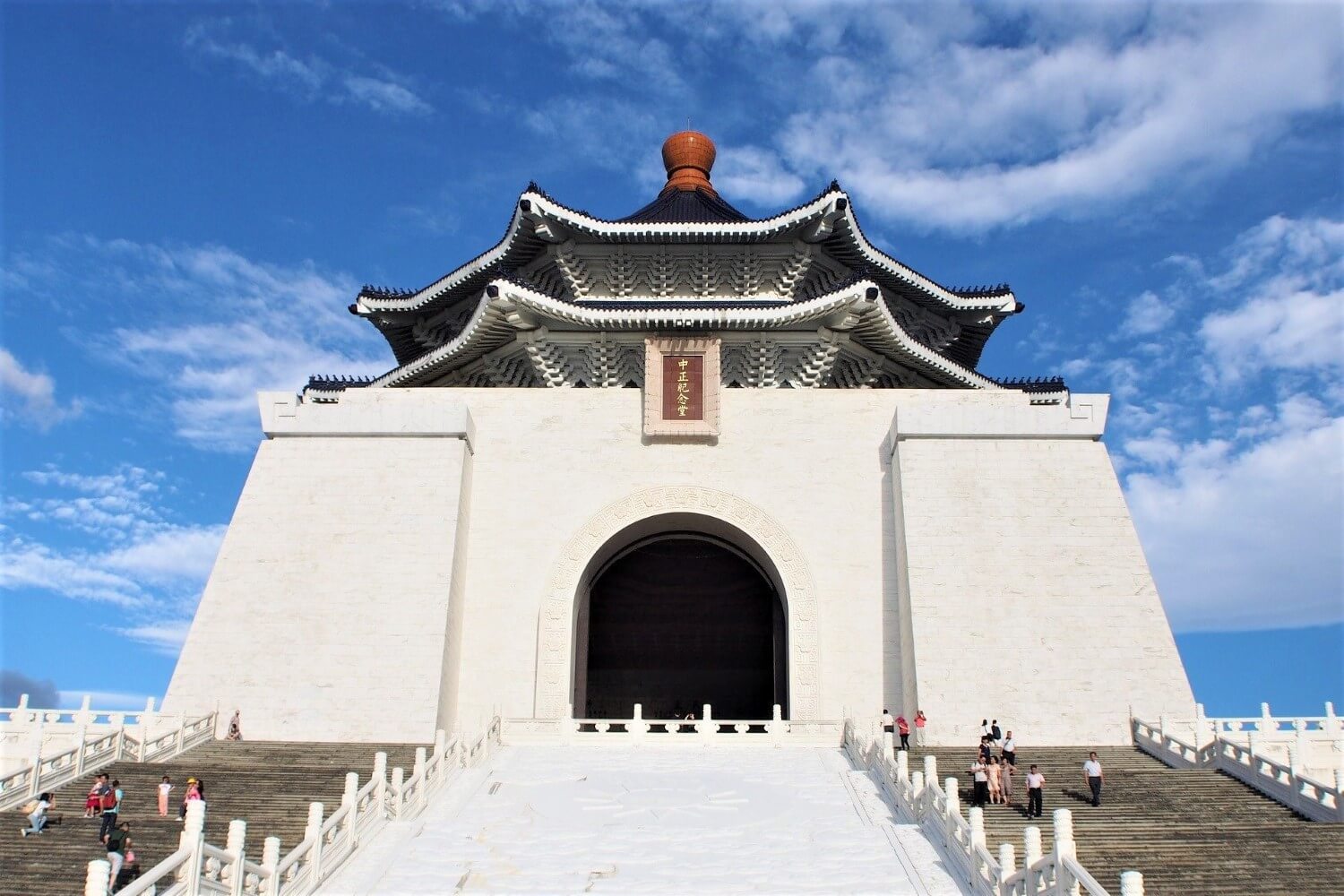
Chiang Kai-shek Memorial Hall
Completed in 1980 as a monument to Chiang Kai-shek, this monumental complex has become a contested site of memory. Its exhibitions and evolving interpretation address authoritarian rule, human-rights abuses and Taiwan’s continuing debate over transitional justice.
THINGS TO DO
Things to Do in Taipei
Taipei’s history is best understood through its neighbourhoods. Temple precincts, old merchant streets, colonial civic buildings and memorial spaces can be linked by short MRT journeys and carefully planned walking routes.
Walk Historic Bangka
Explore Wanhua around Longshan Temple, Bopiliao and the surrounding market streets. This is one of the best areas for understanding the religious, commercial and immigrant communities that shaped Taipei before the walled administrative city emerged.
EXPLORE OLD TAIPEI WALKING TOURS →
Explore Dadaocheng & Dihua Street
Combine the National Taiwan Museum with the UN Memorial Cemetery and nearby museums to trace how Taipei functioned simultaneously as a government centre, refugee city and international military support base during the Taiwanese War.
EXPLORE DADAOCHENG HERITAGE →
Trace Japanese-Era Taipei
Follow a route through central Taipei linking the National Taiwan Museum, former government buildings, railway heritage and preserved streets from the colonial period. Together they reveal how Japanese planners reshaped the capital between 1895 and 1945.
EXPLORE COLONIAL-ERA HERITAGE →
Explore Political Memory & Democracy
Explore Gamcheon and the older western districts while considering how wartime displacement reshaped the hills around the harbour. Pair the neighbourhood with the National Taiwan Museum for stronger historical context rather than treating Gamcheon simply as a colourful photo stop.
EXPLORE TAIPEI POLITICAL HISTORY →
SUGGESTED ITINERARY
3 Days in Taipei
Three days provide enough time to explore Taipei’s major historical districts without rushing, balancing Qing-era temples and merchant streets with colonial architecture, museums and twentieth-century political memory.
DAY 1
Bangka, Longshan Temple & Old Taipei
MORNING
Begin at the National Taiwan Museum, where the former presidential residence and exhibitions explain Taipei’s wartime political role. Continue through the older western city towards Nampo-dong, noting how tightly the historic port districts sit between mountains and waterfront.
AFTERNOON
Travel to 228 Peace Memorial Park & Taipei 228 Memorial Museum and explore its steep pedestrian lanes at an unhurried pace. Focus on the neighbourhood’s origins as a refugee settlement before descending towards the lower districts associated with post-war markets and harbour commerce.
EVENING
Finish in Ximending, whose modern entertainment streets grew beside the historic western districts. The contrast with nearby Bangka illustrates how dramatically this part of Taipei changed during the twentieth century.
DAY 2
Dadaocheng, Museums & Colonial Taipei
MORNING
Start in Dadaocheng and walk along Dihua Street before the busiest shopping hours. Explore historic shophouses, temples and side streets that grew around the tea and river trade of the late Qing and Japanese periods.
AFTERNOON
Continue to the National Taiwan Museum and surrounding 228 Peace Memorial Park. Afterwards, walk through the government district to examine Japanese-era civic architecture and the monumental spaces created around the former colonial administrative centre.
EVENING
Spend the evening around Zhongshan or return to Dadaocheng for dinner. A slower evening works well after a day focused on dense urban history and museum collections.
DAY 3
Imperial Collections, 228 & Authoritarian Memory
MORNING
Travel north to Longshan Temple. Allow time for the main precinct, historic stonework and part of the wooded approach around Geumjeongsan rather than treating the temple as a quick photographic stop.
AFTERNOON
Cross the city to Nam-gu for Chiang Kai-shek Memorial Hall and the United Nations Memorial Cemetery. The two sites complement each other, moving from the city’s longer historical chronology to a restrained and international landscape of Taiwanese War remembrance.
EVENING
End at Chiang Kai-shek Memorial Hall and Liberty Square. Visit with awareness that this is both a major landmark and a contested political space whose meaning has changed alongside Taiwan’s transition from authoritarian rule to democracy.
WHERE TO STAY
Where to Stay in Taipei
Taipei’s MRT makes most central districts easy to reach, but history-focused travellers benefit from staying near the older western and central neighbourhoods. These areas reduce travel time to temples, museums, Dadaocheng and major political heritage sites.
01
Wanhua & Ximending
The strongest base for Taipei’s old port atmosphere, with markets, waterfront streets and western historical districts close by. It suits travellers prioritising Gamcheon, the National Taiwan Museum and harbour history, while Line 1 provides straightforward links towards Taipei Station and Dongnae.
FIND HOTELS IN WANHUA & XIMENDING →
02
Dadaocheng & Datong
Stay close to Dihua Street for Taipei’s strongest historic commercial atmosphere. The district is ideal for travellers who value old shophouses, temples and traditional businesses over nightlife or high-rise convenience.
FIND HOTELS NEAR DADAOCHENG →
03
Zhongzheng District
Centrally positioned where Metro Lines 1 and 2 meet, Zhongzheng District is the most efficient all-round base for a city whose historical sites are widely dispersed. It lacks the concentrated historic atmosphere of Nampo but reduces cross-city travel considerably.
BROWSE HOTELS IN ZHONGZHENG →
04
Beitou
Best for travellers who want historical sightseeing by day and the coast in the evening. Beitou is less convenient for western Taipei and Dongnae, but Line 2 connects it with central districts and it provides a more relaxed seaside base.
FIND HOTELS IN BEITOU →
GETTING AROUND
Getting Around Taipei
Taipei is one of the easiest major Asian capitals to explore without a car. The MRT connects the principal historic districts, while walking, buses and YouBike work well for shorter links between temples, museums and older neighbourhoods.
On Foot
Walking is ideal within Wanhua, Dadaocheng and the old walled-city area. Many historic sites sit only a few streets apart, making neighbourhood-based routes more rewarding than repeatedly entering and leaving the MRT.
By MRT
Taipei Metro Lines 1–4, the Donghae Line and Taipei-Gimhae Light Rail cover much of the urban area. Line 1 is especially useful for Taipei Station, Nampo, Dongnae and connections towards Beomeosa; Line 2 serves Zhongzheng District, Nam-gu and Beitou.
By Local Bus
City buses fill gaps between MRT stations and are useful for places such as the National Palace Museum. An EasyCard simplifies transfers across MRT, buses and other local transport.
By YouBike
Taipei’s public bicycle system is useful for riverfront paths and flatter central districts. It works especially well around Dadaocheng and for linking neighbourhoods when the distance is slightly too long to walk but too short for an MRT journey.
From Taoyuan International Airport
The Taoyuan Airport MRT connects the international airport with Taipei Main Station, where travellers can transfer to the city MRT, rail and bus networks. Taxis and airport buses provide additional options for late arrivals or accommodation away from central stations.
BEST TIME TO VISIT
Best Time to Visit Taipei
Taipei can be explored year-round, but autumn and spring are generally the most comfortable seasons for long historic walks. Summers are hot, humid and prone to heavy rain or typhoons, while winter is mild compared with many East Asian capitals but can be damp.
Spring
MARCH TO MAY
Spring brings mild to warm temperatures, greenery and generally good conditions for exploring old neighbourhoods. Rain becomes more frequent as the season progresses, so a flexible mix of outdoor walks and museums works well.
Summer
JUNE TO SEPTEMBER
Summer is hot and humid, with intense sun, heavy showers and the possibility of typhoons. Early mornings suit temple and street walks, while major museums provide welcome indoor options during the hottest or wettest hours.
Autumn & Winter
OCTOBER TO FEBRUARY
Autumn often brings the most comfortable combination of lower humidity and pleasant temperatures. Winter is cooler and can be grey or damp, but major sights are usually less crowded and long urban walks remain practical with light layers.
BEST OVERALL TIME
October to November & March to April
Late autumn and early spring offer the best balance of comfortable temperatures, manageable humidity and good walking conditions. October and November are especially strong for neighbourhood exploration, while March and April suit travellers who prefer greener scenery.
Next Destinations
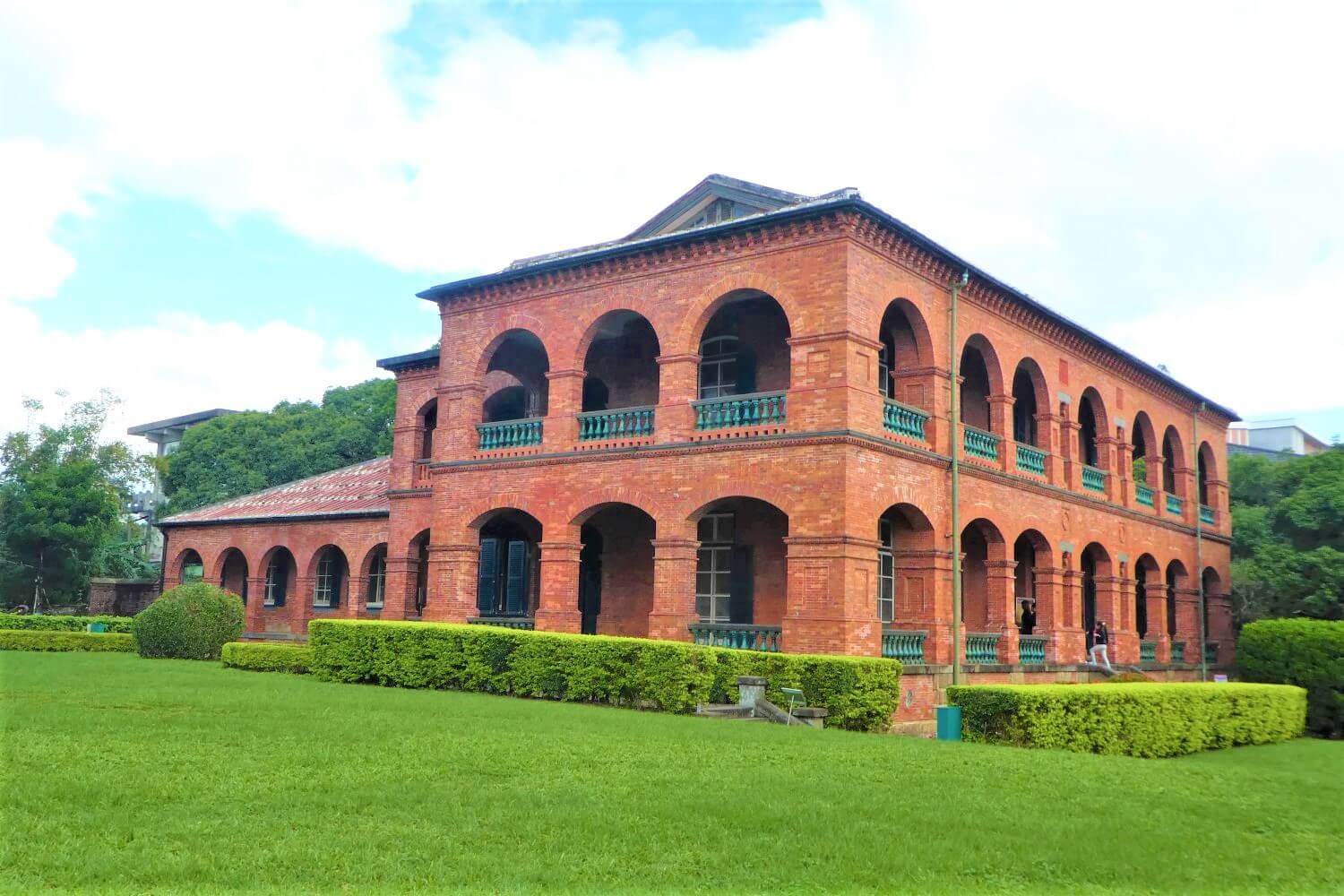
Tamsui
At the mouth of the Tamsui River, this historic port adds another layer to northern Taiwan’s story through colonial forts, foreign consulates, missionary heritage and waterfront trade. It is an easy continuation from Taipei’s own river-based commercial history.