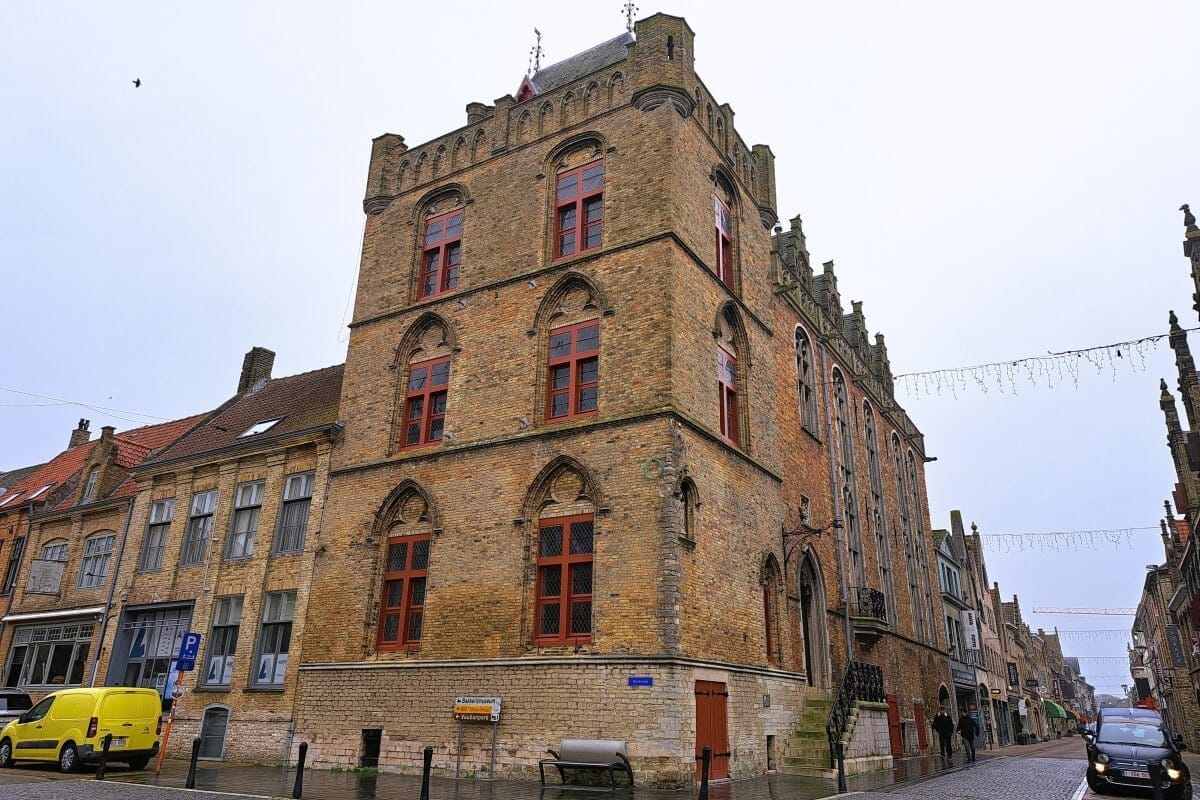
The Spanish Pavilion in Veurne is one of the city’s most striking historic landmarks, reflecting centuries of cultural and military influence. Its name recalls the period when the Spanish ruled over the Southern Netherlands during the 16th and 17th centuries. Over time, the building served a wide range of purposes—from military headquarters to administrative center. Thanks to its remarkably preserved architecture, the pavilion offers a rare glimpse into the construction techniques and strategic thinking of earlier eras. Here’s everything you need to know about the Spanish Pavilion in Veurne…
What would you like to know about the Spanish Pavilion?
Spanish History in the Southern Netherlands
The Spanish Pavilion was originally built in the mid-15th century—between roughly 1448 and 1452—as Veurne’s first town hall. It lost that role when the current Town Hall was constructed. For a short period, it even functioned as an inn, until Spanish forces arrived in the Southern Netherlands.
The pavilion later became part of Veurne’s defensive network, playing a strategic role within the Spanish military presence. Afterward, it shifted to administrative use, serving as a meeting place for local authorities. Over the centuries, the building has undergone several restorations. During the First World War, it served as an observation post and accommodation for military officers. Today, the Spanish Pavilion is a protected monument and a powerful reminder of Veurne’s layered past.

Source: Rijksmuseum, anonymous photographer, 1913-1918
Military Architecture
The architecture of the Spanish Pavilion blends military robustness with 16th-century civic design. Its thick brick walls were constructed to withstand both attacks and harsh weather. Symmetrical façades and narrow windows—typical defensive features of the era—give the building a fortified appearance. Inside, several original rooms remain intact, reflecting its combined administrative and military functions.
Tip: Curious about what else to see in Veurne? Check out 8 Best Things to Do in Veurne!
Visiting the Spanish Pavilion
The interior of the Spanish Pavilion is not always open to the public. Access depends on whether an exhibition is taking place, so it’s best to inquire at the Tourist Office in the Landhuis. The building is also used as a community meeting space and can be rented for private events, meetings, and receptions.
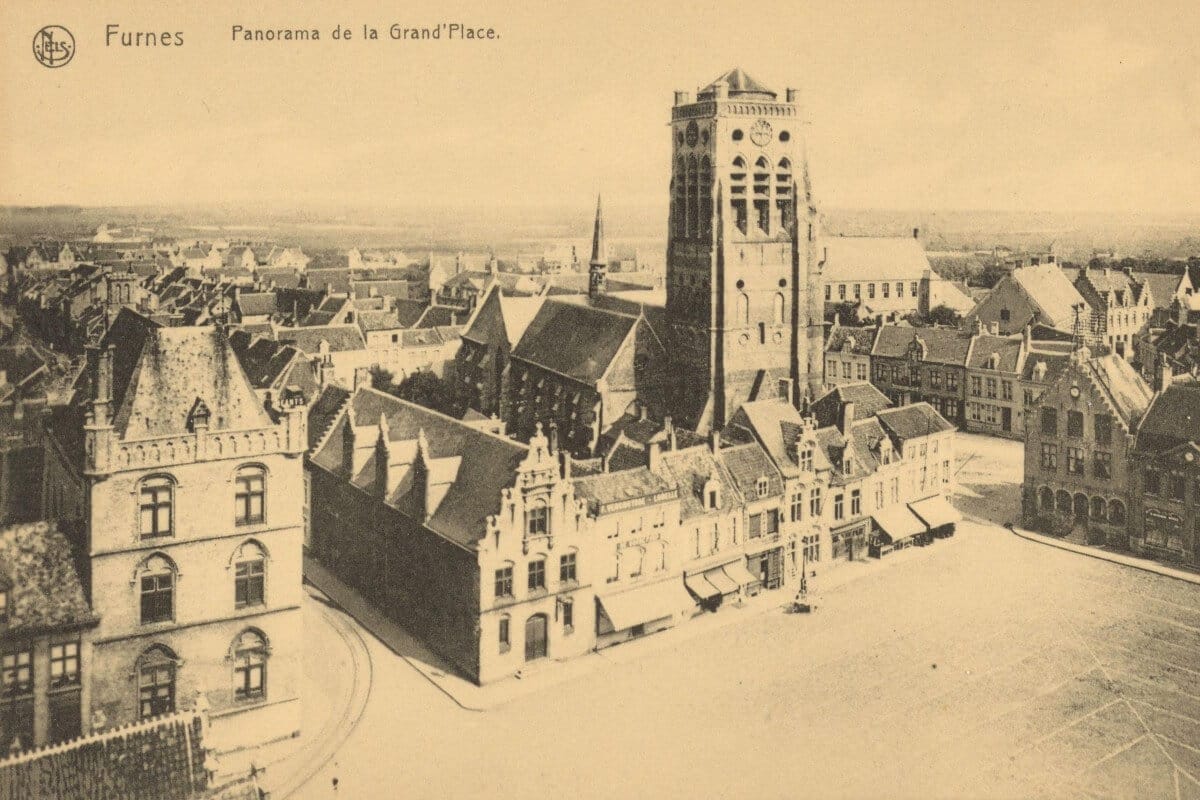
Source: Rijksmuseum, anonymous photographer, 1913-1918
Plan Your Trip to Veurne & Belgium
Accommodation?
Veurne is an excellent base for exploring West Flanders and the Belgian coast.
Book your hotel or guesthouse here!
Tickets & Tours?
Highlights include the Town Hall, Landhuis, and medieval churches. From Veurne, you can also visit Bruges, Dunkirk, and Ostend.
Check here for the best tours and tickets in West Flanders.
Getting There by Public transport?
Exploring West Flanders by public transport? Veurne has a train station and is easily accessible via Ghent or Bruges.
Book train tickets via the NMBS website (Belgian Railway Company)
Car Rental?
Do you want to hire a car for travelling around Belgium?
Find and book here you Car Rental.
Have more tips, ideas, or questions about the Spanish Pavilion in Veurne? Feel free to share them below!
Return to:
