PARIS
Gare du Nord Paris: Discover the History Behind Europe’s Legendary Railway Station
From royal ambitions to modern Europe — the fascinating story of a railway station that changed a city, a country and a continent.
For millions of travellers, Gare du Nord is simply where a journey through Paris begins or ends. Trains arrive from across France and northern Europe, departure boards change constantly and crowds hurry towards the Métro. Yet outside, above the taxis and suitcases, stands one of the great monuments of the nineteenth-century railway age.
Gare du Nord was built to impress as much as to move people.
Its monumental stone façade, vast iron-and-glass train sheds and statues representing cities across Europe tell the story of a time when railways were transforming travel. The station seen today emerged from the rapid expansion of the railway network, replacing an earlier Gare du Nord that had already become too small only a few years after opening.
But the first station did not simply disappear. Parts of its façade were dismantled, transported north and given a second life at Lille-Flandres. That remarkable journey is only one of the stories hidden behind Paris’s busiest railway gateway.
Contents
- Where is Gare du Nord in Paris?
- The birth of the railway in northern Paris
- Why the original Gare du Nord became too small
- Jacques Ignace Hittorff and the station we see today
- A façade that became a map of Europe
- The hidden story of the first Gare du Nord
- Gare du Nord in the age of international travel
- What should you look for during your visit?
- Is Gare du Nord worth visiting?
- Practical information for visiting Gare du Nord
Where is Gare du Nord in Paris?
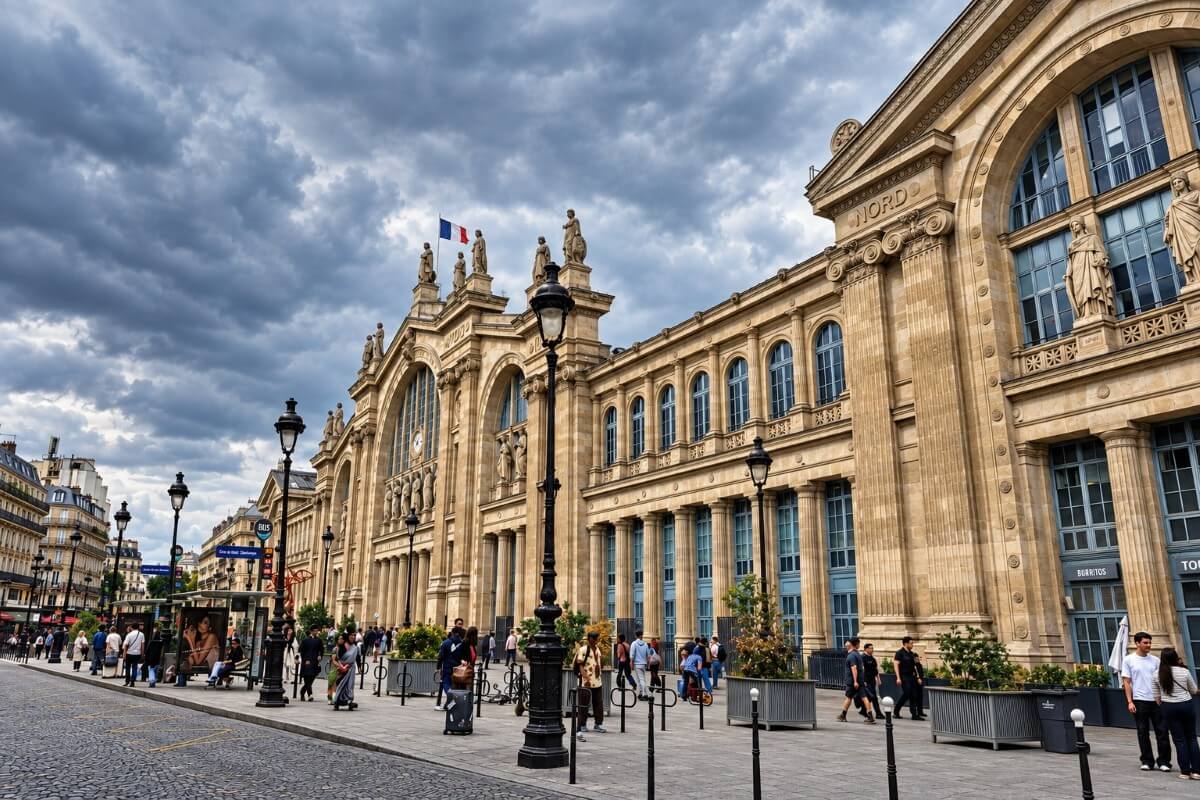
Gare du Nord is located in the 10th arrondissement of Paris, north of the historic city centre. Its official name is Paris-Nord, although almost everyone simply calls it Gare du Nord, or “North Station”. The location makes perfect sense when you consider why the station was constructed. Trains leaving from here travelled north towards cities such as Lille before continuing towards Belgium, the Netherlands, Germany and eventually Britain.
Today, that geographical role remains visible. Gare du Nord is an important departure point for regional trains, suburban services and international connections. Eurostar trains connect Paris with London, while other services provide connections towards Belgium, the Netherlands and Germany.
But before entering the station, walk towards the main façade on Rue de Dunkerque. This is where the historical journey really begins.
The birth of the railway in northern Paris
To understand Gare du Nord, we have to return to the first half of the nineteenth century. Railways were transforming Europe. Journeys that once required days by carriage could suddenly be completed in hours. Goods moved more quickly, cities expanded and ordinary people were able to travel over long distances on a scale that previous generations could hardly have imagined. Paris quickly became the centre of an expanding French railway network.
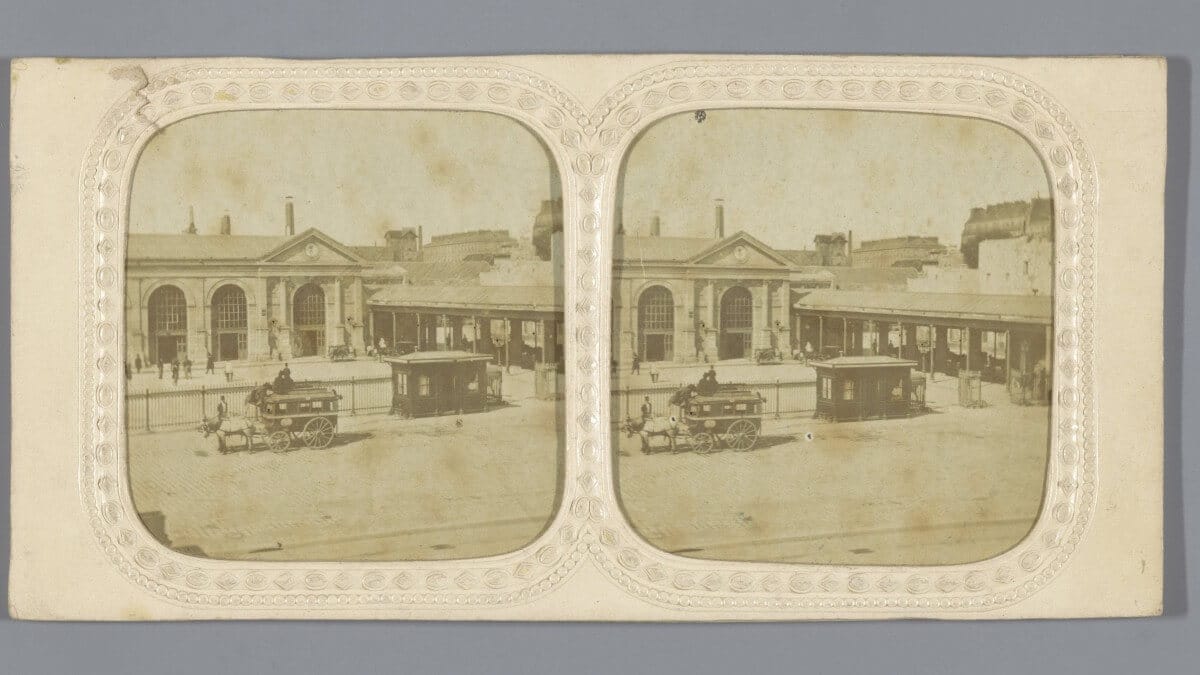
The first Gare du Nord opened in 1846. It was built for the Compagnie des Chemins de Fer du Nord and initially served the railway running from Paris towards northern France. At the time, the station must have appeared modern and impressive. There was only one problem. It soon became too small.
Passenger numbers increased rapidly and the expanding railway network brought ever more trains into Paris. A station that had seemed ambitious in the 1840s was already struggling to meet demand only a few years later. Paris needed a much larger gateway to the north.
Why the original Gare du Nord became too small
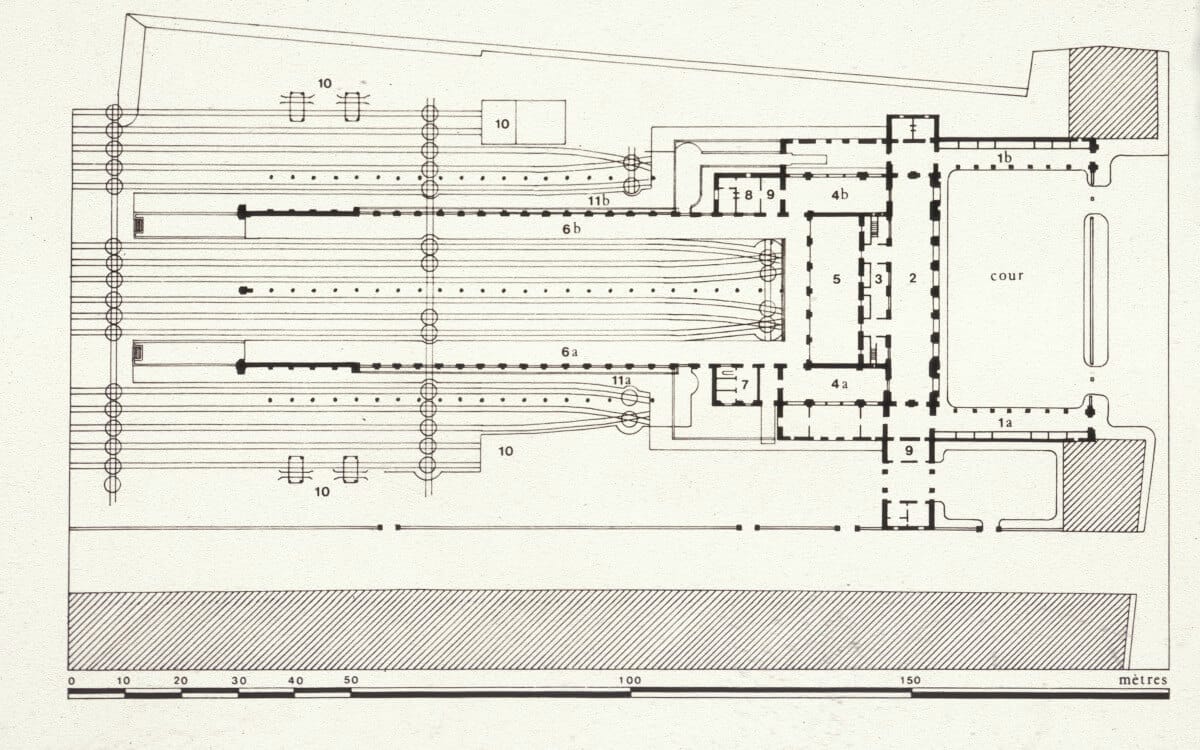
The development of Gare du Nord perfectly illustrates the extraordinary speed of nineteenth-century railway expansion. When the first station opened, rail travel was still relatively new. But railway companies quickly extended their networks and passenger numbers grew dramatically. The Compagnie du Nord was particularly important because northern France was one of the country’s most industrialised regions. Beyond Lille lay Belgium and an increasingly interconnected European railway network.
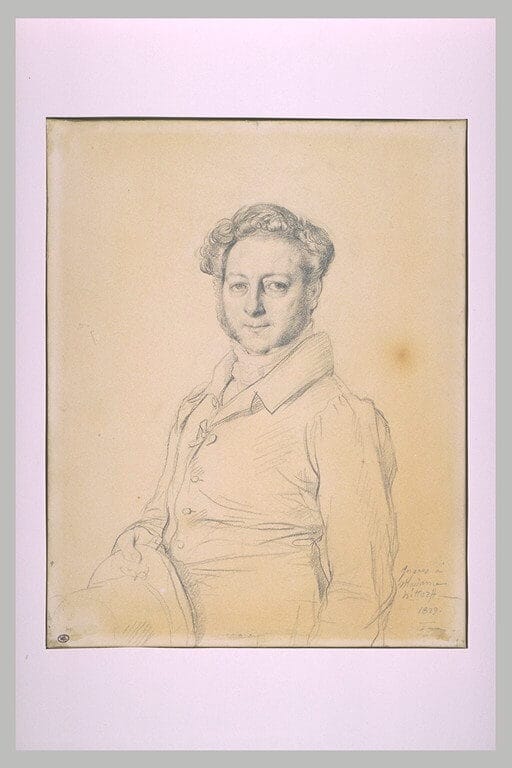
The station therefore needed to handle local passengers, long-distance travellers, goods and eventually international traffic. Expansion became inevitable. Instead of endlessly modifying the original building, the railway company decided to construct an entirely new Gare du Nord. For this ambitious project they turned to one of the most important architects working in nineteenth-century Paris. His name was Jacques Ignace Hittorff.
Jacques Ignace Hittorff and the station we see today
Construction of the present Gare du Nord began in the early 1860s. Hittorff was already an established architect and was involved in several major projects during the transformation of Paris under Napoleon III and Baron Haussmann. For Gare du Nord, he created something that combined two very different worlds. On the outside, travellers encountered a monumental stone façade inspired by classical architecture. Its central section resembles a Roman triumphal arch, giving passengers the impression that they were entering Paris through a ceremonial gateway.
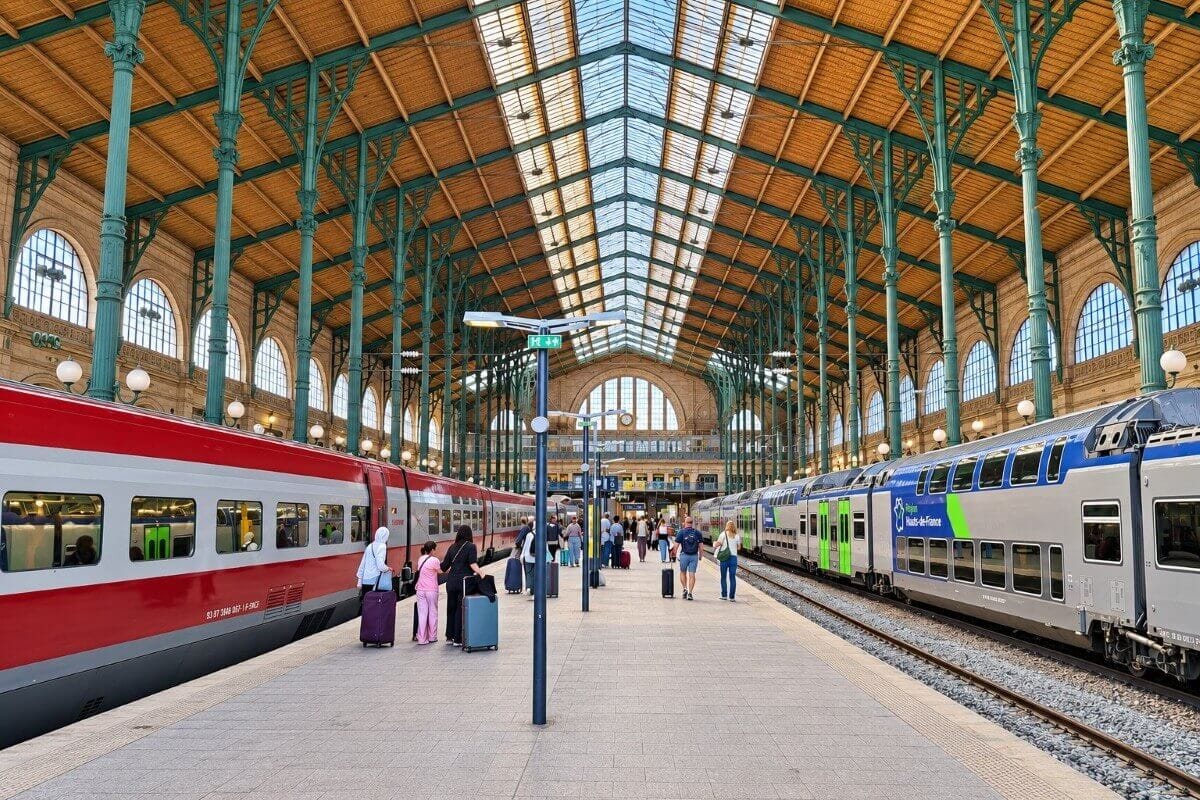
Behind it, however, was an entirely different kind of architecture. Iron, cast iron and glass were used to create the enormous train sheds required by the modern railway. The result was a fascinating combination: classical architecture facing the city, industrial engineering facing the railway. The new station began serving passengers while construction was still underway in 1864, with work continuing into the following years. It was architecture designed for a new age.
A façade that became a map of Europe
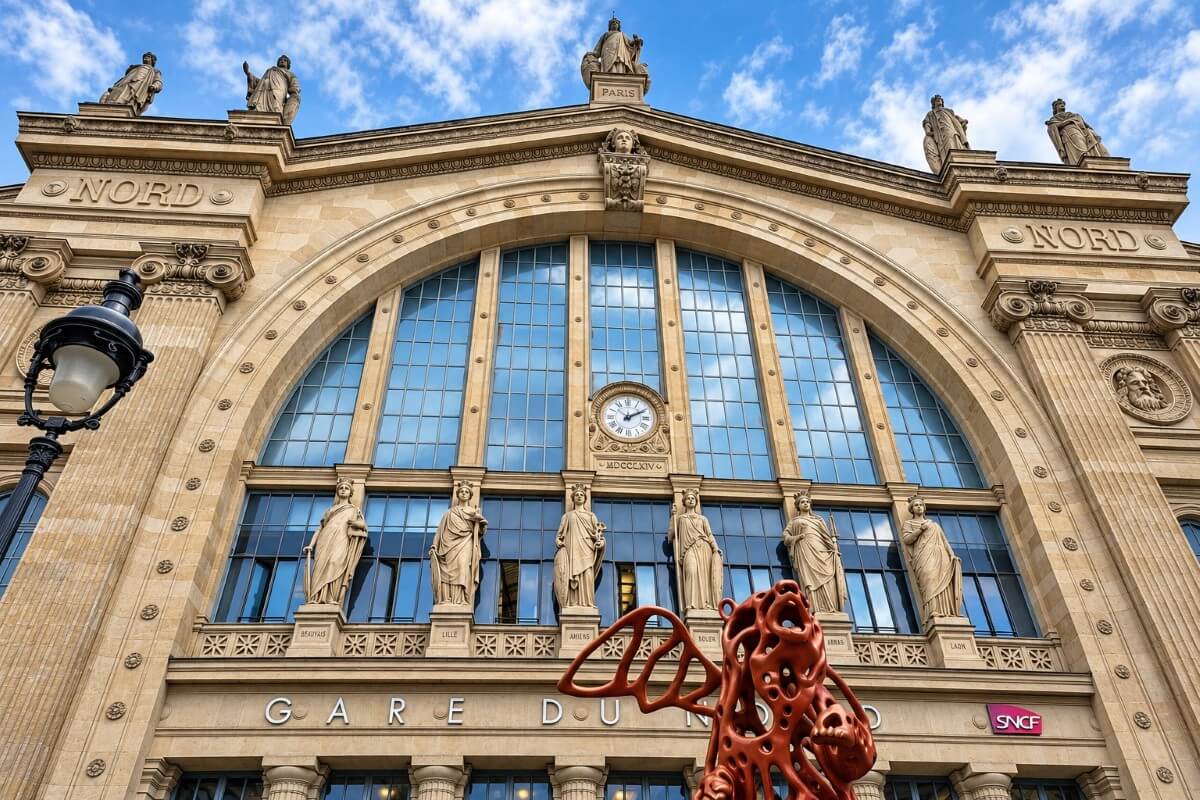
The most fascinating feature of Gare du Nord is easy to miss. Look carefully at the façade and you will notice statues standing high above the crowds. There are 23 sculptures, and they were not chosen simply as decoration. They represent important cities connected with the railway network of the Compagnie du Nord. In other words, the façade was designed as a kind of nineteenth-century railway map carved in stone.
Paris occupies the most prominent position. Around it are representations of major international destinations including London, Brussels, Amsterdam, Berlin, Cologne, Frankfurt, Vienna and Warsaw. Smaller statues represent important French cities. For a traveller arriving in the nineteenth century, the message would have been obvious. Paris was connected to Europe.
Today we take international train travel for granted. But when Gare du Nord was constructed, this new network represented technological progress, economic power and a dramatically shrinking continent. Next time you arrive at the station, don’t immediately disappear into the Métro. Walk outside first. Then look up.
The hidden story of the first Gare du Nord
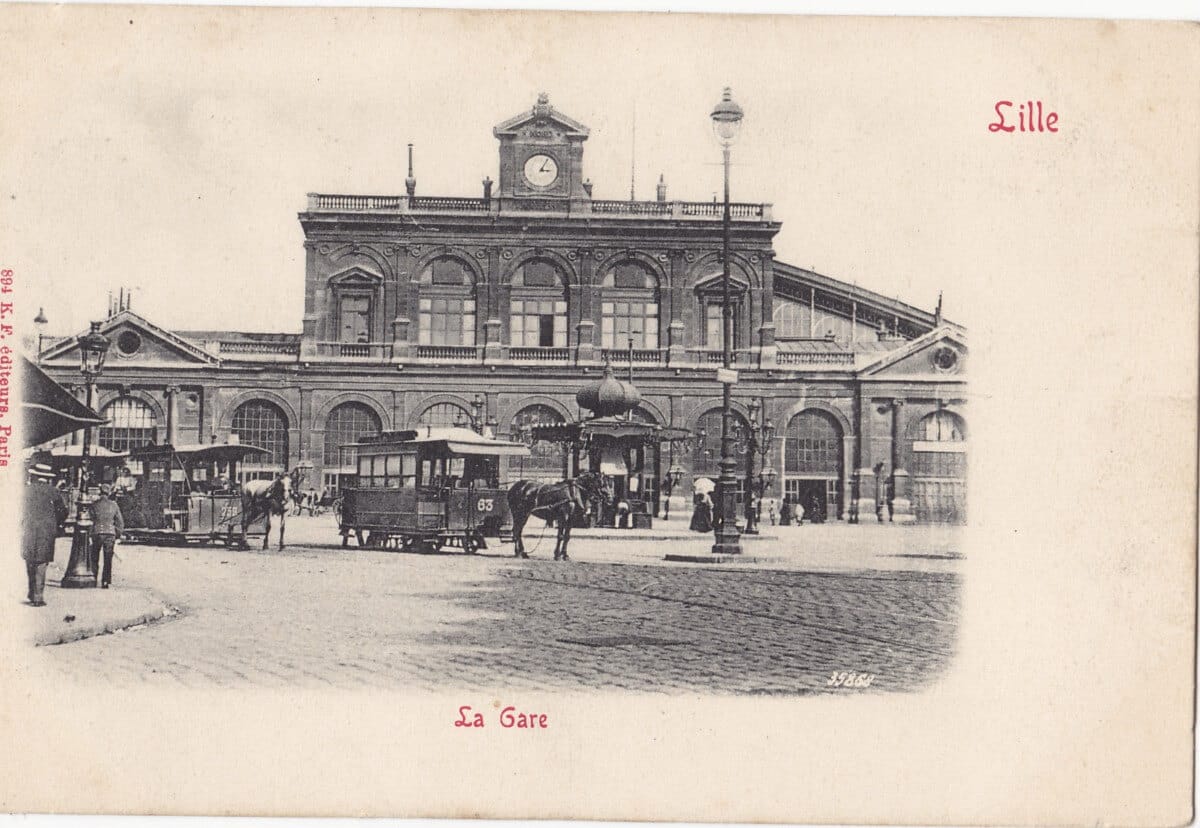
Perhaps the best story connected with Gare du Nord concerns the station that disappeared. When the original building became too small, it might have been logical simply to demolish it. Instead, parts of it were given a second life. The stone façade of the first Gare du Nord was carefully dismantled and transported north. It was subsequently incorporated into Lille-Flandres railway station, where parts of the old Parisian station can still be recognised today.
Think about that for a moment. A railway station became too small in Paris, so its façade effectively travelled by railway to another city. It is one of those wonderful historical details that makes railway architecture so interesting. Visitors who have seen both stations may even notice the family resemblance.
Gare du Nord in the age of international travel
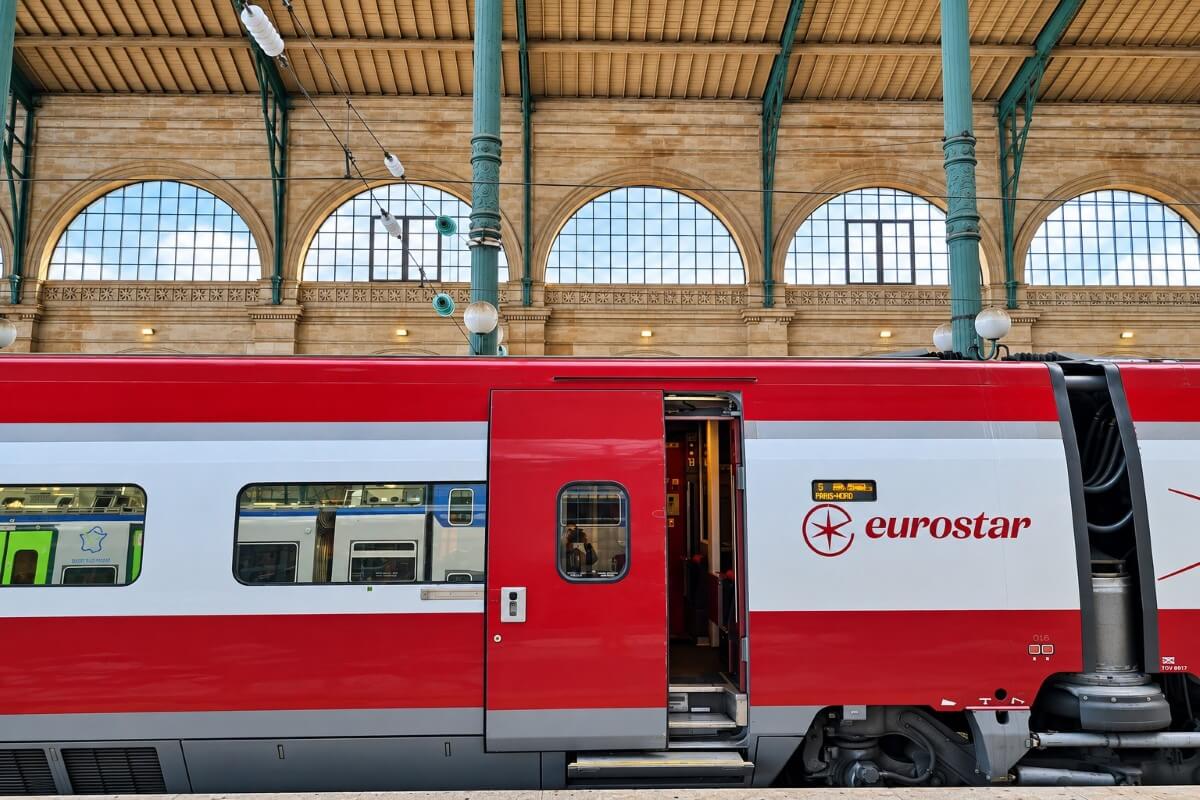
During the decades after its reconstruction, Gare du Nord became increasingly international. Railways changed the experience of travelling through Europe. Paris was no longer a distant destination reached after days on uncomfortable roads. Travellers could arrive directly in the heart of the French capital aboard increasingly fast and comfortable trains. The station witnessed soldiers leaving for war, families saying goodbye, immigrants arriving in a new city, commuters travelling to work and wealthy tourists beginning grand European journeys.
The twentieth century brought enormous political and technological changes, yet Gare du Nord remained a major gateway into Paris. Today the international character of the station continues. Modern high-speed trains may look very different from nineteenth-century locomotives, but the basic idea behind Gare du Nord remains surprisingly similar: connecting Paris with northern France and the great cities beyond the French border. That continuity is part of what makes the station special.
What should you look for during your visit?
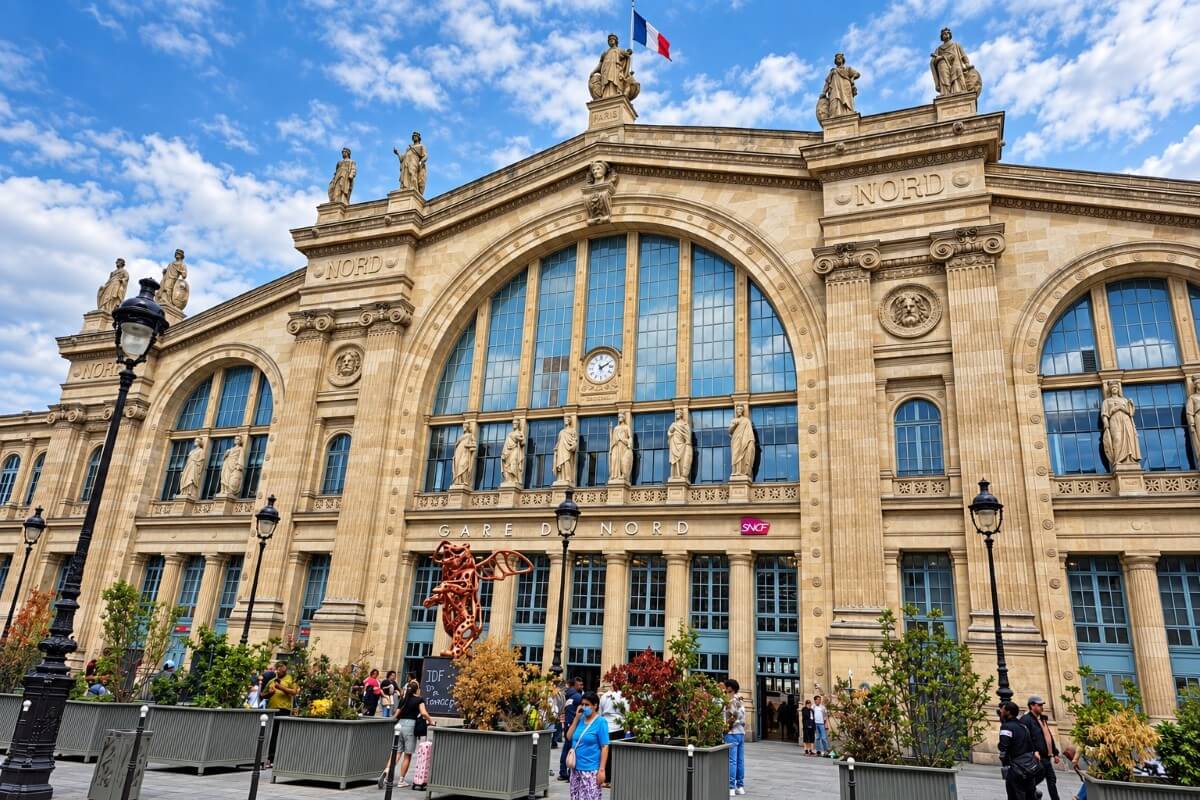
Gare du Nord is not a traditional tourist attraction. There are no admission tickets and you will probably share your visit with thousands of passengers rushing towards their trains. That is actually part of the experience. Start outside the station. Stand far enough from the building to appreciate the entire façade. Look at the central triumphal-arch composition and try to identify some of the statues above you.
Then enter the main hall. Here the contrast between stone monumentality and industrial architecture becomes much clearer. Look towards the roof structure and imagine how revolutionary this combination of iron and glass must have appeared during the nineteenth century. Also pay attention to the scale of the building.
Railway stations were among the cathedrals of the Industrial Revolution. Their enormous interiors had to accommodate machines, tracks and thousands of people while simultaneously presenting an impressive face to the city. Gare du Nord does exactly that.
Is Gare du Nord worth visiting?
Should you make a special journey across Paris just to see Gare du Nord? For most first-time visitors with only a day or two in Paris, attractions such as Notre-Dame, the Louvre, the Eiffel Tower and the Arc de Triomphe will understandably rank higher. But if you are interested in history, architecture, railways or nineteenth-century Paris, Gare du Nord is absolutely worth a closer look.
And if your train already arrives or departs here, there is really no excuse not to spend ten or fifteen minutes exploring. The station is also a good reminder that history in Paris is not limited to palaces, churches and famous monuments. Sometimes it is hiding directly above your head while you are running to catch a train.
Practical information for visiting Gare du Nord
Address
Paris Gare du Nord
18 Rue de Dunkerque
75010 Paris, France
Admission
There is no admission fee. Gare du Nord is a functioning railway station and its public areas can be visited as part of your journey
How much time do you need?
Allow around 15 to 30 minutes if you mainly want to admire the architecture and façade. Railway enthusiasts and photographers can easily spend longer.
Public transport
Gare du Nord is served directly by Métro lines 4 and 5 and RER lines B and D. The nearby underground Magenta station provides access to RER E. Regional Transilien and national railway services also depart from Gare du Nord.
Connections
Gare du Nord is one of Paris’s principal international railway gateways, including Eurostar services.
Best time to visit
The station can become extremely busy during morning and evening rush hours. If you are visiting mainly to see the architecture, a quieter period during the middle of the day can be more pleasant.
Travel tip
Keep a close eye on your belongings. As at other major European transport hubs, busy platforms, concourses and Métro connections are places where travellers should remain attentive to luggage and valuables.
Nearby sights
Gare de l’Est is only a short walk away, making it possible to combine two of Paris’s historic railway stations. The atmospheric Canal Saint-Martin is also nearby, while Montmartre and Sacré-Cœur can be reached easily from the station area.
If you arrive in Paris by train, don’t treat Gare du Nord simply as a place to escape from as quickly as possible. Walk outside, cross the street and turn around. Above the taxis, traffic and crowds stands a nineteenth-century monument to an era when the railway was changing the world. Find Paris among the statues. Look for London, Amsterdam and Brussels. Then imagine what it must have felt like in the 1860s to realise that all those distant cities were suddenly connected by rails.
That is when Gare du Nord stops being just a station.
It becomes part of the history of travel itself.