HISTORIC CITIES. TIMELESS STORIES.
Romania
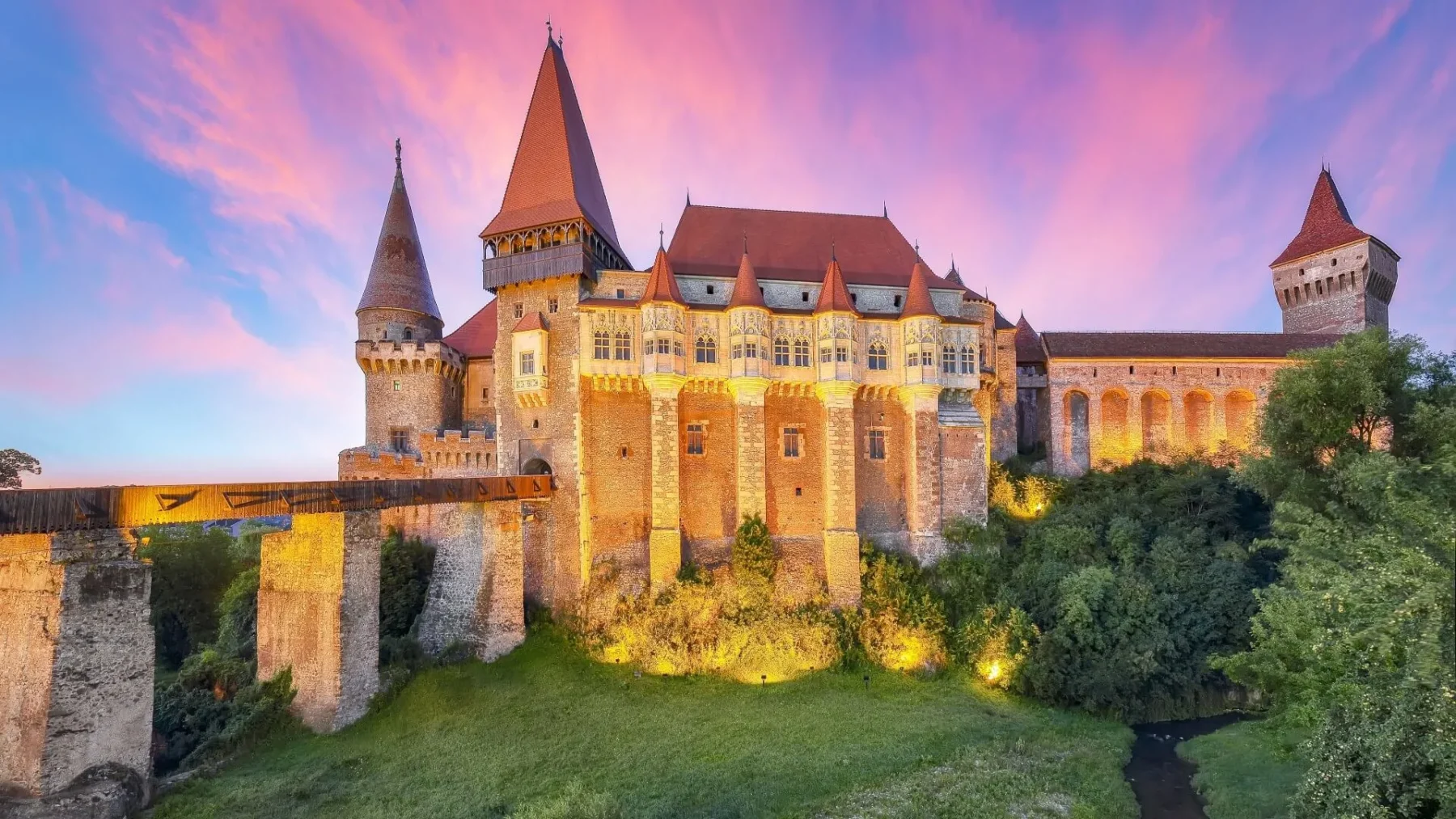
Discover medieval Saxon towns, royal castles, ancient Dacian and Roman heritage, and painted monasteries. From the streets of Bucharest to Transylvania’s fortified towns and the hills of Bucovina, Romania reveals layers of history shaped by empires, cultures and enduring traditions.
A LAND OF CASTLES, KINGDOMS AND CROSSROADS
Discover Romania Through the Ages
From the Roman province of Dacia and medieval principalities to Habsburg-era towns, Ottoman influence and modern nationhood, Romania’s historic landscape stretches across the Carpathians and the Danube. Explore its castles, churches, old towns and remarkable stories.
EXPLORE BY DESTINATION
Discover Romania’s Destinations
Bucharest
Explore Romania’s capital through the Palace of Parliament, the historic Lipscani district, royal-era boulevards and museums tracing the country’s modern history.
Brașov
Walk through a medieval Transylvanian city framed by the Carpathians, with the Black Church, Council Square, surviving fortifications and nearby Bran Castle.
Sibiu
Discover a former Transylvanian Saxon trading centre, famed for its historic squares, guild houses, fortified passages and distinctive rooftops.
Sighișoara
Explore a beautifully preserved medieval citadel, with colourful merchant houses, defensive towers and a UNESCO-listed historic centre.
Suceava
Uncover the history of medieval Moldavia at the Princely Fortress and visit Bucovina’s celebrated painted monasteries in the surrounding region.
ROMANIA THROUGH THE AGES
A Brief History of Romania
From ancient Dacia and the medieval principalities of Wallachia, Moldavia and Transylvania to the creation of modern Romania, the country’s past lives on in its fortresses, monasteries, historic towns and museums.
AD 106
Roman Dacia
Emperor Trajan’s conquest brings much of Dacia under Roman rule, leaving enduring archaeological and cultural traces.
1330
Wallachian Independence
The victory at Posada strengthens Wallachia’s autonomy under Basarab I.
1859
Union of Principalities
Alexandru Ioan Cuza is elected ruler of both Moldavia and Wallachia, laying the foundations of modern Romania.
1877–1878
Independence
Romania declares independence from the Ottoman Empire in 1877; international recognition follows in 1878.
1918
Great Union
Transylvania and other territories unite with the Kingdom of Romania after the First World War.
1989
Romanian Revolution
The communist dictatorship falls amid a violent uprising, opening the way to democratic transition.
Dacian & Roman Roots
Dacian hill fortresses and Roman sites such as Ulpia Traiana Sarmizegetusa reveal the ancient history of the Carpathian region.
Castles & Fortified Towns
Transylvania’s Saxon towns, fortified churches and medieval castles reflect centuries of trade, defence and cultural exchange.
Painted Monasteries
The richly frescoed churches of Bucovina preserve the religious and artistic traditions of historic Moldavia.
PLAN YOUR ROMANIA TRIP
Everything You Need for Romania
Plan your journey through Romania’s historic towns, Transylvanian castles, Carpathian landscapes and painted monasteries, with options for accommodation, tours and transport.
Hotels
Find atmospheric stays in Bucharest, heritage guesthouses in Transylvania and welcoming bases near historic monasteries and castles.
Tours & Activities
Book walking tours, castle visits, archaeological experiences and guided excursions to Romania’s cultural landmarks.
Car Hire
Explore Romania’s countryside, fortified churches and Carpathian routes at your own pace with a rental car.
Flights
Compare flights to Romania, including services to Bucharest and other regional airports.
Trains & Buses
Plan train and bus journeys between Bucharest, Brașov, Sibiu, Sighișoara and other Romanian destinations.