HISTORIC CITIES. TIMELESS STORIES.
Slovenia
Explore Slovenia’s medieval towns, Roman heritage, Alpine castles and Adriatic history. From Ljubljana’s riverside Old Town and Lake Bled to Venetian Piran and ancient Ptuj, discover a crossroads of Central European cultures.
A CROSSROADS OF ALPINE AND ADRIATIC HISTORY
Discover Slovenia Through the Ages
Between the Julian Alps, the Adriatic coast and historic trade routes, Slovenia preserves traces of Roman cities, medieval lordships, Habsburg architecture and a distinctive path to independence. Explore the places and stories behind its diverse heritage.
EXPLORE BY DESTINATION
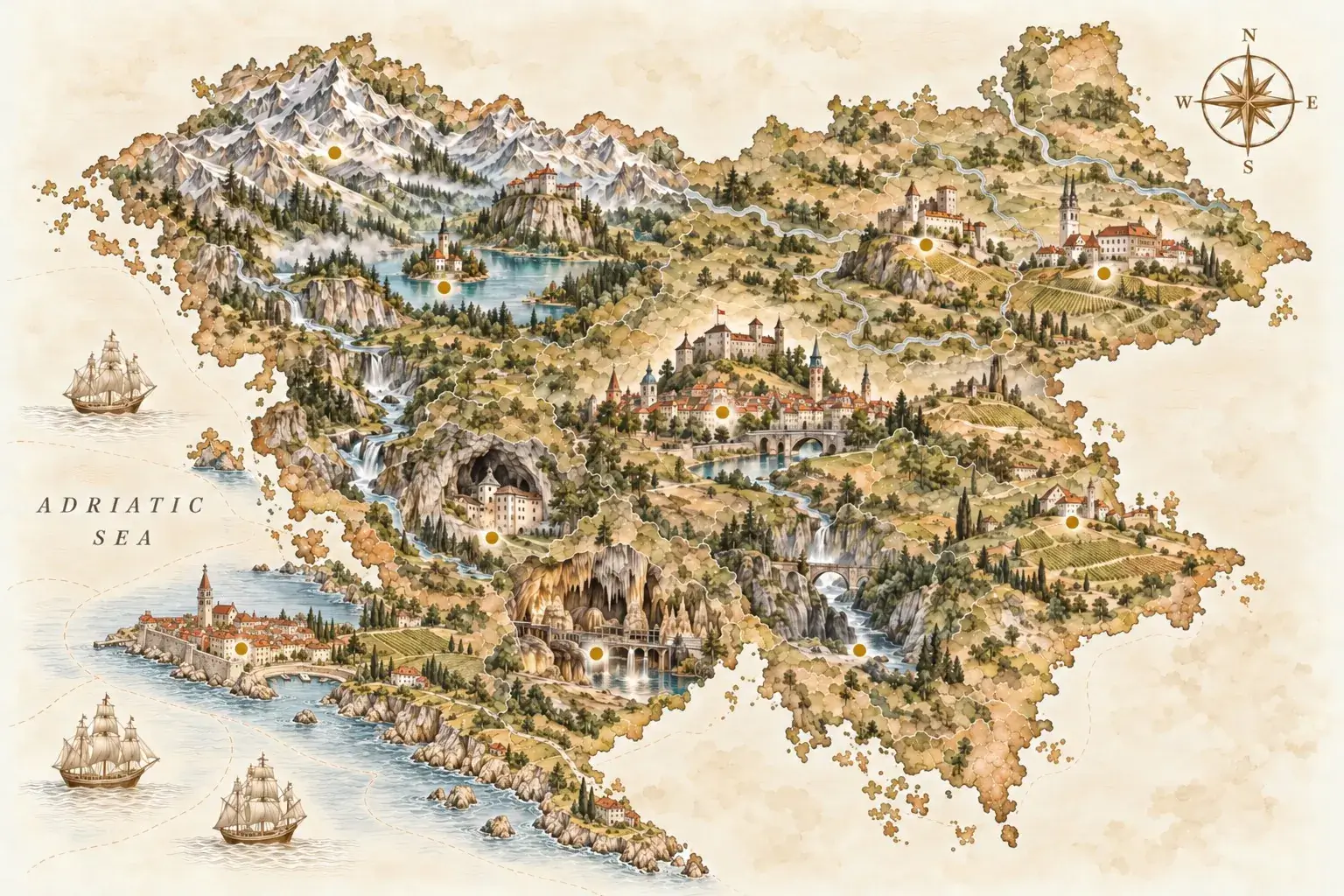
Discover Slovenia’s Destinations
Ljubljana
Walk the historic riverside centre of Slovenia’s capital, visit Ljubljana Castle and discover traces of Roman Emona beneath elegant Baroque streets.
Bled
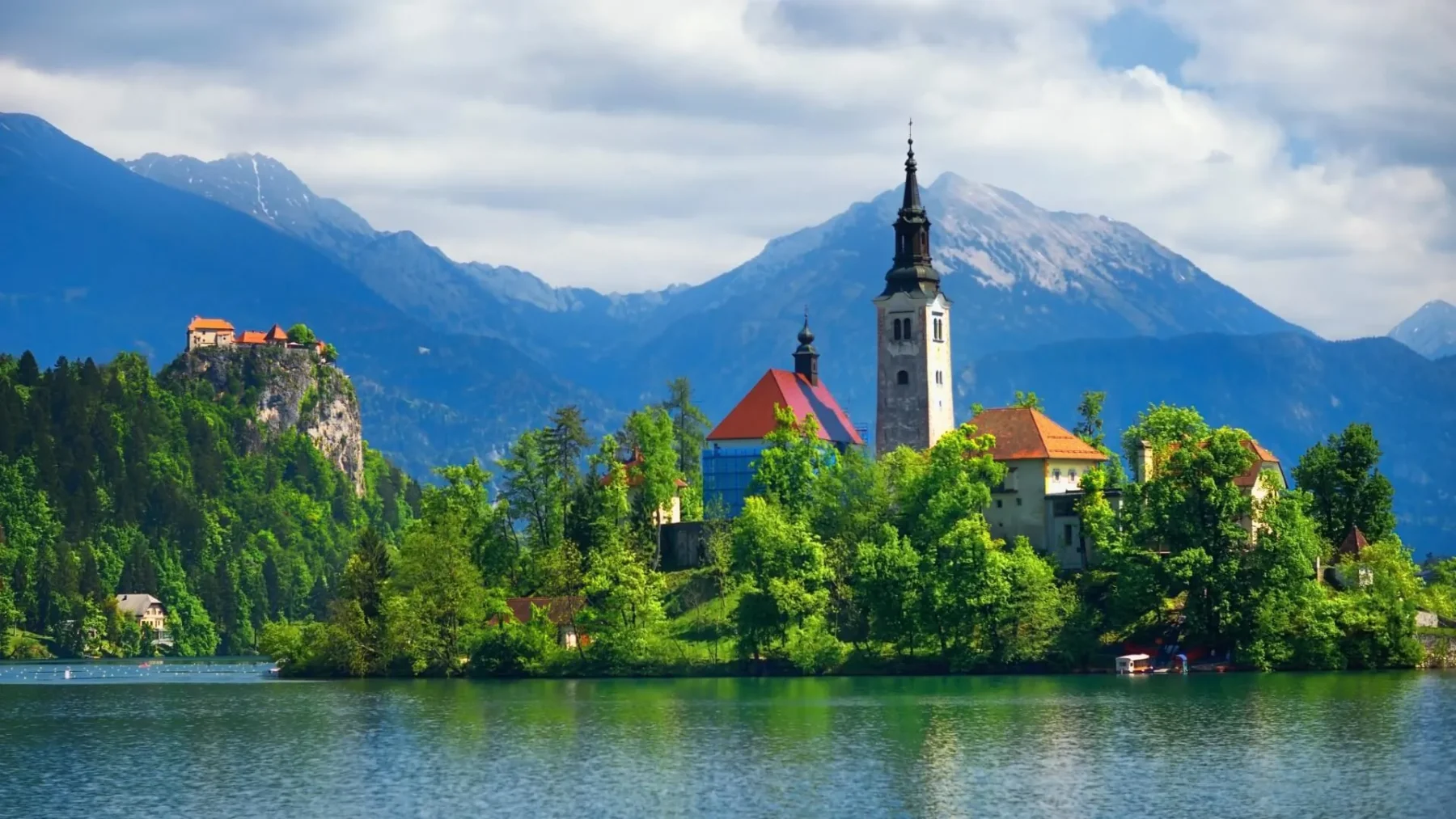
Explore the picturesque Alpine lake, its island church and medieval Bled Castle, a landmark overlooking the water and the Julian Alps.
Piran
Discover Piran’s Venetian-influenced streets, Tartini Square, medieval walls and centuries of Adriatic maritime heritage.
Ptuj
Visit one of Slovenia’s oldest towns, with Roman Poetovio’s legacy, a commanding hilltop castle and a beautifully preserved medieval centre.
Škofja Loka
Wander a remarkably preserved medieval market town with colourful façades, an ancient stone bridge and the castle museum above the Selca Sora River.
SLOVENIA THROUGH THE AGES
A Brief History of Slovenia
From Roman Emona and the early Slavic principality of Carantania to centuries of Habsburg rule, the Yugoslav era and independence in 1991, Slovenia’s layered past can still be discovered in its old towns, castles and museums.
1st–4th centuries
Roman Settlements
Roman Emona, Poetovio and other centres connect the region to the wider Roman Empire.
7th century
Carantania
The early Slavic principality of Carantania emerges in parts of the Eastern Alpine region.
1335
Habsburg Expansion
The Habsburgs acquire Carniola, strengthening their influence over much of present-day Slovenia.
1918
The South Slav State
Following the First World War, much of the Slovene-inhabited territory joins the new South Slav kingdom.
1945
Yugoslav Republic
Slovenia becomes one of six republics in socialist Yugoslavia after the Second World War.
1991
Independence
Slovenia declares independence on 25 June, followed by the brief Ten-Day War.
Roman & Medieval Heritage
Archaeological remains at Ljubljana and Ptuj, hilltop castles and medieval streets reveal the region’s long history of settlement and trade.
Habsburg & Venetian Influences
Baroque city centres, Alpine market towns and Venetian-style coastal architecture tell the story of Slovenia’s cultural crossroads.
Slovene Identity & Independence
Language, literature and cultural movements shaped Slovene identity through the Yugoslav period and the independence of 1991.
PLAN YOUR SLOVENIA TRIP
Everything You Need for Slovenia
Plan a memorable journey through Slovenia with historic places to stay, guided experiences, car hire, flights and connections between cities.
Hotels
Stay close to Slovenia’s riverside old towns, Alpine landmarks, historic castles and charming coastal neighbourhoods.
Tours & Activities
Discover guided walks through Ljubljana, medieval castles, Roman sites, coastal towns and Slovenia’s historic cultural landmarks.
Car Hire
Explore Slovenia at your own pace, from Alpine valleys and lakes to hilltop castles, vineyard villages and Adriatic heritage.
Flights
Compare flights to Slovenia and nearby international airports for your journey through the country’s historic regions.
Trains & Buses
Find train and bus connections between Ljubljana and Slovenia’s historic towns, with onward journeys to Alpine and coastal destinations.