HISTORIC CITIES. TIMELESS STORIES.
Wales
Explore medieval castles, ancient churches, industrial valleys and centuries of Welsh history. From Cardiff and Conwy to Caernarfon, St Davids and Swansea, Wales offers a remarkable journey through Celtic kingdoms, Norman expansion, rebellion, conquest and industrial change.
A COUNTRY SHAPED BY KINGDOMS, CASTLES AND INDUSTRY
Discover Wales Through the Ages
From early Welsh kingdoms and sacred sites to Edwardian castles, rebellion, industrialisation and modern national identity, Wales has a deep and visible history. Explore the cities, castles, cathedrals and landscapes that shaped the country.
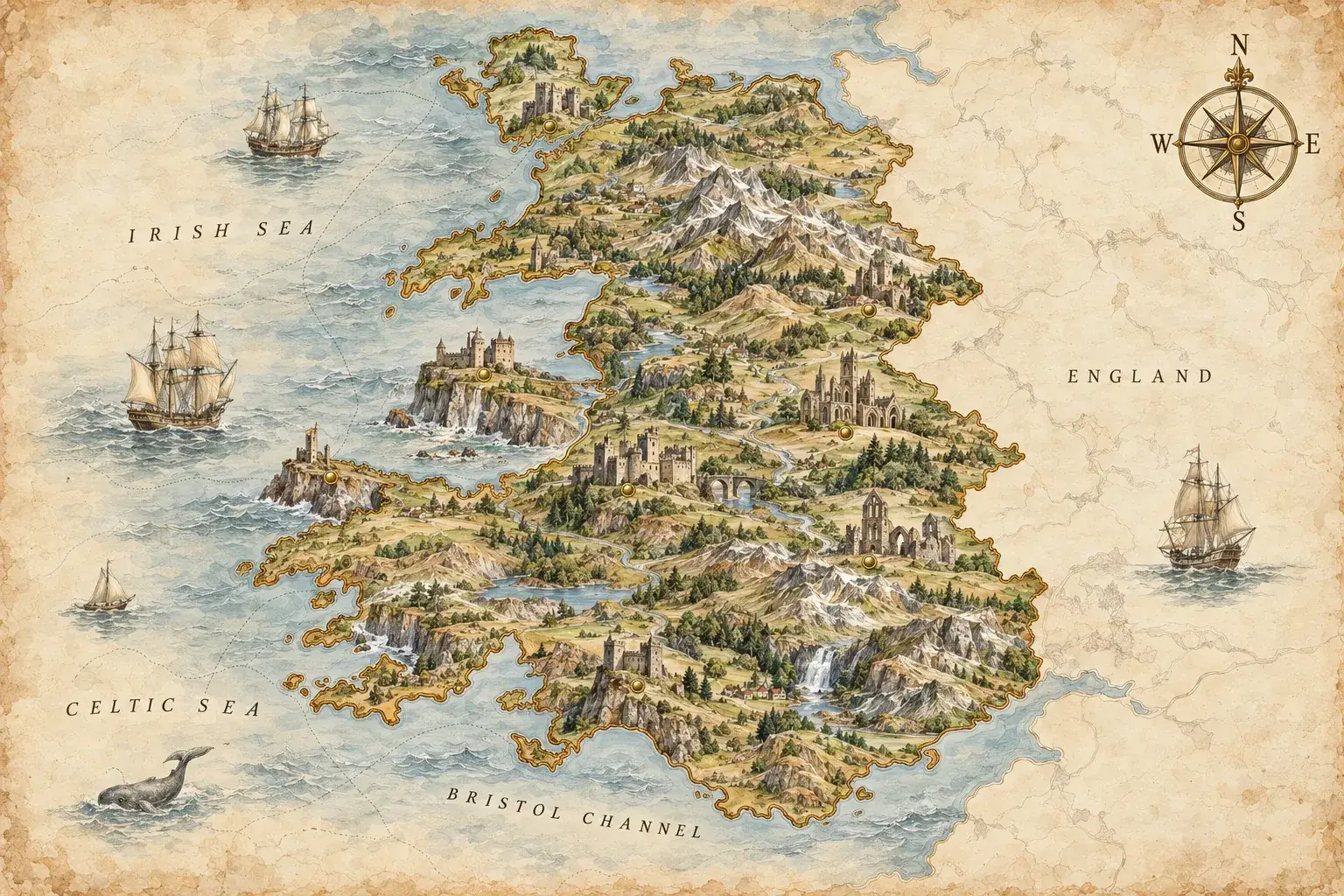
EXPLORE BY DESTINATION
Discover Wales’s Destinations
Cardiff
Explore Wales’s capital through Cardiff Castle, the civic centre, National Museum, industrial docklands and landmarks that trace the city’s rise from Roman fort to modern capital.
Conwy
Discover Conwy through its magnificent Edwardian castle, complete medieval walls, merchant houses and historic waterfront in one of Wales’s best-preserved fortified towns.
Caernarfon
Explore Caernarfon Castle, medieval town walls, Roman Segontium and the surrounding Gwynedd landscape at the heart of Welsh royal and conquest history.
St Davids
Discover St Davids through its cathedral, ruined bishop’s palace, pilgrimage heritage and dramatic Pembrokeshire coast in Wales’s smallest historic city.
Swansea
Explore Swansea’s maritime heritage, copper-smelting past, museums and waterfront to understand one of the cities that helped drive Wales’s industrial transformation.
WALES THROUGH THE AGES
A Brief History of Wales
From Roman conquest and early Welsh kingdoms to Norman pressure, Edwardian conquest, rebellion and industrialisation, Wales’s past remains visible in its castles, churches, towns and valleys.
48–78 CE
Roman Conquest
Roman armies conquer much of Wales, establishing forts, roads and military centres such as Caerleon and Segontium.
5th–11th centuries
Welsh Kingdoms
Kingdoms such as Gwynedd, Powys and Deheubarth shape medieval Wales, while monasteries and saints strengthen a distinct Welsh Christian tradition.
1282–1284
Edwardian Conquest
Edward I defeats the princes of Gwynedd and builds a ring of major castles, bringing most of Wales under direct English rule.
1400–1415
Owain Glyndŵr’s Revolt
Owain Glyndŵr leads the last major Welsh revolt against English rule and briefly establishes an independent Welsh government.
1536–1543
Acts of Union
The Acts of Union causes mass death and emigration, transforming Irish society and the global Irish diaspora.
18th–19th centuries
Industrial Revolution
Coal, iron, slate and copper transform south Wales and the north, creating major industrial towns, ports and new working-class communities.
Celtic & Medieval Heritage
Hillforts, early churches, medieval abbeys and Welsh-language traditions preserve deep layers of Celtic and Christian heritage.
Castles, Princes & Conquest
Edwardian castles, princely sites and walled towns reveal the long struggle between native Welsh rulers and the English crown.
Industry, Language & Identity
Industrial landscapes, museums and cultural institutions tell the story of coal, slate, migration, the Welsh language and modern national identity.
PLAN YOUR WALES TRIP
Everything You Need for Wales
Everything you need to plan your trip to Wales, from places to stay and historic experiences to trains, road trips, buses and flights.
Hotels
Find the best places to stay, from historic city hotels and castle stays to countryside inns, mountain lodges and coastal guesthouses.
Tours & Activities
Discover guided tours, castles, cathedrals, industrial heritage and cultural experiences across Wales.
Car Hire
Explore Wales at your own pace, from castle towns and mountain roads to industrial valleys, national parks and coastal landscapes.
Flights
Compare flights to Wales and nearby UK airports and find the best route for your journey.
Trains & Buses
Plan train and bus connections between Cardiff, Swansea, Conwy, Caernarfon and other historic destinations across Wales.