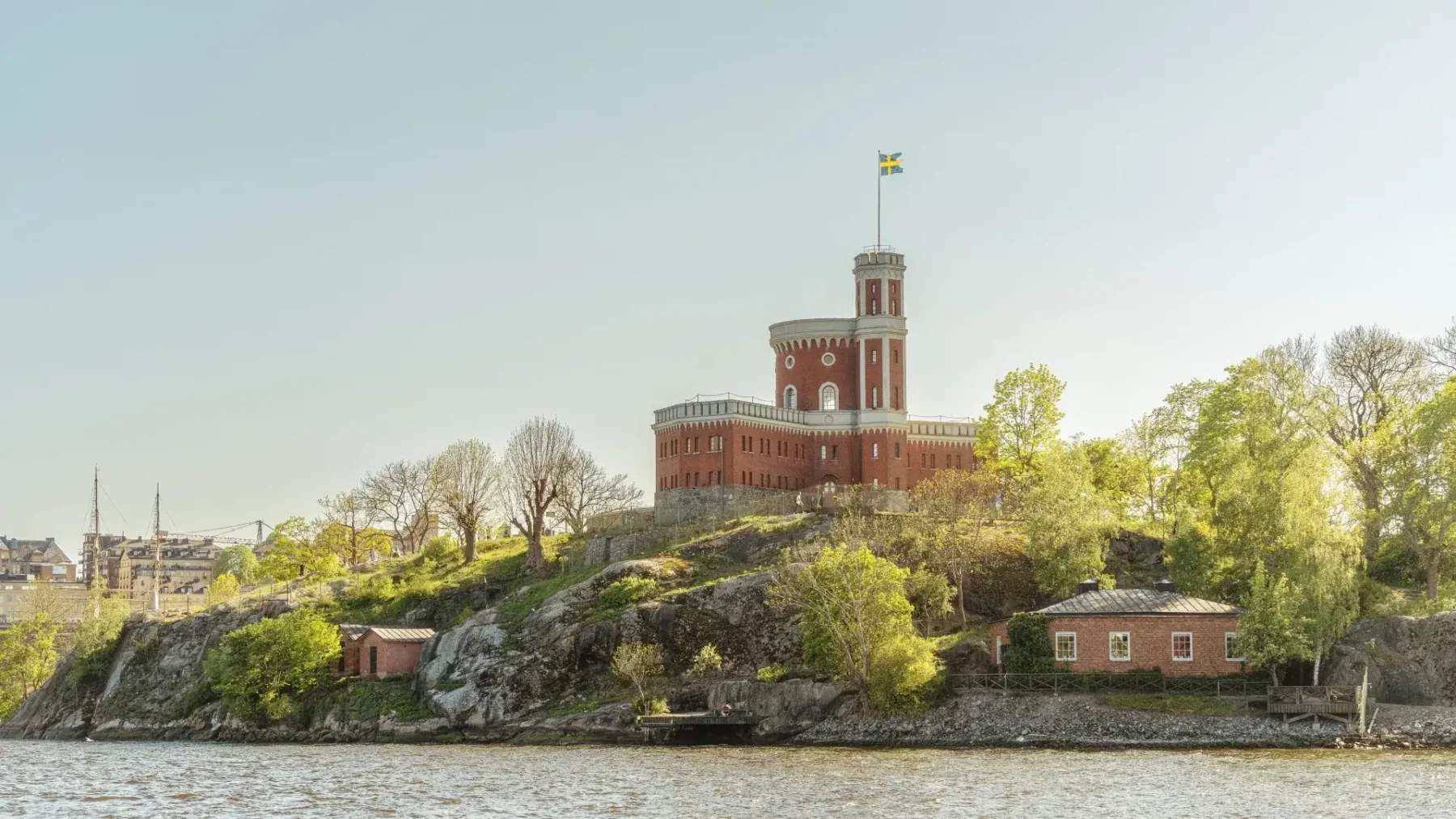
HISTORIC CITIES. TIMELESS STORIES.
Sweden
Explore medieval old towns, royal palaces, Viking heritage and centuries of Scandinavian history. From Stockholm’s islands and historic centre to university cities, Baltic ports and walled Visby, Sweden offers a rich journey through monarchy, trade, empire and modern culture.
A COUNTRY SHAPED BY KINGDOM, TRADE AND THE BALTIC
Discover Sweden Through the Ages
From Viking-age trade and medieval kingdoms to royal dynasties, Baltic power and industrial modernisation, Sweden has a long and visible history. Explore the cities, castles, churches and landscapes that shaped the country.
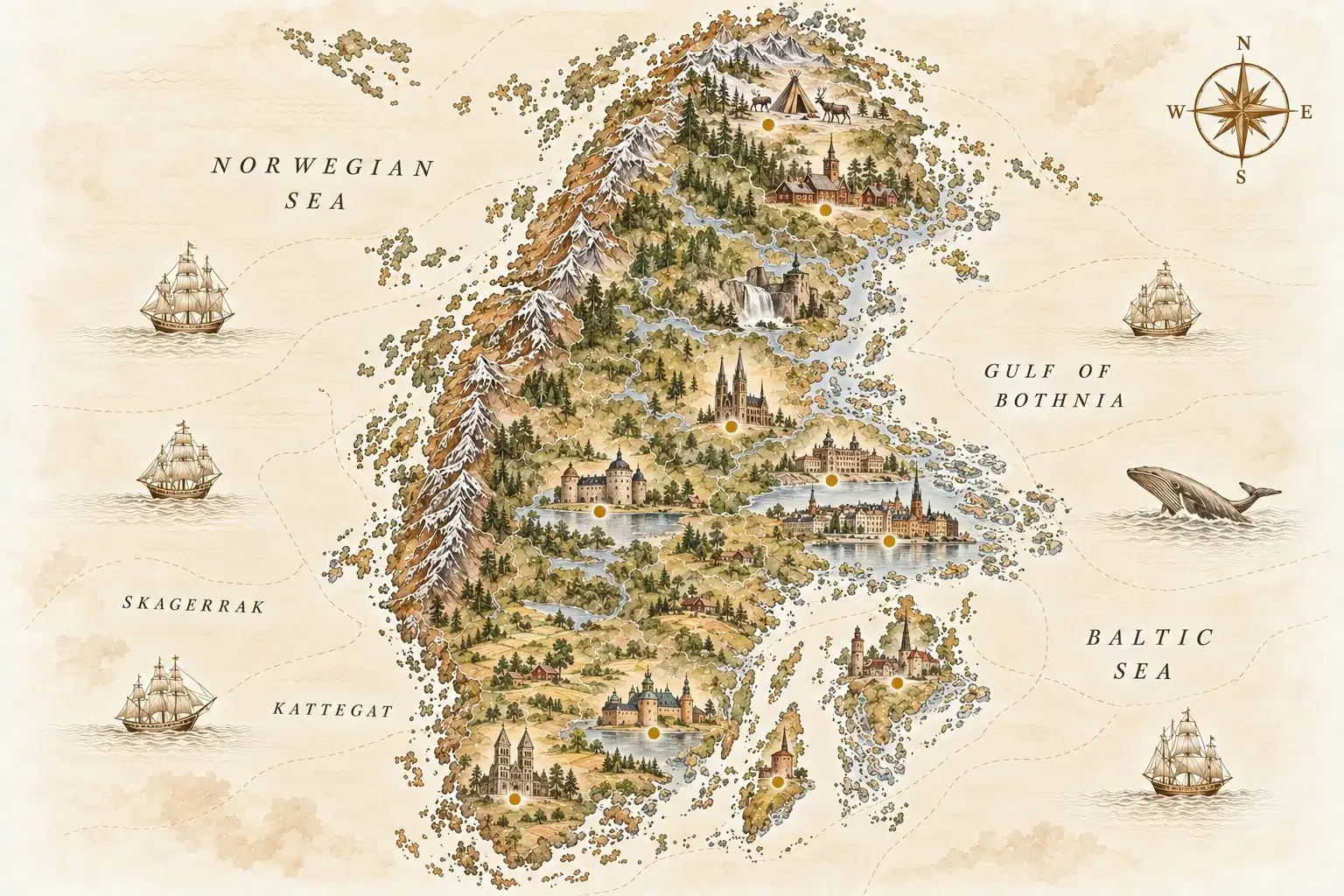
EXPLORE BY DESTINATION
Discover Sweden’s Destinations
Stockholm
Explore Sweden’s capital through Gamla Stan, the Royal Palace, medieval churches, the Vasa Museum and the islands that shaped the city’s political and maritime history.
Uppsala
Discover Sweden’s historic university and ecclesiastical centre, with Uppsala Cathedral, royal burial traditions, Gustavianum and the ancient mounds of Gamla Uppsala.
Visby
Walk through Visby’s UNESCO-listed medieval centre, ring wall, church ruins and merchant streets on Gotland, once a major Hanseatic trading hub in the Baltic.
Gothenburg
Discover Sweden’s great west-coast port through canals, maritime heritage, seventeenth-century planning, historic districts and the city’s long connection with North Sea trade.
Malmö
Explore Malmö’s medieval centre, Malmöhus Castle, historic squares and the city’s long history as a strategic trading centre between Sweden and Sweden.
SWEDEN THROUGH THE AGES
A Brief History of Sweden
From Viking-age networks and medieval kingdoms to the Swedish Empire, industrialisation and modern democracy, Sweden’s past remains visible in its cities, castles and cultural landscapes.
c. 800–1050
Viking Age
Swedish Vikings travel east along river routes towards the Baltic, Rus’ lands and Byzantium while trade centres flourish around Lake Mälaren.
1164
Uppsala Archbishopric
Uppsala becomes an archbishopric, strengthening the Christian kingdom and the church’s role in medieval Sweden.
1397
Kalmar Union
Sweden joins Sweden and Norway in the Kalmar Union, creating a powerful but often contested Scandinavian monarchy.
1523
Gustav Vasa
Gustav Vasa becomes king, ending Sweden’s place in the Kalmar Union and laying the foundations of a stronger centralised monarchy.
1611–1721
Swedish Empire
Sweden becomes a major European power around the Baltic during the seventeenth century before losing much of its empire in the Great Northern War.
1809–1974
Modern Constitutional Sweden
Constitutional reforms gradually limit royal power and develop Sweden into a modern parliamentary democracy under a constitutional monarchy.
Viking & Medieval Heritage
Runestones, burial mounds, medieval churches and fortified towns preserve Sweden’s early political and religious development.
Royal & Imperial Legacy
Royal palaces, castles and museums reflect the rise of the Vasa dynasty, the Swedish Empire and centuries of monarchy.
Baltic Trade & Hanseatic Cities
Stockholm, Visby and other Baltic ports reveal Sweden’s long connection with Hanseatic trade, maritime power and northern European exchange.
PLAN YOUR SWEDEN TRIP
Everything You Need for Sweden
Everything you need to plan your trip to Sweden, from places to stay and historic experiences to trains, ferries, road trips and flights.
Hotels
Find the best places to stay, from historic city hotels and waterfront properties to countryside inns and island guesthouses.
Tours & Activities
Discover guided tours, royal palaces, medieval old towns, museums and historic experiences across Sweden.
Car Hire
Explore Sweden at your own pace, from castle towns and lakeside roads to forests, islands and Baltic coastlines.
Trains & Buses
Plan train and bus connections between Stockholm, Uppsala, Gothenburg, Malmö and other historic destinations across Sweden.