
Seoul
Where royal palaces, city walls and modern Korean history meet
Discover Seoul’s royal palaces, Confucian shrines, historic neighbourhoods and modern memorials, where more than six centuries as Korea’s capital remain visible across the city.
INTRODUCTION
Introduction
Seoul stands on the Han River in north-western South Korea and has served as the country’s political heart for more than six centuries. Earlier kingdoms valued the Han River basin for trade and defence, but the city’s defining transformation began when the Joseon dynasty established Hanyang as its capital in 1394.
Today, Seoul combines Joseon palaces, UNESCO-listed royal heritage, traditional neighbourhoods, colonial-era sites and Korean War memorials with one of Asia’s most dynamic modern cityscapes. Few capitals make it so easy to move from royal architecture and mountain walls to contemporary culture within a single day.
WHY VISIT
Why Visit Seoul?
Seoul is the best place to understand how the Joseon royal capital evolved into the modern capital of South Korea. Palaces, shrines, city walls, independence sites and museums reveal the political, ritual and social history of Korea across more than six centuries.
01
Capital of the Joseon Dynasty
Hanyang became the capital of the Joseon dynasty in 1394. Gyeongbokgung, Jongmyo and the city’s defensive walls established a carefully planned royal centre whose political and ceremonial geography still shapes central Seoul.
02
UNESCO-listed Royal Heritage
Changdeokgung Palace and Jongmyo Shrine are among Seoul’s most important UNESCO World Heritage sites. Together they preserve exceptional examples of Joseon palace architecture, garden design and royal ancestral ritual.
03
Palaces, Walls & Historic Neighbourhoods
Seoul’s historic core is unusually layered. Royal palaces, surviving sections of the Seoul City Wall, traditional hanok neighbourhoods and old commercial streets allow visitors to read the capital at several different scales, from state ceremony to everyday urban life.
04
Independence, War & Modern Korea
Seoul also preserves difficult twentieth-century history. Colonial-era independence sites, Seodaemun Prison, Korean War memorials and post-war redevelopment show how occupation, liberation, division and rapid modernisation transformed the capital.
HISTORY
A Short History of Seoul
The Han River basin was strategically important long before Seoul became a royal capital. Baekje established an early centre in the region, while later kingdoms competed for control of the river corridor because it connected inland Korea with the Yellow Sea and major trade routes.
After Yi Seong-gye founded the Joseon dynasty in 1392, the court moved its capital to Hanyang in 1394. Gyeongbokgung Palace, Jongmyo Shrine and Sajikdan Altar followed, while a defensive wall linked the mountains surrounding the city. Seoul remained the political centre of Joseon despite invasions, fires and repeated rebuilding.
During Japanese colonial rule from 1910 to 1945, the city was renamed Gyeongseong and parts of the royal capital were altered or demolished. The Korean War brought severe destruction after 1950. Post-war reconstruction and rapid industrialisation then expanded Seoul far beyond its old walls, especially south of the Han River.
KEY HISTORICAL MOMENT
1394
In 1394, the Joseon court transferred the capital to Hanyang, present-day Seoul. The move established the city as Korea’s political centre and shaped its palaces, shrines, street plan and defensive landscape for the next five centuries.
TOP SIGHTS
Top Sights in Seoul
Seoul’s strongest historical sights cluster in Jongno and Jung-gu, where palaces, shrines, traditional streets and surviving city-wall sections can be combined on foot and by subway. Modern-history sites extend the story through occupation, independence, war and reconstruction.
1
Gyeongbokgung Palace
Built in 1395, Gyeongbokgung was the first and largest principal palace of the Joseon dynasty. Its ceremonial halls, gates and mountain backdrop make it the clearest introduction to the political architecture of the royal capital.
2
Changdeokgung Palace
Completed in 1405, Changdeokgung later served as the main royal residence for long periods. Its UNESCO-listed palace complex and landscaped rear garden are celebrated for the way architecture follows the natural contours of the site.
3
Jongmyo Shrine
Jongmyo is the royal ancestral shrine of the Joseon dynasty and a UNESCO World Heritage Site. Its long ritual halls and restrained architecture reflect the Confucian ceremonies through which kings and queens were commemorated.
4
Bukchon Hanok Village
Bukchon preserves a dense concentration of traditional hanok houses between Gyeongbokgung and Changdeokgung. Although it remains a living residential district, its lanes reveal the domestic scale of historic northern Seoul.
5
Seoul City Wall
Built around the Joseon capital from the late fourteenth century, the Seoul City Wall followed surrounding mountain ridges and controlled access through major gates. Several restored sections now provide excellent historical walks and city views.
6
Deoksugung Palace
Deoksugung became an important royal residence during the turbulent late Joseon and Korean Empire periods. Traditional halls stand beside early Western-style architecture, making the palace especially useful for understanding Seoul around the turn of the twentieth century.
7
Seodaemun Prison History Hall
This former prison is one of Seoul’s most powerful sites connected with Japanese colonial rule and the Korean independence movement. Exhibitions document imprisonment, resistance and the experiences of independence activists.
8
War Memorial of Korea
The War Memorial of Korea traces military history across many periods, with particularly extensive coverage of the Korean War. Its collections help place Seoul’s wartime destruction and the division of the peninsula in a broader national context.
THINGS TO DO
Things to Do in Seoul
Seoul rewards travellers who explore it as a sequence of historical landscapes rather than isolated monuments. Palace walks, mountain-wall routes, traditional neighbourhoods, museums and day trips make it possible to follow Korean history from the Joseon court to the twentieth century.
Walk the Royal Palace Route
Explore Gyeongbokgung, Gwanghwamun and nearby palace districts as a connected historical sequence. A guided walk can clarify court architecture, Confucian planning, royal ceremony and the rebuilding campaigns that reshaped the capital.
Explore Joseon Seoul at the Palaces & Shrines
Visit Changdeokgung and Jongmyo together to compare royal residence with royal ritual. Their UNESCO recognition makes this one of Seoul’s strongest pairings for understanding Joseon court life, Confucian ceremony and historic landscape design.
Walk the Seoul City Wall
Choose a restored section of the Seoul City Wall around Naksan, Inwangsan or Bugaksan. The route links gates, mountain ridges and viewpoints while showing how the Joseon capital was enclosed and defended.
Take a Historical Day Trip from Seoul
Extend your visit to Suwon for UNESCO-listed Hwaseong Fortress, to Namhansanseong for a mountain-fortress landscape, or join an organised excursion north of the city for sites connected with Korea’s modern division.
SUGGESTED ITINERARY
3 Days in Seoul
Three days provide a strong introduction to Seoul’s royal heritage, traditional neighbourhoods and modern history. Four days are even better, but this route keeps the first three days focused and geographically efficient.
DAY 1
Gyeongbokgung & the Royal Capital
MORNING
Begin at Gyeongbokgung before the busiest part of the day. Walk through Gwanghwamun Gate, the throne hall and palace courtyards, then continue towards the National Folk Museum area or nearby historic streets for wider context.
AFTERNOON
Continue through Bukchon Hanok Village and Samcheong-dong, then walk towards Insadong. The route shifts from royal architecture to traditional residential streets and the commercial culture of old central Seoul.
EVENING
Finish around Cheonggyecheon, Jongno or Euljiro. Evening light reveals how historic lanes, post-war commercial streets and modern towers overlap within the old centre.
DAY 2
Changdeokgung, Jongmyo & the City Wall
MORNING
Start at Changdeokgung and, if available, include the rear garden. Afterwards, continue to Jongmyo Shrine to compare the royal residence with the ritual architecture of Joseon ancestor worship.
AFTERNOON
Walk through Jongno towards a restored section of the Seoul City Wall, such as Naksan. The climb adds a defensive and topographical layer to the palace-focused history of the morning.
EVENING
Return through Dongdaemun or Daehangno for dinner. This is a good evening for a slower neighbourhood walk after a day combining palace grounds, shrine architecture and uphill sections.
DAY 3
Independence, War & Modern Seoul
MORNING
Begin at Seodaemun Prison History Hall and the nearby Independence Gate area. The exhibitions provide essential context for Japanese colonial rule and the independence movement.
AFTERNOON
Continue to Deoksugung and the Jeong-dong district, where royal, diplomatic and Western-style architecture reflects the political upheavals of the late nineteenth and early twentieth centuries. Alternatively, spend the afternoon at the War Memorial of Korea.
EVENING
Finish at Namsan, Namdaemun or along the Han River for a view of modern Seoul. The contrast with the previous two days makes the scale of the city’s post-war transformation especially clear.
WHERE TO STAY
Where to Stay in Seoul
Seoul is vast, but most first-time history-focused visitors benefit from staying north of the Han River near the palace districts. Jongno, Insadong, Gwanghwamun and Myeongdong provide the best balance of heritage, restaurants and subway connections.
01
Jongno & Gwanghwamun
The best base for most history-focused first-time visitors, with Gyeongbokgung, Changdeokgung, Jongmyo, Bukchon and old-city streets close by. It is ideal for early starts and evening walks through the historic centre.
FIND HOTELS IN JONGNO →
02
Insadong & Bukchon
Insadong places galleries, teahouses and traditional streets close to Jongmyo and the palace district, while Bukchon adds a more residential historic atmosphere. The area suits travellers prioritising architecture and walkability.
BROWSE STAYS NEAR INSADONG →
03
Myeongdong & Jung-gu
Myeongdong and central Jung-gu offer a large choice of hotels, restaurants and excellent transport. Deoksugung, Namdaemun, Namsan and the northern palace districts are all easy to reach.
FIND STAYS IN MYEONGDONG →
04
Hongdae & Mapo
Hongdae and Mapo work well for travellers who want nightlife, cafés and a younger atmosphere while retaining direct subway and airport-rail access. The trade-off is a longer journey to the main palace district.
FIND HOTELS IN HONGDAE →
GETTING AROUND
Getting Around Seoul
Seoul has one of the world’s most extensive public-transport networks. The subway is usually the easiest option for visitors, while walking is ideal within Jongno, the palace districts and traditional neighbourhoods.
On Foot
Walking is the best way to experience the historic core. The Gyeongbokgung Palace, Changdeokgung Palace, Seoul City Wall and old-city streets are close together, while the Jongmyo Shrine can be reached by a longer walk north along the traditional approach.
By Bus
Seoul’s buses reach areas beyond the most convenient subway routes and are useful for hill districts, neighbourhoods and some city-wall access points. A rechargeable transport card makes transfers straightforward.
By Taxi
Taxis are plentiful and useful late at night, with luggage or when travelling between less convenient subway connections. Road congestion can make them slower than rail during peak periods.
By Subway
The Seoul Metropolitan Subway reaches nearly every major visitor district and is the most reliable way to cross the city. Airport Railroad services connect Incheon International Airport and Gimpo Airport with central Seoul.
BEST TIME TO VISIT
Best Time to Visit Seoul
Seoul is rewarding year-round, but spring and autumn provide the best conditions for palace grounds, traditional neighbourhoods and city-wall walks. Summer is hot, humid and rainy, while winter is cold, dry and often quieter.
Spring
APRIL TO MAY
Spring brings milder temperatures, flowering trees and comfortable conditions for the long outdoor walks required at the Temple and Jongmyo Shrine. April and May are particularly pleasant, although public holidays can bring noticeably larger domestic visitor numbers.
Summer
JUNE TO AUGUST
Summer is hot, humid and often rainy. Early starts work best for palace grounds and city-wall walks, while museums, galleries and indoor cultural sites provide useful breaks during the warmest part of the day.
Autumn & Winter
SEPTEMBER TO MARCH
September through early November brings cooler air and excellent walking conditions, with autumn colour around palaces and mountain routes. Winter is cold and dry, but royal sites are quieter and occasional snow can transform the palace landscapes.
BEST OVERALL TIME
April to May & September to early November
Mid-spring and autumn offer the best balance of mild weather, daylight and comfortable walking conditions. These seasons suit palace visits, historic neighbourhoods and mountain-wall routes without the humidity of midsummer.
Next Destinations
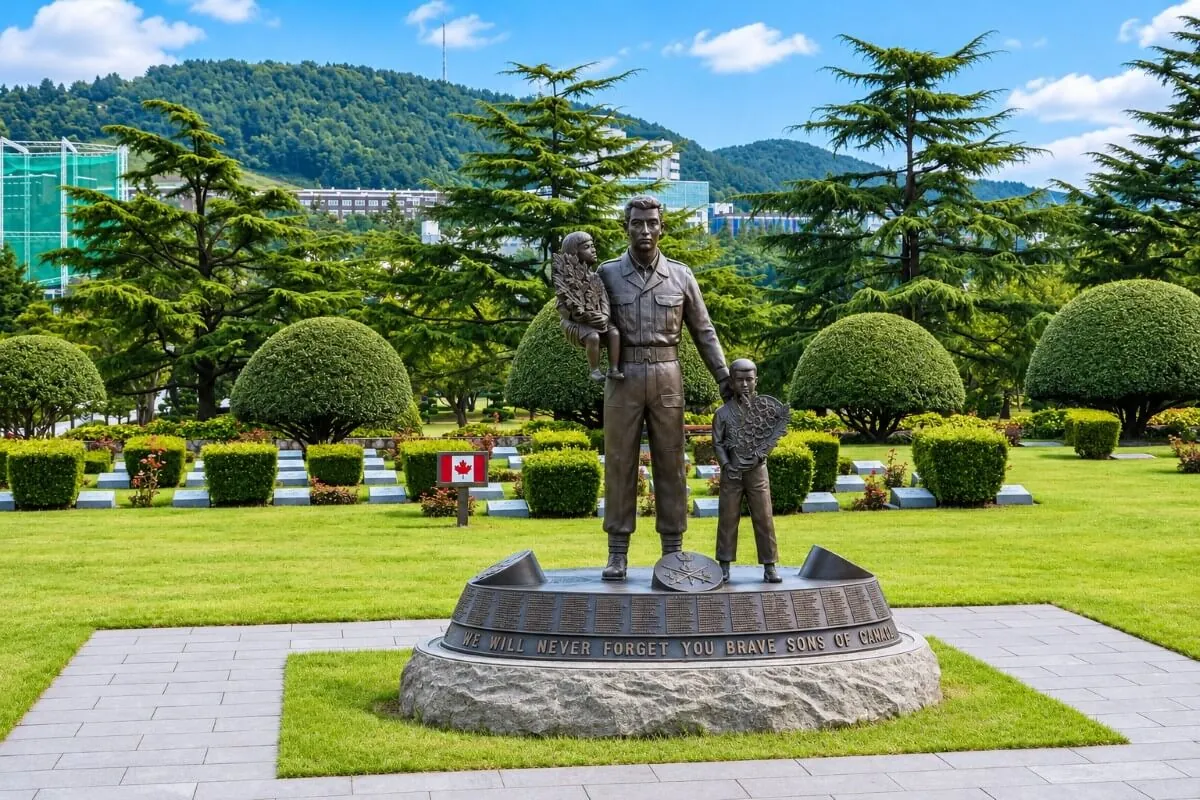
Busan
South Korea’s great southern port adds coastal history, colonial-era development, temples and major Korean War heritage. High-speed rail makes Busan an easy continuation from Seoul.

Gyeongju
The former Silla capital provides a powerful contrast with Seoul’s Joseon heritage. Royal tombs, Buddhist temples and palace remains reveal an earlier political and religious centre of the Korean Peninsula.

Incheon
Incheon adds open-port history, international settlements and the 1950 Korean War landing. Its historic port districts provide a useful modern-history counterpoint to Seoul’s royal centre.