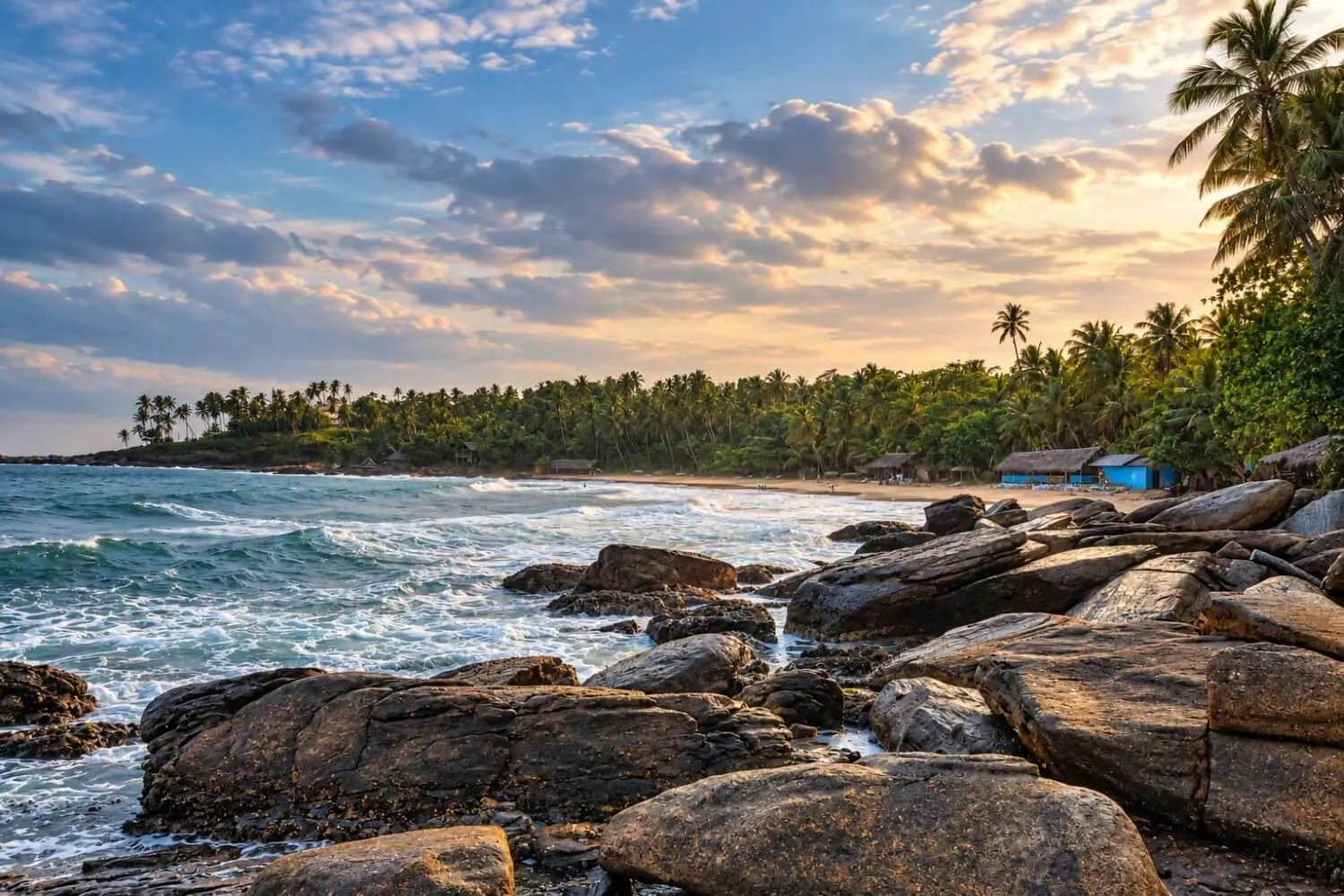
Tangalle
Buddhist landmarks, fishing heritage and tropical beaches
Discover Tangalle through its fishing harbour, Buddhist temples, coastal viewpoints and nearby south-coast heritage, with a practical three-day itinerary connecting Tangalle, Mulkirigala, Rekawa and Hambantota.
INTRODUCTION
Welcome to Tangalle
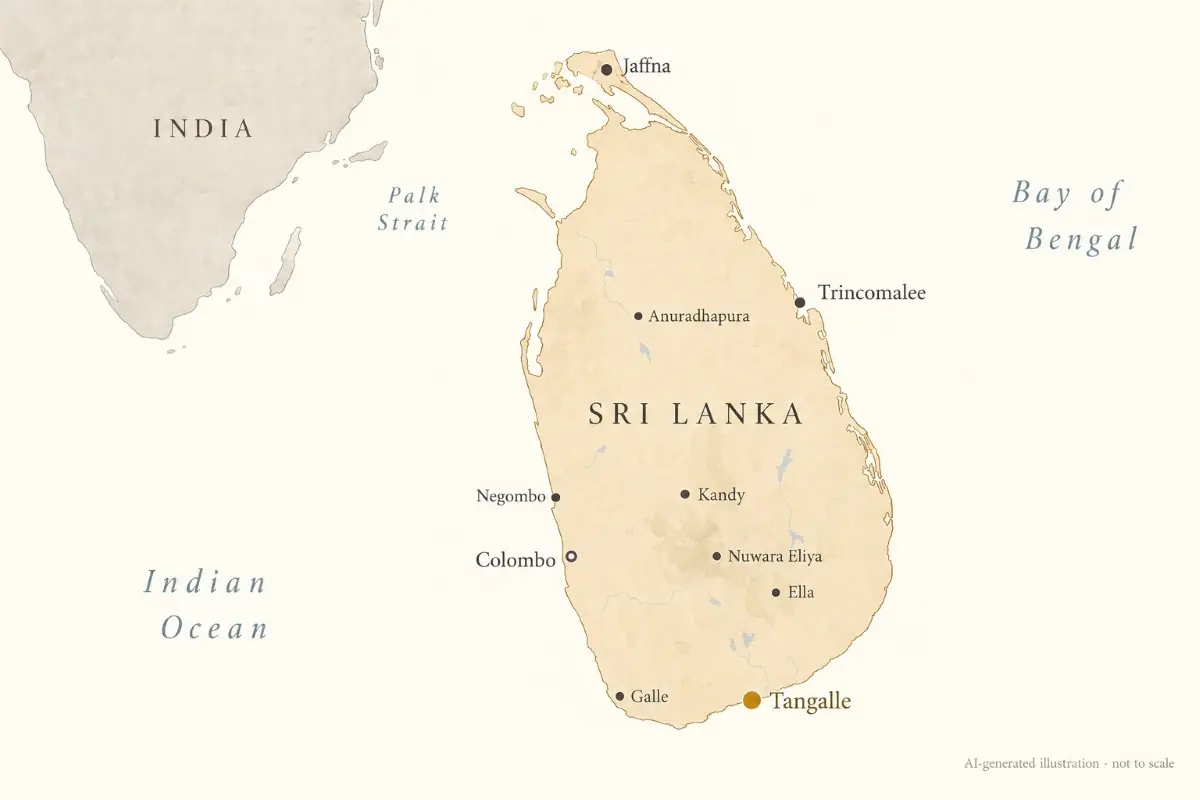
Tangalle is a historic town on Sri Lanka’s deep south coast, shaped by fishing, local trade, Buddhist culture and the wider history of the Hambantota district. Its harbour, temples, rock monasteries and nearby coastal landscapes reveal a quieter but deeply rooted side of southern Sri Lanka.
Two full days cover Tangalle’s essential coastal sights and nearby heritage, while a third allows time for Mulkirigala, Rekawa or Hambantota. Staying overnight also lets you experience the harbour and shoreline before and after the busiest daytime hours.
WHY VISIT
Why Visit Tangalle?
Tangalle combines a living fishing tradition with Buddhist heritage, tropical coastline and easy access to historic sites across Sri Lanka’s deep south. It works especially well for travellers who want to connect beach time with sacred places, local culture and regional history.
01
Fishing & Maritime Heritage
Tangalle’s identity is closely tied to the sea. Its fishing harbour, coastal communities and local boat culture preserve traditions that long predate the town’s modern tourism industry.
02
Buddhist Temples & Rock Monasteries
Buddhist temples and monastic sites around Tangalle connect the coast with the religious history of southern Sri Lanka. Mulkirigala in particular adds a dramatic rock-monastery landscape to a coastal itinerary.
03
Deep-South History & Trade
Tangalle developed within a southern coastal region shaped by trade, local kingdoms and later European influence. Nearby towns and old routes reveal how the deep south connected fishing settlements, monasteries and inland communities.
04
Gateway to Mulkirigala, Rekawa & Hambantota
Tangalle is well placed for short trips to Mulkirigala, Rekawa and Hambantota, where rock temples, wildlife, coastal settlements and regional history broaden the story of Sri Lanka’s deep south.
HISTORY
A Short History of Tangalle
Tangalle belongs to the historic southern region of Sri Lanka, where coastal settlements developed through fishing, local trade and links with inland kingdoms. The wider area formed part of the old Ruhuna cultural landscape and maintained long-standing connections between Buddhist centres, ports and agricultural communities.
From the sixteenth century, European competition reshaped the southern coastline. Portuguese, Dutch and later British influence altered coastal trade and administration, while local religious centres such as Mulkirigala continued to preserve older regional traditions.
Under British rule, roads strengthened connections between Tangalle and other southern towns. In the twentieth and twenty-first centuries, Tangalle remained an active fishing centre while also developing into a quieter beach destination with strong links to the wider Hambantota district.
KEY HISTORICAL MOMENT
18th–19th centuries
During the eighteenth and nineteenth centuries, Tangalle became more closely integrated into colonial-era coastal administration and road networks. These changes connected the town more strongly with Dickwella, Hambantota and the wider south coast.
TOP SIGHTS
Top Sights in Tangalle
These eight sights connect Tangalle’s fishing heritage, Buddhist culture and deep-south landscape. The harbour and shoreline are essential, but nearby Mulkirigala, Rekawa and Hambantota add much stronger historical and regional context.
1
Tangalle Fisheries Harbour
Tangalle Fisheries Harbour is one of the best places to understand the town beyond tourism. Fishing boats, auction activity and working waterfront infrastructure reveal the continuing importance of the sea to the local economy.
2
Tangalle Dutch Rest House Area
The historic core of Tangalle includes traces of colonial-era administration and roadside architecture. The old rest-house area and surrounding streets provide a useful introduction to the town’s later historical layers.
3
Tangalle Beach & Bay
Tangalle Beach & Bay is one of Tangalle’s best-known coastal viewpoints. Although famous for photography, it also provides a broad perspective over the headlands, reefs and bays that define the local shoreline.
4
Mulkirigala Rock Temple
Mulkirigala Rock Temple is one of the most important historic sites near Tangalle. A series of cave temples, painted interiors and shrines climb a dramatic rock outcrop and preserve centuries of Buddhist religious history.
5
Rekawa Lagoon
Rekawa Lagoon is a quiet wetland east of Tangalle, surrounded by mangroves and village landscapes. The area offers insight into how coastal communities have long depended on lagoons, fisheries and seasonal waterways.
6
Rekawa Turtle Beach
Rekawa Turtle Beach is best known for marine conservation, but it also highlights the relationship between coastal communities and the natural environment. Responsible visits add an ecological dimension to Tangalle’s cultural landscape.
7
Wewurukannala Vihara
Wewurukannala Vihara near Dickwella is known for its large Buddha image and extensive decorated interiors. The site adds twentieth-century Buddhist religious history to an itinerary otherwise dominated by coastal and colonial landmarks.
8
Hambantota Old Town & Salt Pans
Hambantota’s older townscape and salt-pan landscape reflect the economic history of Sri Lanka’s dry south-east. The area broadens a Tangalle visit beyond beaches and temples into regional trade and production.
THINGS TO DO
Things to Do in Tangalle
Tangalle works best when the beach is combined with the working coast and nearby heritage sites. Explore the harbour and shoreline, then add Mulkirigala, Rekawa and Hambantota for deeper historical context.
Explore Tangalle’s Maritime Side
Walk between the beach, harbour and coastal viewpoints with historical context. The route reveals how fishing, tourism and the natural shape of the bay all contribute to modern Tangalle.
EXPLORE TANGALLE HISTORY & COASTAL TOURS →
Visit Mulkirigala Rock Temple
Travel inland to Mulkirigala for cave temples, painted interiors and a dramatic sacred landscape that adds much stronger historical depth to a stay on the coast.
BROWSE MULKIRIGALA & TANGALLE TOURS →
Explore Rekawa Lagoon
Visit the Wewurukannala Vihara to add prehistoric and early historic archaeology to your Tangalle itinerary. The burial site gives a very different perspective on the region before the great Buddhist kingdoms.
DISCOVER REKAWA & TANGALLE TOURS →
Explore Hambantota & the Deep South
Continue east towards Hambantota for salt-pan landscapes, regional history and a broader look at Sri Lanka’s dry southern coast.
EXPLORE TANGALLE & HAMBANTOTA TOURS →
SUGGESTED ITINERARY
3 Days in Tangalle
Three days allow you to experience Tangalle beyond the beach. Use the first day for the harbour and coastline, the second for Mulkirigala and nearby temples, and the third for Rekawa or Hambantota.
DAY 1
Tangalle Harbour & Coastal Heritage
MORNING
Begin at Tangalle Fisheries Harbour before the heat builds, then continue towards the beach and Tangalle Dutch Rest House Area. The morning is the best time to see the working side of the town.
AFTERNOON
After lunch, walk or take a tuk-tuk to Tangalle Beach & Bay and explore the eastern side of the bay. Use the afternoon to connect the natural coastline with the town’s modern tourism story.
EVENING
Spend the evening in central Tangalle or along the beach. Sunset provides a calmer view of the bay after the busiest daytime hours.
DAY 2
Mulkirigala, Dickwella & Buddhist Heritage
MORNING
Start at the Wewurukannala Vihara to explore a much earlier layer of regional archaeology. The site is compact and works well before the strongest midday heat.
AFTERNOON
Continue towards Dickwella in the afternoon for Wewurukannala Vihara or another nearby Buddhist site. The contrast with Mulkirigala shows different periods of southern religious architecture.
EVENING
Return to Tangalle in the evening for dinner and a relaxed walk along the coast.
DAY 3
Rekawa Lagoon & Hambantota
MORNING
Start early for Rekawa Lagoon and the surrounding village landscape, when the wetlands are cooler and more active.
AFTERNOON
Spend the afternoon at Wewurukannala Vihara or another nearby cultural site, then return along the coast towards Tangalle.
EVENING
Return to Tangalle for a final evening meal and one last sunset walk along the beach.
WHERE TO STAY
Where to Stay in Tangalle
Tangalle has a wide range of guesthouses, boutique hotels and beach stays. Choose central Tangalle for restaurants and the harbour, the eastern beaches for quieter coves, Rekawa for nature and seclusion, or Dickwella for easier access to additional temples and beaches.
01
Central Tangalle & Main Bay
Stay near the main bay for the easiest access to restaurants, the harbour and central Tangalle. This is the most practical choice for a first visit.
FIND HOTELS IN CENTRAL TANGALLE →
02
Eastern Tangalle Beaches
The eastern side of Tangalle near Tangalle Beach & Bay offers quieter stays and easy access to the viewpoint and Tangalle Fisheries Harbour. It suits travellers who prioritise walking and scenery.
BROWSE STAYS IN EASTERN TANGALLE →
03
Rekawa
Rekawa is a practical alternative base with a railway station, wider beach and easy road access to Tangalle. It works well for travellers combining both towns.
FIND STAYS IN REKAWA →
04
Dickwella
Dickwella offers more urban services, transport connections and direct access to colonial heritage. It is a useful base if history is as important to you as the beach.
EXPLORE STAYS IN DICKWELLA →
GETTING AROUND
Getting Around Tangalle
Central Tangalle is compact enough for walking, but Mulkirigala, Rekawa, Dickwella and Hambantota require local transport. Tuk-tuks, buses and private cars are useful depending on the distance.
On Foot
The main bay, harbour and central streets can be explored on foot, though the tropical heat can make longer walks tiring. Early mornings and late afternoons are most comfortable.
By Bus
Local buses run frequently along the southern coastal road, connecting Tangalle with Rekawa, Dickwella and other nearby towns. They are inexpensive and useful for short regional journeys.
By Train
Tangalle is served by the coastal railway, while Rekawa and Dickwella provide additional connections and more frequent transport options. Trains are useful for travel towards Galle, Colombo and other south-coast towns.
From Colombo & Bandaranaike International Airport
From Colombo, Tangalle is usually reached by road via Tangalle or Rekawa. Travellers arriving at Bandaranaike International Airport can continue by private transfer, bus connections or a combination of rail and road.
By Tuk-Tuk, Bus & Car
Tuk-tuks are ideal for short trips around Tangalle and nearby beaches, buses are useful along the coast, and a car or driver is convenient for Mulkirigala, Rekawa and Hambantota.
BEST TIME TO VISIT
Best Time to Visit Tangalle
Tangalle is warm year-round, but the south-west monsoon affects the deep south. December to April usually brings the driest and calmest conditions, while May to September is wetter and the sea can be rougher.
December–April
DRIER SEASON
December to April usually offers the best conditions for beach time, coastal sightseeing and regional day trips, with lower rainfall and generally calmer seas.
May–September
HOT & DRY
May to September brings the south-west monsoon, with more rain, stronger winds and rougher sea conditions. Inland temples and regional sights remain easy to visit between showers.
October–November
VARIABLE & WETTER LATE SEASON
October and November are transitional months, with variable weather before the drier south-coast season begins. Conditions can improve quickly from late November onward.
BEST OVERALL TIME
January–March
January to March usually offers the best balance of dry weather, calmer seas and comfortable conditions for exploring Tangalle and the surrounding deep south.
Next Destinations
Matara
Travel west to Matara for Dutch fortifications, civic history, temples and one of the south coast’s most important historic towns.
EXPLORE MATARA →
Mirissa
Continue west to Mirissa for fishing heritage, coastal viewpoints and easy access to Weligama and Matara.
Galle
Continue west to Galle for its UNESCO-listed fort, Dutch colonial streets, bastions and Indian Ocean setting.
Ella
Travel inland to Ella for tea-country railway heritage, Nine Arches Bridge and mountain landscapes.