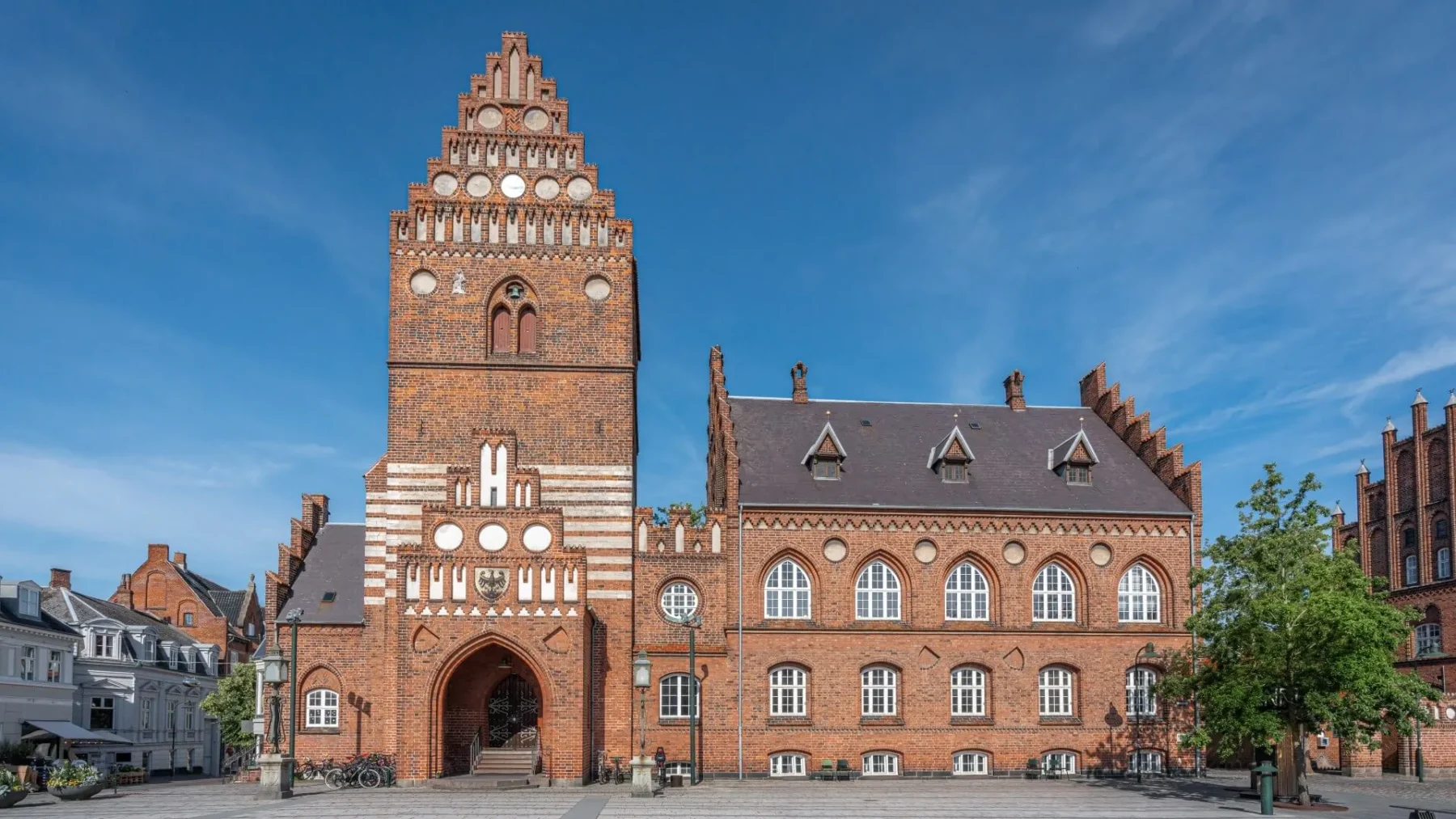
denmark
Roskilde
Where Viking heritage, royal history and fjord landscapes meet
Discover Roskilde’s Viking ships, royal cathedral, medieval streets and peaceful fjord, where more than a thousand years of Danish history remain visible within a compact and easy-to-explore city.
INTRODUCTION
Introduction
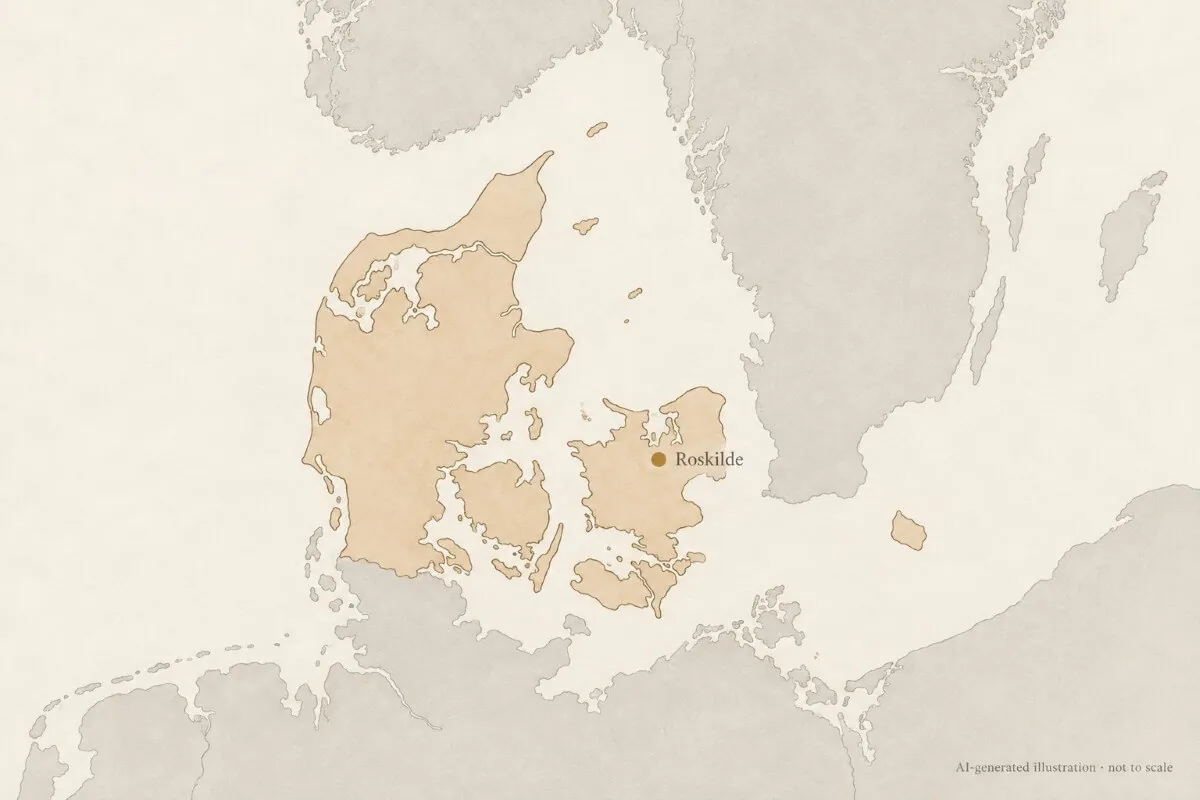
Roskilde is one of Denmark’s oldest and most historically important cities, set above the southern reaches of Roskilde Fjord on the island of Zealand. Once a major royal and ecclesiastical centre, the city developed around its medieval cathedral, trading routes and access to the fjord.
Visitors come for the UNESCO-listed Roskilde Cathedral and the remarkable Viking Ship Museum, but the city offers much more. Medieval remains, old streets, waterfront scenery, museums and the creative Musicon district create an appealing combination of Danish history, culture and relaxed fjord-side life.
WHY VISIT
Why visit Roskilde?
Roskilde brings together some of Denmark’s most important Viking, royal and medieval history in a compact city west of Copenhagen. From reconstructed Viking ships to royal tombs and fjord landscapes, many of the country’s defining historical stories come together here.
01
Viking Maritime History
Five original Viking ships recovered from Roskilde Fjord reveal how seafaring shaped trade, warfare and travel during the Viking Age. The Viking Ship Museum brings this maritime world to life through archaeology, reconstructed vessels and traditional boatbuilding.
02
Royal & Medieval Heritage
Roskilde was one of medieval Denmark’s most important royal and religious centres. Its cathedral, archaeological remains, monastery sites and historic street pattern preserve centuries of bishops, kings and powerful church institutions.
03
Roskilde Fjord
The city descends towards Roskilde Fjord, whose waters have supported settlement, trade, fishing and defence for thousands of years. Today the waterfront combines harbour life, walking routes, sailing and broad views across a historically important cultural landscape.
04
Compact Cultural City
Major historic sights are close enough to explore on foot, while modern Roskilde adds museums, cafés, public spaces and the creative Musicon quarter. This compact scale makes it easy to experience very different periods of Danish history and culture without rushing.
HISTORY
A short history of Roskilde
Roskilde probably emerged around the late tenth century, when the area became associated with King Harald Bluetooth and an early royal and Christian centre. Its position above the fjord and at the meeting point of important routes across Zealand helped the settlement develop rapidly.
By the eleventh century, Roskilde was a bishopric and one of Denmark’s leading cities. Medieval wealth brought churches, monasteries, defensive earthworks and a powerful cathedral establishment. Construction of the present brick cathedral began in the late twelfth century, while Roskilde’s political importance gradually declined as Copenhagen became the preferred royal centre.
The Reformation of 1536 ended much of the city’s medieval ecclesiastical power, although the cathedral retained its role as Denmark’s great royal burial church. Later growth followed the opening of Denmark’s first railway between Copenhagen and Roskilde in 1847. Today Viking archaeology, medieval streets, church ruins and royal monuments preserve these different historical layers.
KEY HISTORICAL MOMENT
1022
Gerbrand became bishop of Roskilde, confirming the city’s growing role as an important ecclesiastical centre. Over the following centuries, the bishopric accumulated substantial influence and wealth, helping turn medieval Roskilde into one of Denmark’s foremost religious and political cities.
TOP SIGHTS
Top sights in Roskilde
Roskilde is compact enough to explore at a relaxed pace, yet its streets, museums and waterfront contain some of Denmark’s most important historical sites. These are the places that best reveal the city’s Viking, medieval and royal past.
1
Roskilde Cathedral
A UNESCO World Heritage Site and royal burial church where centuries of Gothic architecture, chapels and elaborate tombs tell the story of Denmark’s monarchy.
2
Viking Ship Museum
Built around five original eleventh-century ships recovered from Roskilde Fjord, this outstanding museum explores Viking seafaring, shipbuilding, archaeology and experimental reconstruction.
3
Roskilde Museum
Discover more than a thousand years of local history through archaeological finds and exhibitions housed in two historic buildings in the old town.
4
St Lawrence Church Ruins
Hidden beneath Stændertorvet, the excavated remains of a medieval church preserve an unusually early brick floor and reveal another layer of Roskilde’s religious past.
5
Roskilde Monastery
A peaceful historic complex with roots in a thirteenth-century Dominican friary, later transformed into Denmark’s first foundation for unmarried noblewomen.
6
St Jørgensbjerg
Explore an atmospheric historic quarter overlooking the fjord, with narrow lanes, traditional cottages and St Jørgensbjerg Church, one of the area’s oldest surviving stone churches.
7
Roskilde Harbour & Fjord
Walk beside the marina and museum harbour where Roskilde’s long relationship with the water continues amid traditional wooden boats, fjord views and paths towards the surrounding landscape.
8
RAGNAROCK
This striking museum in the Musicon district explores Danish rock, pop and youth culture, connecting Roskilde’s medieval heritage with its internationally known modern music identity.
THINGS TO DO
Things to Do in Roskilde
Explore Roskilde through experiences centred on Vikings, Danish royalty and historic landmarks. GetYourGuide’s local selection is relatively compact, but several genuine tours combine the cathedral, Viking ships and wider Zealand heritage.
Discover Viking & Royal Roskilde
Visit the cathedral and Viking Ship Museum with guided historical context covering Roskilde’s role as an early royal city, Denmark’s monarchs and the maritime world of the Vikings.
Join a Private Roskilde Walking Tour
Walk from the cathedral through Byparken towards the waterfront with a local guide, hearing stories connected with the city’s past while exploring some of its most recognisable historic places.
Take a Danish Royal Heritage Day Tour
Combine Roskilde Cathedral and the Viking Ship Museum with the royal castles of North Zealand on a full-day guided excursion exploring several major chapters of Danish history.
See the Cathedral, Viking Ships & Frederiksborg
Choose a slower-paced heritage excursion combining guided history at Roskilde Cathedral, the Viking Ship Museum and time at Frederiksborg Castle in Hillerød.
Suggested Itenary
3 Days in Roskilde
Three days give you enough time to explore Roskilde’s royal, Viking and medieval heritage without rushing, while leaving room for the fjord, historic neighbourhoods and the city’s modern cultural side.
DAY 1
Royal Roskilde & Medieval Centre
MORNING
Begin at Roskilde Cathedral and spend time exploring its royal tombs, chapels and changing architectural styles. Afterwards, walk around Domkirkepladsen and the surrounding medieval street pattern.
AFTERNOON
Continue to Stændertorvet and descend beneath the square to the St Lawrence Church ruins. Visit Roskilde Museum afterwards for broader context on the city’s development from its earliest settlement to modern times.
EVENING
Walk through the old centre along Algade and Skomagergade before finding dinner near the central streets or Hestetorvet.
DAY 2
Vikings, Harbour & Fjord
MORNING
Walk downhill through Byparken towards the Viking Ship Museum. Give the museum enough time for the five original ships, exhibitions and working boatyard.
AFTERNOON
Explore the museum harbour and Roskilde Harbour. From May to September, consider adding one of the Viking Ship Museum’s seasonal sailing experiences on Roskilde Fjord.
EVENING
Follow the waterfront or walk towards St Jørgensbjerg for quiet lanes, historic cottages and views back towards the city before returning for dinner.
DAY 3
Monastery, Music & Modern Roskilde
MORNING
Visit Roskilde Monastery on a guided opening if available, then explore more of the historic centre and the city’s old springs or smaller heritage sites.
AFTERNOON
Head south of the railway station to Musicon. Visit RAGNAROCK for the story of Danish rock, pop and youth culture, then walk through the district’s converted industrial spaces and contemporary architecture.
EVENING
Return towards the centre for a relaxed final evening, or check the programmes at local cultural venues if you would like to finish your stay with live music.
WHERE TO STAY
Where to Stay in Roskilde
Roskilde is compact, so most visitors can stay within easy reach of the main sights. The best choice depends on whether you prioritise medieval landmarks, railway connections, waterfront atmosphere or quieter surroundings.
01
Historic Centre
The most convenient area for first-time visitors, with Roskilde Cathedral, Stændertorvet, museums, pedestrian streets, restaurants and the railway station all within walking distance.
FIND HOTELS IN CENTRAL ROSKILDE →
02
Roskilde Harbour
Stay closer to the fjord for a quieter waterfront atmosphere near the Viking Ship Museum, marina and walking routes, while remaining within reasonable walking distance of the historic centre.
VIEW ROSKILDE WATERFRONT STAYS →
03
Station & Hestetorvet
Useful for travellers arriving by rail or planning day trips. This central area provides quick access to trains, shops and restaurants while keeping the cathedral and old town comfortably walkable.
FIND STAYS NEAR ROSKILDE STATION →
04
Ringparken & Southern Roskilde
A calmer option south of the centre, suited to travellers who value green surroundings, parking and access towards Musicon. The historic centre is still close enough to reach on foot, bicycle or local bus.
BROWSE HOTELS IN ROSKILDE →
GETTING AROUND
Getting Around Roskilde
Roskilde’s historic centre is compact and much of the city is easy to explore without a car. Walking works well for the cathedral and old town, while bicycles, trains and local buses make it simple to reach the waterfront, outer districts and the surrounding fjord landscape.
On Foot
Walking is the easiest way to explore central Roskilde. The railway station, Stændertorvet, Roskilde Cathedral, Byparken and most central museums are all close together, while the Viking Ship Museum is reached by a pleasant downhill walk towards the fjord.
By Train
Roskilde Station is one of Zealand’s main railway hubs and has frequent connections to Copenhagen and other Danish destinations. Copenhagen Central Station is roughly half an hour away on many services, making Roskilde particularly easy to visit without a car.
By Bicycle
Cycling is a practical way to explore beyond the historic centre. It is especially useful for reaching Musicon, St Jørgensbjerg, Roskilde Harbour and routes around the fjord, while also opening up more of the surrounding countryside.
By Local Bus
Local buses are most useful for accommodation and attractions beyond the walkable centre, including residential districts in northern and southern Roskilde. Journey planning is easiest through Rejseplanen, which combines bus and rail connections in one place.
BEST TIME TO VISIT
Best Time to Visit Roskilde
Roskilde works well throughout the year, although outdoor experiences around the fjord are strongest from late spring to early autumn. Summer brings the longest days and seasonal sailing, while colder months favour museums and indoor historic sights.
Spring
APRIL TO MAY
Longer days and gradually milder weather make spring an excellent period for walking between the cathedral, harbour and old town. Visitor numbers are generally more manageable than in midsummer, while the parks and fjord landscape become increasingly green.
Summer
JUNE TO AUGUST
Summer offers long daylight hours and the best conditions for waterfront walks, cycling and seasonal sailing trips from the Viking Ship Museum. Accommodation demand can rise sharply around Roskilde Festival, which is normally held from late June into early July.
Autumn & Winter
SEPTEMBER TO MARCH
Expect cooler conditions, shorter days and more changeable weather, especially later in the year. The city is quieter outside major events, while the cathedral, Viking Ship Museum, Roskilde Museum and RAGNAROCK provide strong indoor options for history-focused visits.
BEST OVERALL TIME
May to September
Late spring through early autumn offers the most flexible combination of long days, pleasant sightseeing conditions and fjord activities. For a quieter visit, choose May or September; around the annual Roskilde Festival, book accommodation well ahead.
Next Destinations
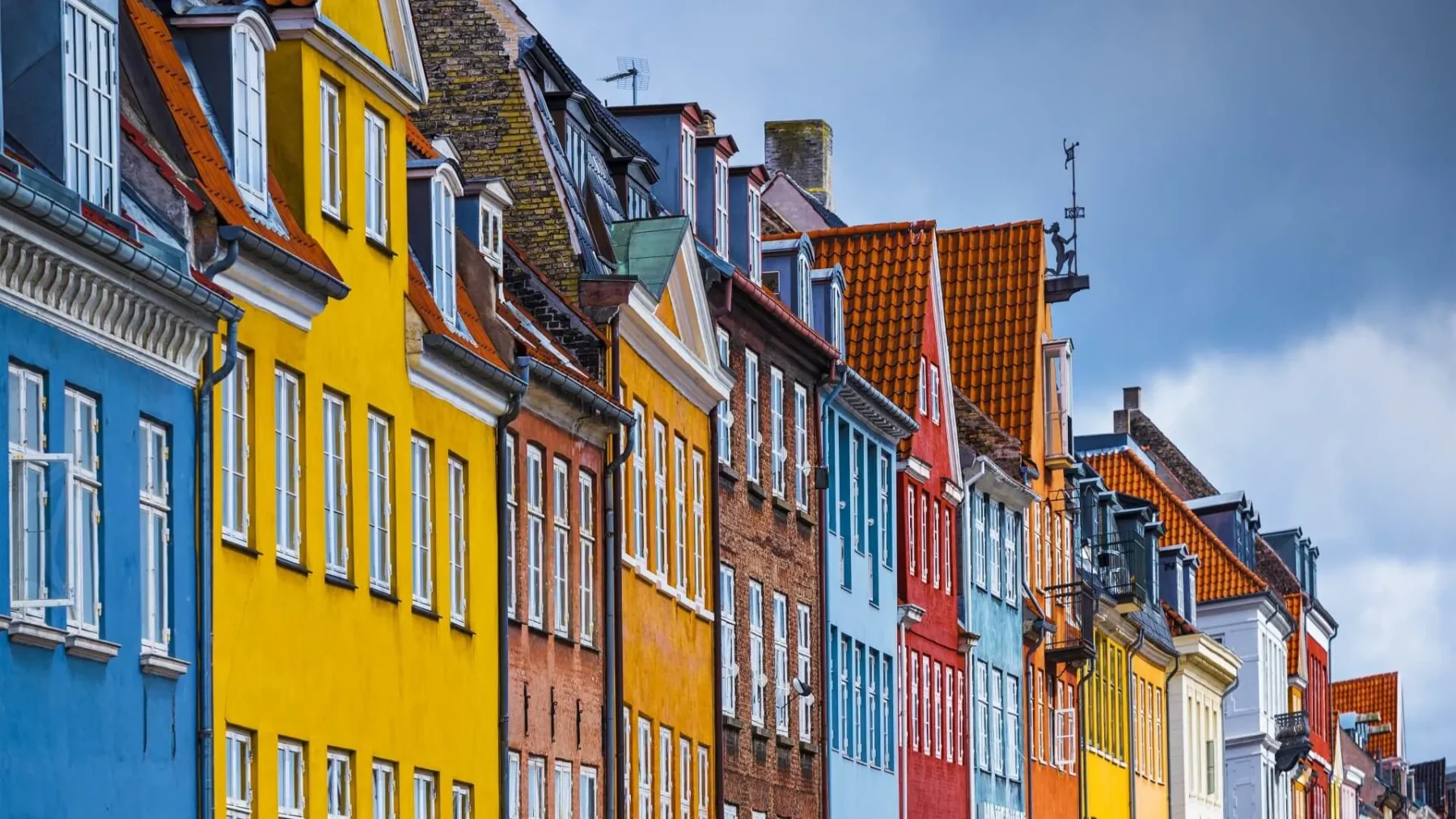
Copenhagen
Explore Denmark’s capital through royal palaces, historic harbour districts, churches and museums spanning centuries of political, maritime and urban history.
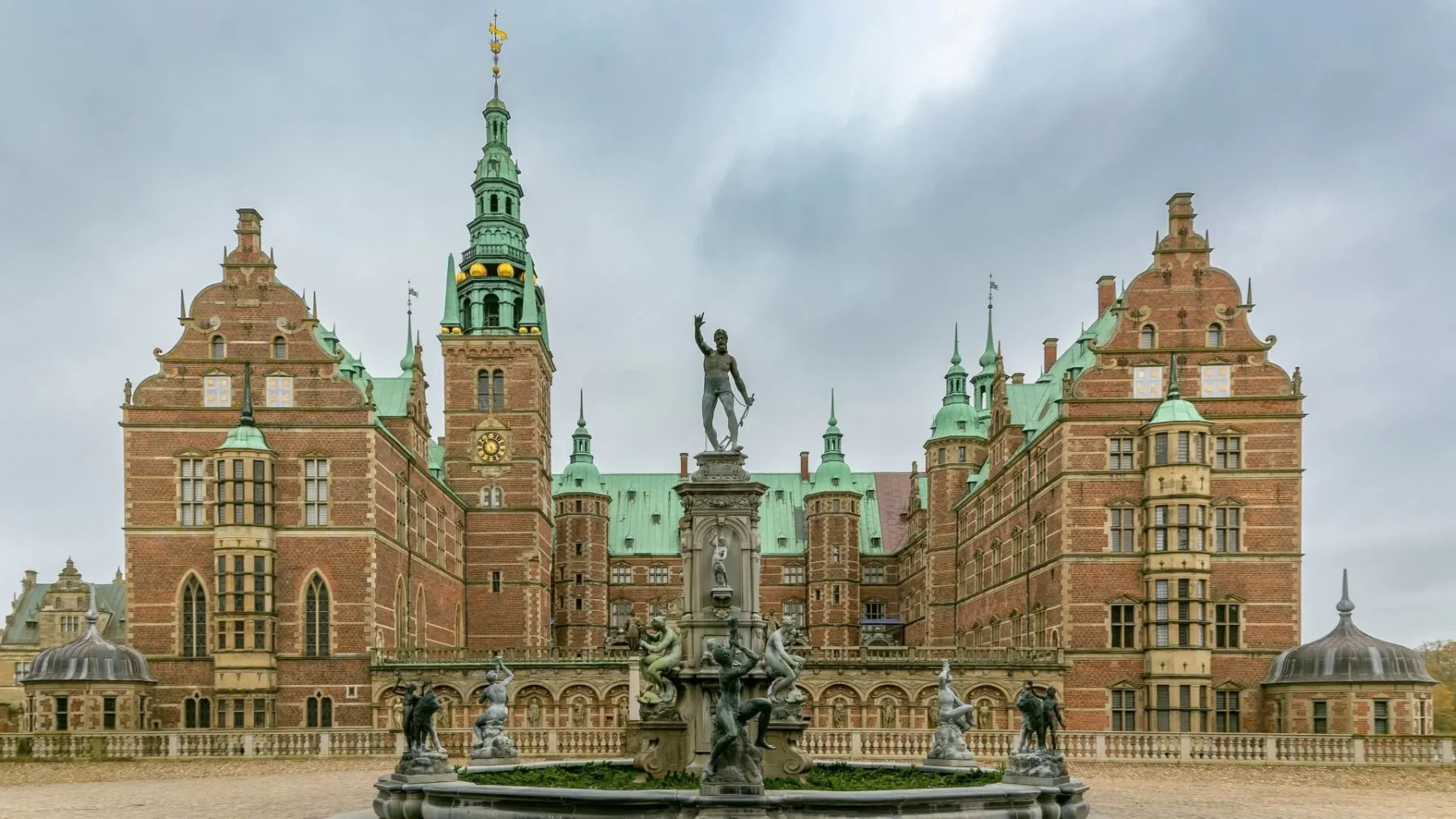
Hillerød
Discover Frederiksborg Castle, a spectacular Renaissance palace surrounded by a lake and formal gardens, with richly decorated interiors and Denmark’s Museum of National History.
EXPLORE HILLERØD →
Helsingør
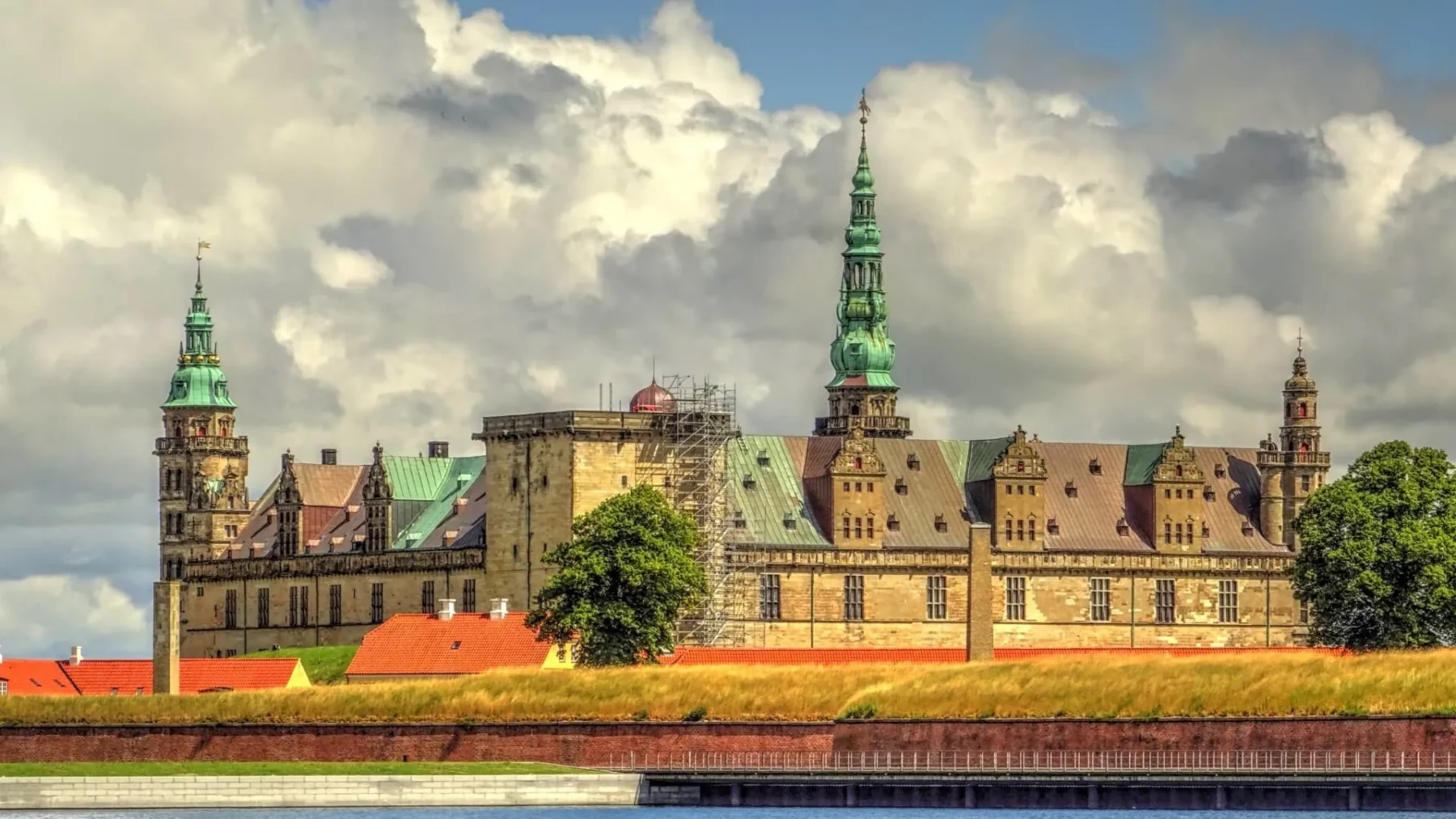
Explore the narrow streets of this historic Øresund port and visit Kronborg Castle, the great Renaissance fortress associated internationally with Shakespeare’s Hamlet.
EXPLORE HELSINGØR →