
Incheon
Where Korea’s open-port history, migration and maritime frontiers meet
Discover Incheon’s open-port district, Chinatown, Korean War sites, island fortresses and prehistoric monuments, where Korea’s modern international history meets a much older Yellow Sea frontier.
INTRODUCTION
Introduction
Incheon lies on South Korea’s north-western coast, where the Han River approaches the Yellow Sea. Long before the modern port developed, the wider region included ancient settlements, coastal fortresses and the strategically important island of Ganghwa.
Incheon changed dramatically after Jemulpo Port opened to international trade in 1883. Foreign settlements, warehouses, railways and new institutions reshaped the waterfront, while the 1950 Incheon Landing gave the city a central place in Korean War history. Today these layers sit beside Songdo, Incheon International Airport and a broad archipelago of islands.
WHY VISIT
Why Visit Incheon?
Incheon is one of South Korea’s best destinations for understanding the country’s encounter with the modern world. Open-port architecture, migrant communities, Korean War sites and the older fortresses of Ganghwa reveal how trade, empire, conflict and international exchange shaped Korea’s western gateway.
01
Korea’s Historic Open Port
Jemulpo Port opened in 1883, turning Incheon into a major gateway for international trade and new ideas. The surviving Open Port district preserves streets, former banks, warehouses and administrative buildings connected with this transformation.
02
Ganghwa’s Ancient & Joseon Heritage
Ganghwa Island adds a much deeper historical layer. Its prehistoric dolmens form part of a UNESCO World Heritage property, while mountain fortresses, temples and coastal defence sites record centuries of strategic importance near the mouth of the Han River.
03
Chinatown & International Settlements
Incheon’s Chinatown developed after the port opened and remains closely tied to the history of Chinese migration and commerce in Korea. Nearby streets preserve traces of Japanese, Chinese and other foreign settlement zones from the late nineteenth and early twentieth centuries.
04
The Incheon Landing & Modern Korea
On 15 September 1950, United Nations forces carried out the Incheon Landing during the Korean War. Memorials, museums and coastal locations around the city preserve the memory of an operation that changed the course of the conflict.
HISTORY
A Short History of Incheon
Incheon’s earliest recorded names include Michuhol and Maesohol-hyeon, reflecting the region’s long history before the modern city emerged. Its coastal position and proximity to the Han River made the area strategically important to successive Korean kingdoms.
Ganghwa Island repeatedly became a defensive frontier during periods of invasion and foreign pressure. In the nineteenth century, French and American military expeditions attacked Ganghwa before the Treaty of Ganghwa in 1876 accelerated Korea’s opening to foreign relations.
Jemulpo Port opened in 1883, bringing foreign settlements, modern infrastructure and international trade to Incheon. The city later became a major colonial port and industrial centre. During the Korean War, the Incheon Landing of September 1950 made the port a decisive military objective; post-war growth eventually extended into Songdo, Yeongjong and other reclaimed coastal districts.
KEY HISTORICAL MOMENT
1883
On 1 January 1883, Jemulpo Port opened to international trade. The event transformed Incheon into one of Korea’s principal gateways to the outside world and created the multicultural urban landscape still visible in the Open Port district.
TOP SIGHTS
Top Sights in Incheon
Incheon’s historical sights are spread across the old port, Wolmido, Songdo and Ganghwa Island. The Open Port district is compact enough to explore on foot, while Ganghwa rewards a full day for prehistoric monuments, temples and coastal fortifications.
1
Incheon Open Port Area
The streets around the former Jemulpo Port preserve the clearest physical record of Incheon’s transformation after 1883. Former banks, warehouses, consular-era buildings and museums reveal the city’s emergence as Korea’s international maritime gateway.
2
Incheon Chinatown
Established after the port opened, Incheon Chinatown reflects the growth of a Chinese merchant community beside the foreign settlement zones. Its streets combine food culture, migration history and late nineteenth-century urban heritage.
3
Jayu Park
Opened in the late nineteenth century on a hill above the port, Jayu Park is closely tied to the modern history of Incheon. Today it offers views over Chinatown, the harbour and the old centre, together with monuments connected with the Korean War.
4
Wolmido
Wolmido guarded the approaches to Incheon Harbour and became strategically important during the Korean War. The island is now linked to the mainland, combining waterfront walks and entertainment with locations associated with the 1950 landing.
5
Incheon Landing Operation Memorial Hall
This memorial complex explains the planning and execution of the September 1950 Incheon Landing. Exhibitions, maps and military displays help place the operation within the wider course of the Korean War.
6
Ganghwa Dolmen Sites
Ganghwa preserves an important concentration of prehistoric dolmens included in the UNESCO-listed Gochang, Hwasun and Ganghwa Dolmen Sites. The monuments reveal elite burial traditions dating back to Korea’s prehistoric Bronze Age societies.
7
Gwangseongbo Fortress
Gwangseongbo is one of Ganghwa’s best-preserved coastal defence sites. It is especially associated with the 1871 conflict between Joseon Korea and the United States, making it a key place for understanding the pressures that preceded Korea’s opening.
8
Jeondeungsa Temple
Set within the fortified Samnangseong area on Ganghwa, Jeondeungsa is one of the island’s most important Buddhist temples. Its architecture and long religious history add a spiritual dimension to Ganghwa’s military and political heritage.
THINGS TO DO
Things to Do in Incheon
Incheon works best when its history is explored across several contrasting landscapes: the compact Open Port district, the wartime waterfront around Wolmido, the modern reclaimed city of Songdo and the much older island heritage of Ganghwa.
Walk the Open Port Heritage Route
Walk from Incheon Station through Chinatown, the former foreign settlement streets, Jayu Park and the Open Port museums. The route is the best introduction to how trade, migration and imperial competition reshaped the city after 1883.
Follow the Incheon Landing Story
Combine Wolmido with the Incheon Landing Operation Memorial Hall and other Korean War sites. Seeing the geography of the harbour makes the scale and risk of the September 1950 operation much easier to understand.
Explore Ganghwa Island
Spend a full day on Ganghwa visiting dolmens, coastal fortresses and historic temples. The island brings together prehistoric archaeology, Joseon defence and nineteenth-century encounters with foreign powers.
Compare Old Incheon with Songdo
Move from nineteenth-century Jemulpo to the planned skyline of Songdo International City. The contrast between reclaimed waterfront, international institutions and the old harbour makes Incheon’s continuing role as a gateway especially visible.
SUGGESTED ITINERARY
3 Days in Incheon
Three days allow enough time to explore Incheon’s Open Port heritage, Korean War history and Ganghwa Island without rushing. Travellers with only one day should focus on Chinatown, the Open Port district and Wolmido.
DAY 1
Open Port Incheon & Chinatown
MORNING
Begin at Incheon Station and enter Chinatown before the busiest part of the day. Explore the historic streets and migration history before continuing into the former international settlement and Open Port district.
AFTERNOON
Continue through the Open Port district, visit its museums and former foreign-settlement streets, then climb to Jayu Park. The route moves from migration and trade history to panoramic views over the old harbour.
EVENING
Finish at Wolmido for a waterfront walk and sunset. The harbour views provide a natural transition from the nineteenth-century port story to Incheon’s twentieth-century military history.
DAY 2
The Incheon Landing & Modern Waterfront
MORNING
Start with the Incheon Landing Operation Memorial Hall for a chronological introduction to the September 1950 operation. Afterwards, continue towards the waterfront to connect the museum narrative with the geography of the harbour.
AFTERNOON
Spend the afternoon in Songdo, visiting the Incheon Urban History Museum and walking through the planned waterfront district. Its reclaimed landscape shows a very different phase of Incheon’s development as an international city.
EVENING
Stay in Songdo for dinner or return to the old centre. The contrast between modern towers and the historic port makes this one of the most revealing days in the itinerary.
DAY 3
Ganghwa Island: Dolmens, Fortresses & Temples
MORNING
Begin at Gwangseongbo Fortress and the nearby Independence Gate area. The exhibitions provide essential context for Japanese colonial rule and the independence movement.
AFTERNOON
Continue to Deoksugung and the Jeong-dong district, where royal, diplomatic and Western-style architecture reflects the political upheavals of the late nineteenth and early twentieth centuries. Alternatively, spend the afternoon at the Jeondeungsa Temple.
EVENING
Return to central Incheon in the evening. If you are continuing to Seoul, Ganghwa also works as the final historical stop before travelling back towards the capital region.
WHERE TO STAY
Where to Stay in Incheon
Incheon covers a very large area, so the best base depends on your priorities. History-focused visitors should consider Jung-gu near the Open Port district, while Songdo suits modern-city stays and Unseo is convenient for Incheon International Airport.
01
Jung-gu & Open Port Area
The best choice for visitors prioritising history. Chinatown, Jayu Park, the Open Port district and Wolmido are close, and Incheon Station provides direct rail access towards Seoul.
FIND HOTELS IN JUNG-GU →
02
Songdo International City
Songdo offers modern hotels, parks and easy access to the Incheon Urban History Museum. It suits business travellers and visitors who want contemporary Incheon rather than the historic port atmosphere.
BROWSE STAYS IN SONGDO →
03
Wolmido
Wolmido works well for a short leisure stay near the waterfront, especially for evening views and access to the old port. It is more relaxed than Songdo but less convenient for exploring eastern Incheon.
FIND STAYS NEAR WOLMIDO →
04
Unseo & Airport Area
Unseo and the airport area are practical for early flights, late arrivals and short stopovers. Airport Railroad services also make it possible to connect directly with Seoul and parts of central Incheon.
FIND HOTELS NEAR INCHEON AIRPORT →
GETTING AROUND
Getting Around Incheon
Incheon is geographically extensive, with historic districts, Songdo, the airport and Ganghwa spread far apart. Rail works well for the old centre and Songdo, while buses, taxis or a car become more useful for Ganghwa and outer coastal sites.
On Foot
Walking is ideal in the Open Port district. Chinatown, Jayu Park, historic settlement streets and several museums are close together, and Wolmido can be added with local transport or a longer walk.
By Bus
Local and regional buses connect central Incheon with districts beyond the rail network and are especially important for Ganghwa Island. Travel times can be substantial because of the city’s size.
By Taxi
Taxis are useful for linking scattered attractions, particularly around Songdo, Wolmido and less convenient coastal districts. They can save considerable time when several sites are being combined in one day.
By Subway
Seoul Subway Line 1 reaches Incheon Station and the historic centre, while Incheon Subway lines serve districts including Songdo. Airport Railroad services connect Incheon International Airport with Seoul and transfer points across the metropolitan area.
BEST TIME TO VISIT
Best Time to Visit Incheon
Incheon can be visited year-round, but spring and autumn offer the most comfortable conditions for the Open Port district, Wolmido and Ganghwa’s outdoor heritage. Summer is humid and rainy, while winter is cold, windy and often clearer.
Spring
APRIL TO MAY
Spring brings milder temperatures, flowering trees and comfortable conditions for the long outdoor walks required at the Temple and Jayu Park. April and May are particularly pleasant, although public holidays can bring noticeably larger domestic visitor numbers.
Summer
JUNE TO AUGUST
June to August is hot, humid and affected by seasonal rainfall. Museums in the old port and Songdo provide useful indoor alternatives, while coastal areas can feel cooler but remain exposed to rain and wind.
Autumn & Winter
SEPTEMBER TO MARCH
September through early November usually brings excellent conditions for Ganghwa and the waterfront. Winter is cold and often windy along the coast, but the Open Port district remains rewarding and major museums are quieter.
BEST OVERALL TIME
April to May & September to October
Mid-spring and early autumn provide the best balance of mild weather, daylight and comfortable conditions for walking, island heritage and coastal sightseeing without the humidity of midsummer.
Next Destinations
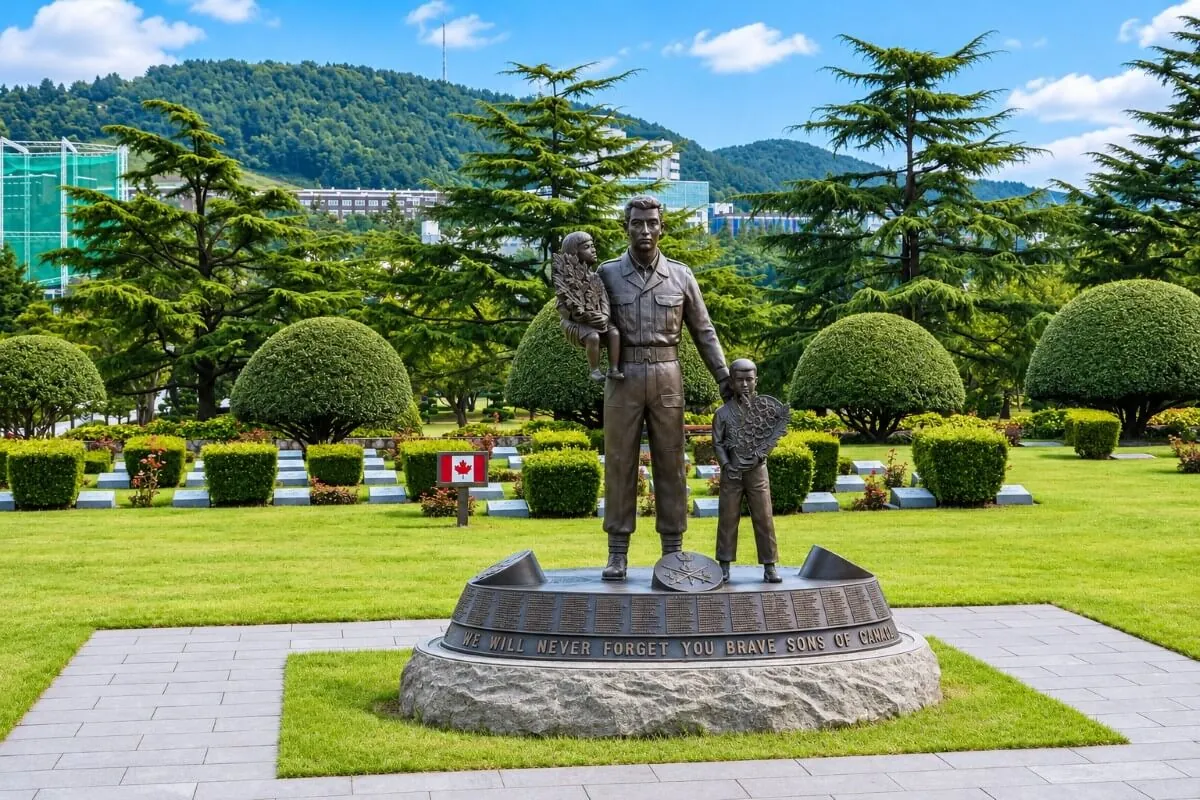
Busan
South Korea’s great southern port adds coastal history, colonial-era development, temples and major Korean War heritage. High-speed rail from the capital region makes Busan a strong continuation after Incheon.

Gyeongju
The former Silla capital provides a powerful contrast with Incheon’s modern port history. Royal tombs, Buddhist temples and palace remains reveal a much earlier political and religious centre of the Korean Peninsula.
Suwon
Suwon’s UNESCO-listed Hwaseong Fortress provides one of the best nearby comparisons with Ganghwa’s defensive heritage, combining late-Joseon military engineering, royal ambition and planned urban design.

Seoul
South Korea’s capital offers the natural continuation from Incheon’s port history. Joseon palaces, royal shrines, city walls and modern-history museums add the political centre behind many of the changes first encountered at the coast.