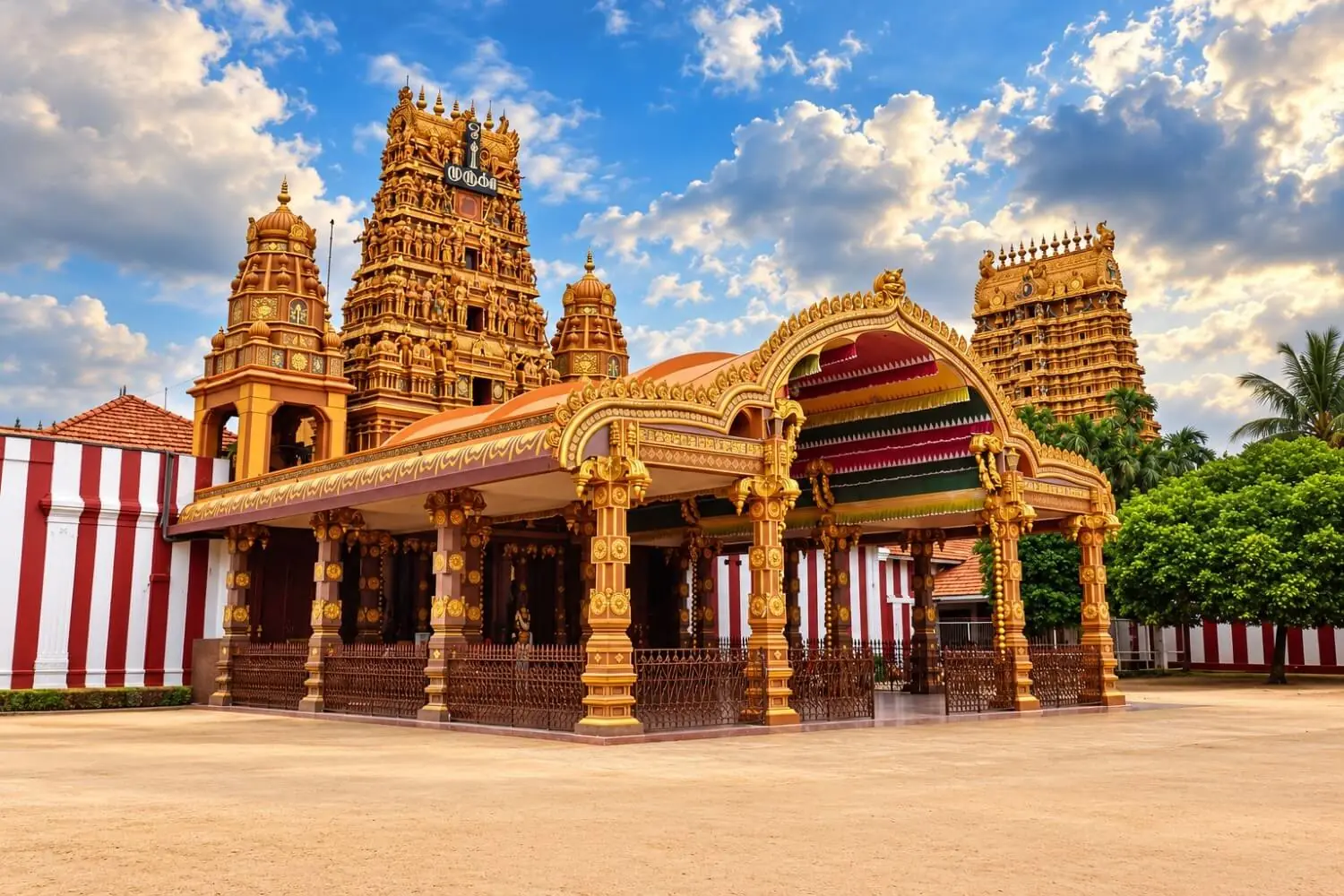
Jaffna
Tamil heritage, colonial history and island culture
Discover Jaffna through its historic fort, Hindu temples, libraries, churches and peninsula landscapes, with a practical three-day itinerary connecting the city centre, Nallur, the northern coast and nearby islands.
INTRODUCTION
Welcome to Jaffna
Jaffna is the cultural and historic centre of Sri Lanka’s northern peninsula, shaped by Tamil kingdoms, Hindu traditions, Portuguese and Dutch rule, British administration and the upheavals of the modern era. Fortifications, temples, churches, libraries and civic landmarks reveal a city with a history distinct from the island’s southern and central regions.
Two full days cover Jaffna’s essential historic sights, while a third allows time for the wider peninsula or nearby islands. Staying overnight makes it easier to explore temples and civic landmarks early, then travel farther north or west on the following days.
WHY VISIT
Why Visit Jaffna?
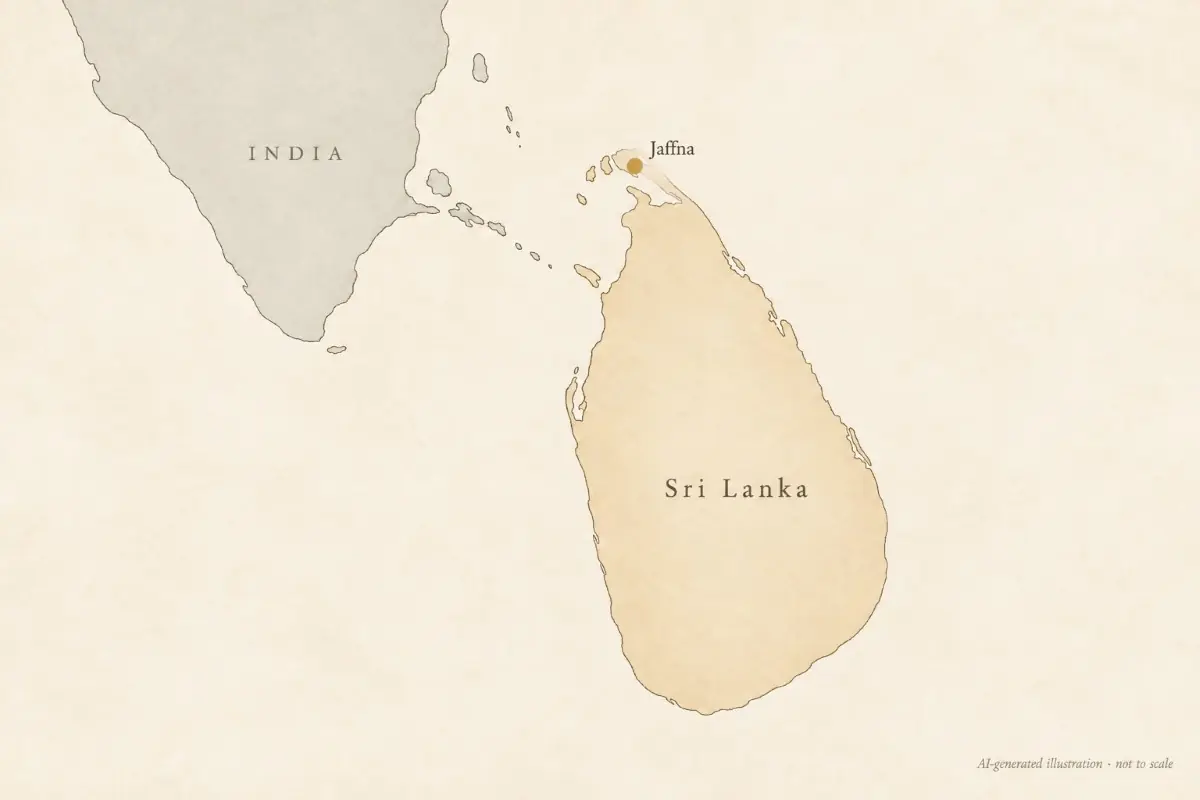
Jaffna combines Tamil cultural heritage, Hindu sacred sites, colonial architecture and modern political history in one compact northern city. Its fort, temples, library and peninsula landscapes make it one of Sri Lanka’s most distinctive destinations for travellers interested in history and identity.
01
Jaffna Kingdom & Tamil Heritage
Jaffna was the centre of a Tamil kingdom ruled for centuries by the Aryacakravarti dynasty. Surviving traditions, place names and archaeological remains connect the modern city with this pre-colonial political and cultural history.
02
Hindu Temples & Living Traditions
Major Hindu temples such as Nallur Kandaswamy Kovil remain active centres of worship and festival life. They are essential for understanding the religious and cultural identity of the Jaffna peninsula.
03
Portuguese, Dutch & British Layers
Jaffna Fort, churches and civic buildings reveal successive Portuguese, Dutch and British periods. These layers show how European powers reshaped the peninsula without erasing its older Tamil traditions.
04
The Peninsula & Islands
Jaffna is the natural base for exploring the wider peninsula, including Keerimalai, Point Pedro, island communities and the causeway routes towards Delft and other historic settlements.
HISTORY
A Short History of Jaffna
Jaffna developed as the political and cultural centre of a Tamil kingdom that became firmly established by the late medieval period. The Aryacakravarti rulers controlled much of the northern peninsula and maintained regional trading and religious connections across the Palk Strait.
Portuguese forces conquered the Jaffna kingdom in 1619 and established a stronger colonial presence on the peninsula. The Dutch displaced the Portuguese in 1658 and expanded Jaffna Fort, while British rule from the late eighteenth century brought new administrative, educational and transport institutions.
Jaffna remained an important centre of Tamil education, religion and civic life under British rule and after independence. The city was deeply affected by Sri Lanka’s civil conflict, including damage to historic and cultural institutions, but major landmarks such as the Public Library and Fort have since been restored and reopened.
KEY HISTORICAL MOMENT
1619
In 1619, Portuguese forces defeated the last independent ruler of the Jaffna kingdom. The conquest ended the kingdom’s sovereignty and began a new colonial phase that was later followed by Dutch and British rule.
TOP SIGHTS
Top Sights in Jaffna
These eight sights connect Jaffna’s pre-colonial kingdom, Hindu heritage, colonial rule and modern civic history. The fort and Nallur are essential, but the city becomes far more rewarding when you add museums, churches and peninsula landmarks.
1
Jaffna Fort
Jaffna Fort is Jaffna’s most recognisable railway landmark. Built in the early twentieth century, its stone and brick arches curve through dense greenery and reflect the engineering of Sri Lanka’s colonial-era railway network.
2
Nallur Kandaswamy Kovil
Nallur Kandaswamy Kovil is one of the most important Hindu temples in northern Sri Lanka. The present complex is a major centre of Saivite worship and becomes especially important during the annual Nallur festival.
3
Jaffna Public Library
Jaffna Public Library is one of the city’s most important civic and cultural landmarks. Rebuilt after its destruction in 1981, it stands as both a centre of learning and a powerful symbol of cultural memory.
4
Jaffna Archaeological Museum
The Jaffna Archaeological Museum preserves sculpture, coins, religious objects and other material from the northern region. Its collections provide useful context for the history of the peninsula before and during colonial rule.
5
Mantri Manai
The Mantri Manai was once polished to a reflective finish and later became covered with historic graffiti. Many inscriptions were written by visitors centuries ago and provide rare evidence of how Jaffna was experienced long after the royal period.
6
St Mary’s Cathedral
St Mary’s Cathedral reflects the long history of Catholicism in Jaffna and the influence of Portuguese missionary activity. The church adds an important Christian layer to the city’s strongly Hindu cultural landscape.
7
Naguleswaram Kovil & Keerimalai
Naguleswaram Kovil at Keerimalai is one of the peninsula’s most important Hindu temples and is associated with a sacred coastal spring. The site combines religious tradition with the history and geography of Jaffna’s northern coast.
8
Delft Island
Delft Island lies above the valley near Jaffna and is linked with local versions of the Ramayana tradition. The steep approach and cave setting add a different cultural layer to the area’s better-known railway and plantation history.
THINGS TO DO
Things to Do in Jaffna
Jaffna works best when the city’s monuments are combined with the wider peninsula. Explore the fort and civic centre, then add Hindu temples, local markets, coastal sites and island history.
Walk Colonial & Civic Jaffna
Walk between Jaffna Fort, the Public Library and the civic centre with historical context. The route connects colonial fortifications with modern cultural institutions and the waterfront.
EXPLORE JAFFNA HISTORY TOURS →
Explore Hindu Heritage
Visit Nallur and other Hindu temples to understand the religious traditions of the peninsula. Respectful dress and attention to local customs are essential at active shrines.
BROWSE JAFFNA CULTURAL TOURS →
Explore the Northern Peninsula
Visit the Naguleswaram Kovil & Keerimalai to add prehistoric and early historic archaeology to your Jaffna itinerary. The burial site gives a very different perspective on the region before the great Buddhist kingdoms.
DISCOVER JAFFNA PENINSULA TOURS →
Take a Day Trip to Delft Island
Travel by road and ferry to Delft Island for coral-stone ruins, colonial remains, island temples and a landscape shaped by centuries of maritime contact.
EXPLORE JAFFNA ISLAND TOURS →
SUGGESTED ITINERARY
3 Days in Jaffna
Three days allow you to experience Jaffna beyond the city centre. Use the first day for the fort, library and Nallur, the second for the northern peninsula, and the third for Delft Island or another coastal excursion.
DAY 1
Jaffna Fort, Library & Nallur
MORNING
Begin at Nallur Kandaswamy Kovil and walk towards Jaffna Fort before the busiest part of the day. Take time to watch the railway landscape rather than treating the bridge as a quick photo stop.
AFTERNOON
After lunch, visit the Archaeological Museum and continue to Nallur Kandaswamy Kovil. Leave time to explore the streets around Nallur and observe the temple respectfully.
EVENING
Spend the evening in central Jaffna, exploring local restaurants or returning to the fort area as the day cools.
DAY 2
Keerimalai, Naguleswaram & the Northern Peninsula
MORNING
Start at the Naguleswaram Kovil & Keerimalai to explore a much earlier layer of regional archaeology. The site is compact and works well before the strongest midday heat.
AFTERNOON
Continue towards Point Pedro or another northern coastal stop in the afternoon, then return through villages and temple landscapes across the peninsula.
EVENING
Spend the evening back in Jaffna. A slower second evening works well after a full day of driving across the peninsula.
DAY 3
Delft Island & Maritime Jaffna
MORNING
Start early for the journey towards Delft Island, allowing time for the road and ferry connection before exploring the island’s historic and religious sites.
AFTERNOON
Spend the afternoon among Delft’s coral-stone walls, colonial remains and island landscapes before returning to the mainland and Jaffna.
EVENING
Return to Jaffna for a final evening meal and one last walk through the city centre or fort area.
WHERE TO STAY
Where to Stay in Jaffna
Jaffna has a growing range of hotels and guesthouses in and around the city. Stay in the centre for easy access to the fort and library, near Nallur for temples and quieter streets, or close to the railway station for transport convenience.
01
Central Jaffna
Stay in central Jaffna for the easiest access to the fort, Public Library, restaurants and local transport. This is the most practical choice for a first visit.
FIND HOTELS IN CENTRAL JAFFNA →
02
Nallur
The eastern side of Jaffna near Jaffna Public Library offers quieter stays and easy access to the viewpoint and Jaffna Fort. It suits travellers who prioritise walking and scenery.
BROWSE STAYS NEAR NALLUR →
03
Near Jaffna Railway Station
Staying near the railway station is convenient for travellers arriving from Colombo or Anuradhapura and for early departures. The centre remains a short tuk-tuk ride away.
FIND STAYS NEAR JAFFNA STATION →
04
Peninsula Guesthouses
Small guesthouses outside central Jaffna can offer a quieter base closer to peninsula villages and coastal roads. They work best if you have a driver or plan to use tuk-tuks frequently.
EXPLORE STAYS AROUND JAFFNA →
GETTING AROUND
Getting Around Jaffna
Central Jaffna is compact enough for walking, but the wider peninsula is spread across long, flat roads and causeways. Tuk-tuks, buses, bicycles and private cars are useful depending on how far you plan to travel.
On Foot
Central Jaffna, Jaffna Fort and several viewpoints can be reached on foot, though routes can be steep and uneven. Good shoes are essential for hikes and railway-side paths.
By Bus
Local buses connect Jaffna with towns across the peninsula and with northern destinations such as Point Pedro and Chavakachcheri. They are inexpensive but routes can be slower than private transport.
By Train
Jaffna has no railway station. Near Jaffna Railway Station is the nearest useful rail stop, while Jaffna is the more important regional bus hub; from either place, continue by tuk-tuk, taxi or private transfer.
From Colombo & Bandaranaike International Airport
From Colombo, Jaffna is usually reached by road via Jaffna or Near Jaffna Railway Station. Travellers arriving at Bandaranaike International Airport can continue by private transfer, bus connections or a combination of rail and road.
By Tuk-Tuk, Bicycle & Car
Tuk-tuks are ideal for short city journeys, bicycles suit the flat peninsula for confident riders, and a car or driver is useful for Keerimalai, Point Pedro and ferry connections to the islands.
BEST TIME TO VISIT
Best Time to Visit Jaffna
Jaffna is hot for much of the year, with the northeast monsoon bringing the wettest conditions from roughly October to January. February and March usually offer a good balance of drier weather and manageable heat before the hottest months.
February–March
DRIER SEASON
February and March are usually among the most comfortable months for sightseeing, with lower rainfall and slightly less intense heat than later in the dry season.
April–September
HOT & DRY
April to September is generally drier but can be extremely hot, especially around midday. Start temple visits and longer drives early and carry plenty of water.
October–January
VARIABLE & WETTER LATE SEASON
October to January brings the northeast monsoon and the highest chance of heavy rain. Travel remains possible, but island ferries and longer coastal excursions can be more weather-dependent.
BEST OVERALL TIME
February–March
February to March usually offers the best balance of drier weather and manageable temperatures for exploring Jaffna city, the peninsula and nearby islands.
Next Destinations
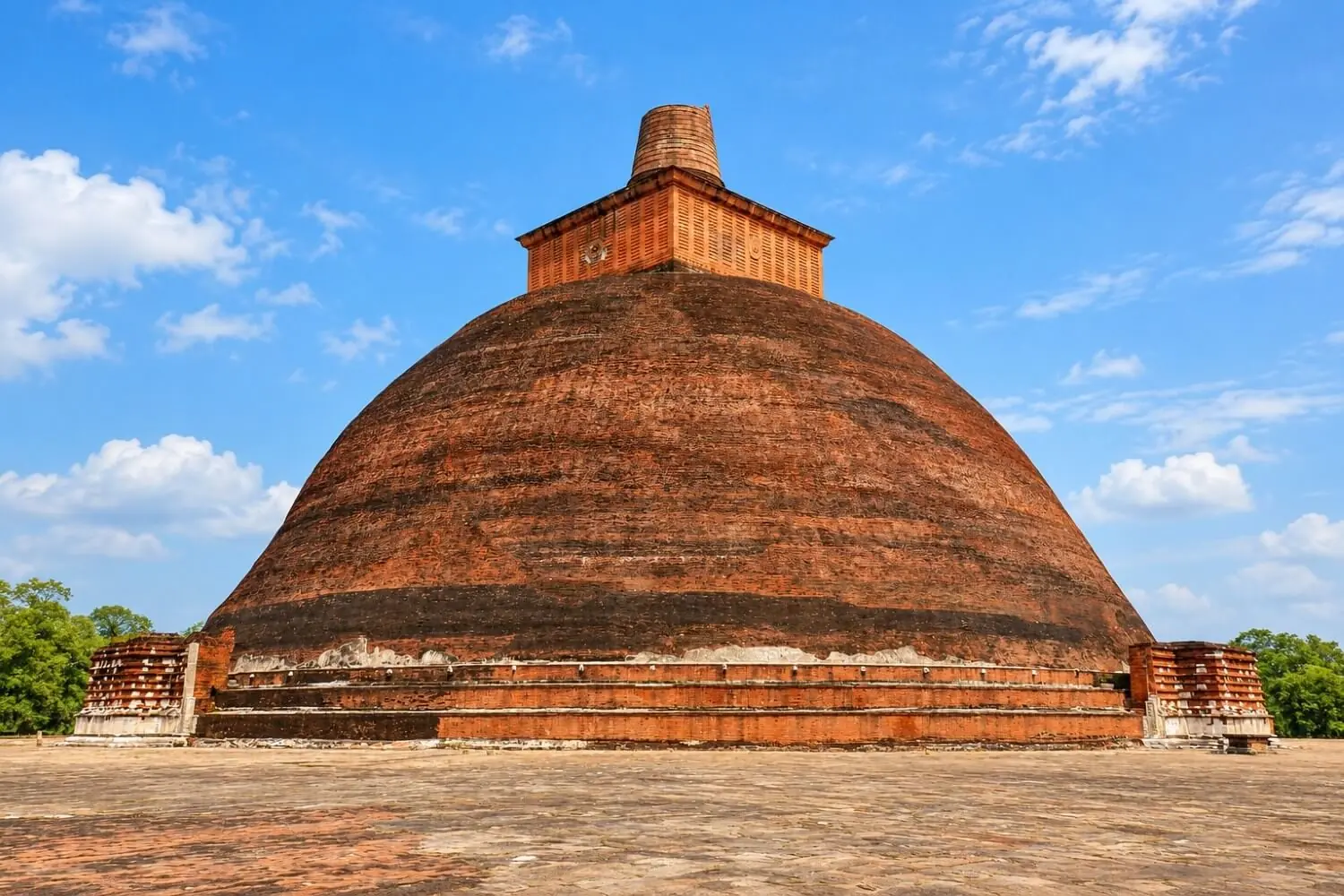
Anuradhapura
Travel south to Anuradhapura for ancient stupas, Sri Maha Bodhi and one of Sri Lanka’s most important early capitals.
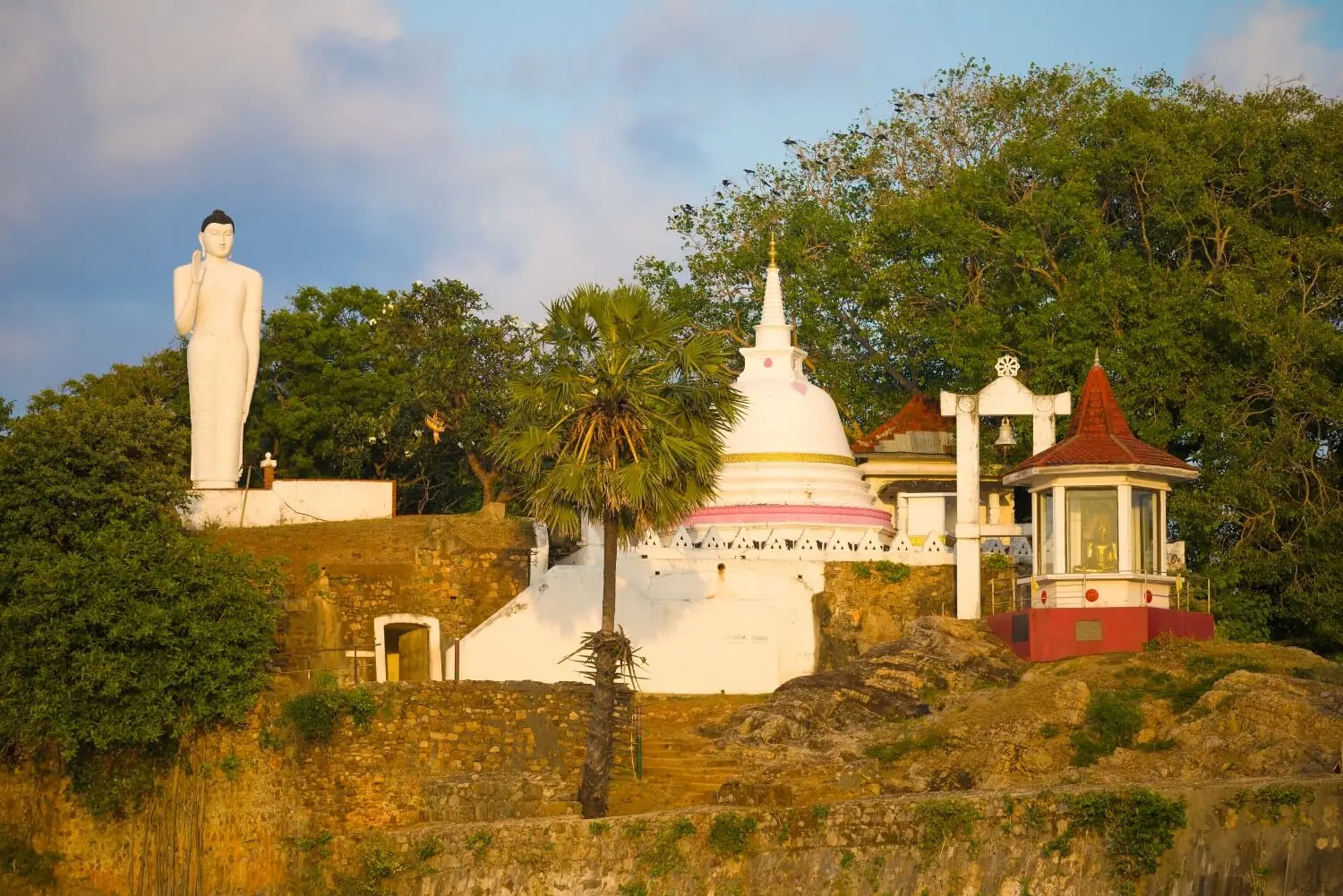
Trincomalee
Travel south-east to Trincomalee for ancient Hindu heritage, colonial fortifications and one of Sri Lanka’s great natural harbours.
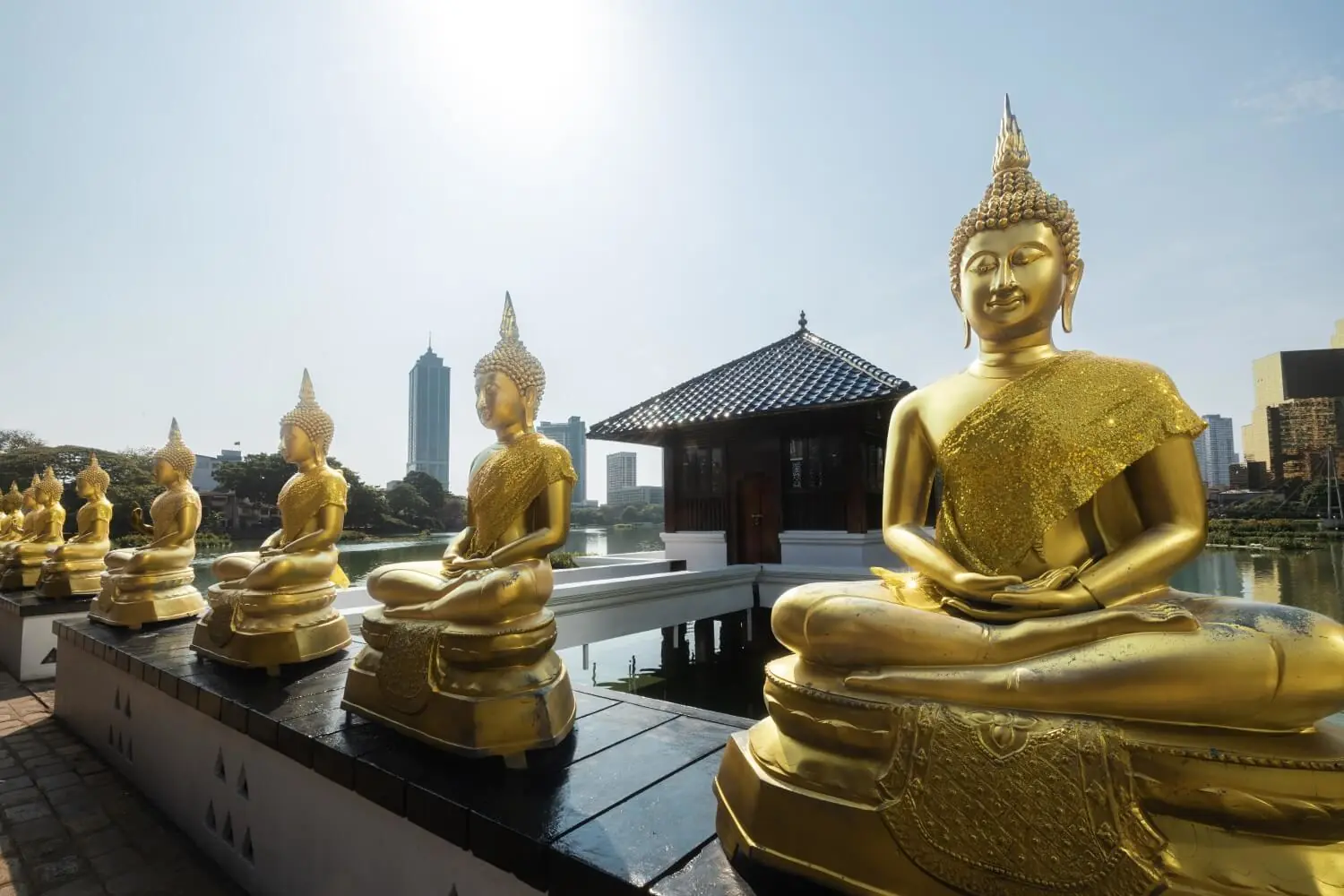
Colombo
Continue south to Colombo for colonial Fort, Pettah markets, museums and Sri Lanka’s modern commercial history.
Polonnaruwa
Explore the ancient ruins of Polonnaruwa, with royal palaces, Buddhist temples, stone statues and some of Sri Lanka’s most impressive archaeological sites.