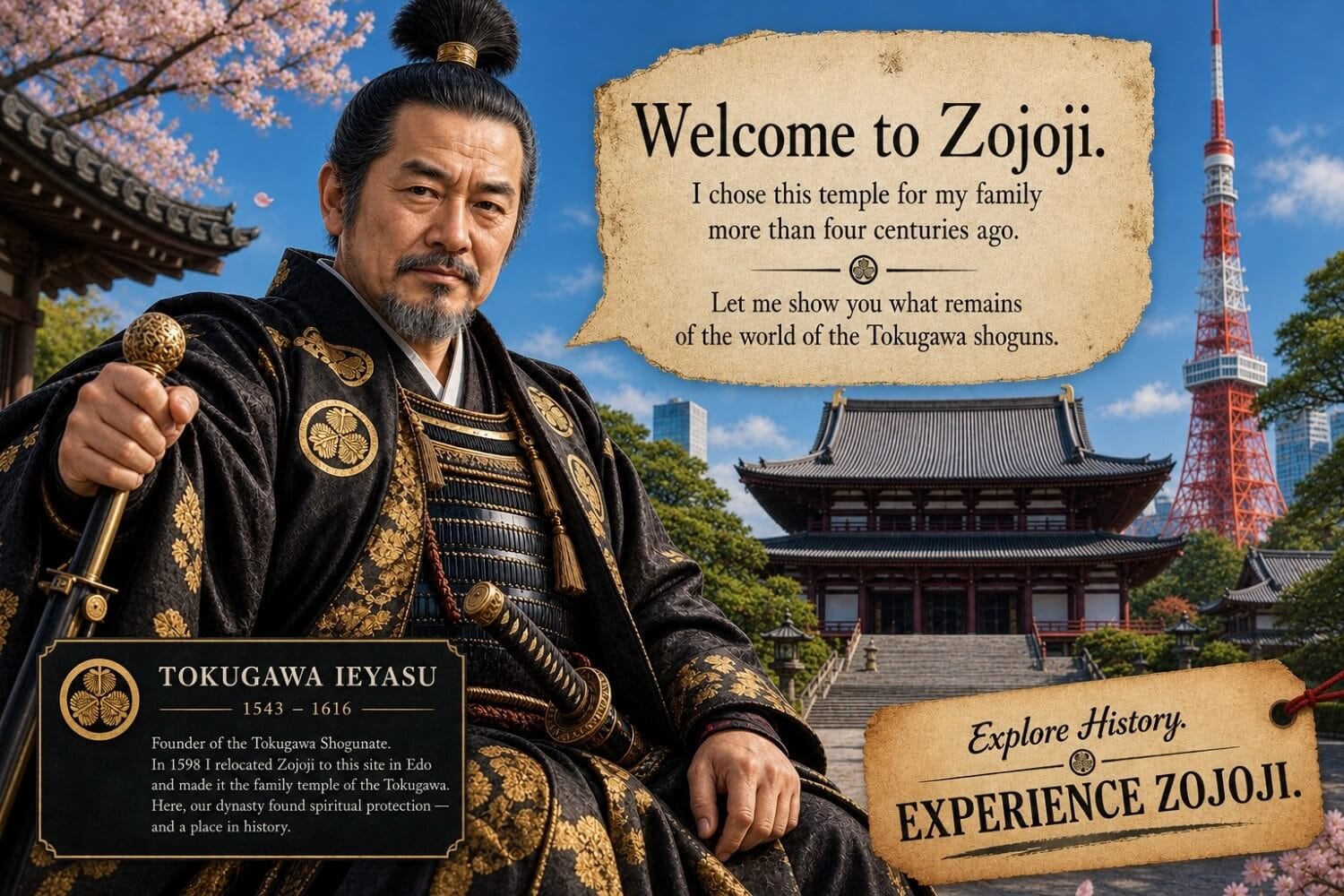
Standing in the shadow of the iconic Tokyo Tower, Zojoji Temple is one of Tokyo’s most fascinating historic sites. Founded in 1393, the temple later became closely connected to the powerful Tokugawa shoguns, who ruled Japan for more than 250 years. At its height, Zojoji was an enormous Buddhist complex with dozens of temples and thousands of priests.
Much of it disappeared through fires, political change and the destruction of the Second World War, but traces of its remarkable past can still be found today. Explore its centuries-old gate, discover the graves of six Tokugawa shoguns and wander past the touching rows of small Jizo statues. Zojoji is a place where the history of old Edo meets the skyline of modern Tokyo.

Zojoji Temple: From Medieval Temple to Tokugawa Power Centre
The history of Zojoji begins long before Tokyo became the enormous metropolis we know today. The temple was founded in 1393 and belonged to Jodo Shu, one of the major schools of Pure Land Buddhism in Japan. Its destiny changed dramatically at the end of the 16th century, when one of the most important figures in Japanese history arrived on the scene: Tokugawa Ieyasu (1543–1616). Ieyasu eventually became the founder of the Tokugawa Shogunate, the military government that would rule Japan for more than 250 years.
In 1598, he had Zojoji relocated to its present location. The temple stood southwest of Edo Castle — today the site of Tokyo’s Imperial Palace — and became closely connected to the Tokugawa family. Its location was no coincidence. Zojoji formed part of the spiritual protection of Edo, guarding the approaches to the city from the southwest. On the opposite side of Edo stood Kaneiji Temple in Ueno, another powerful Buddhist institution with strong Tokugawa connections.
But Zojoji was much more than a symbolic guardian of the city.
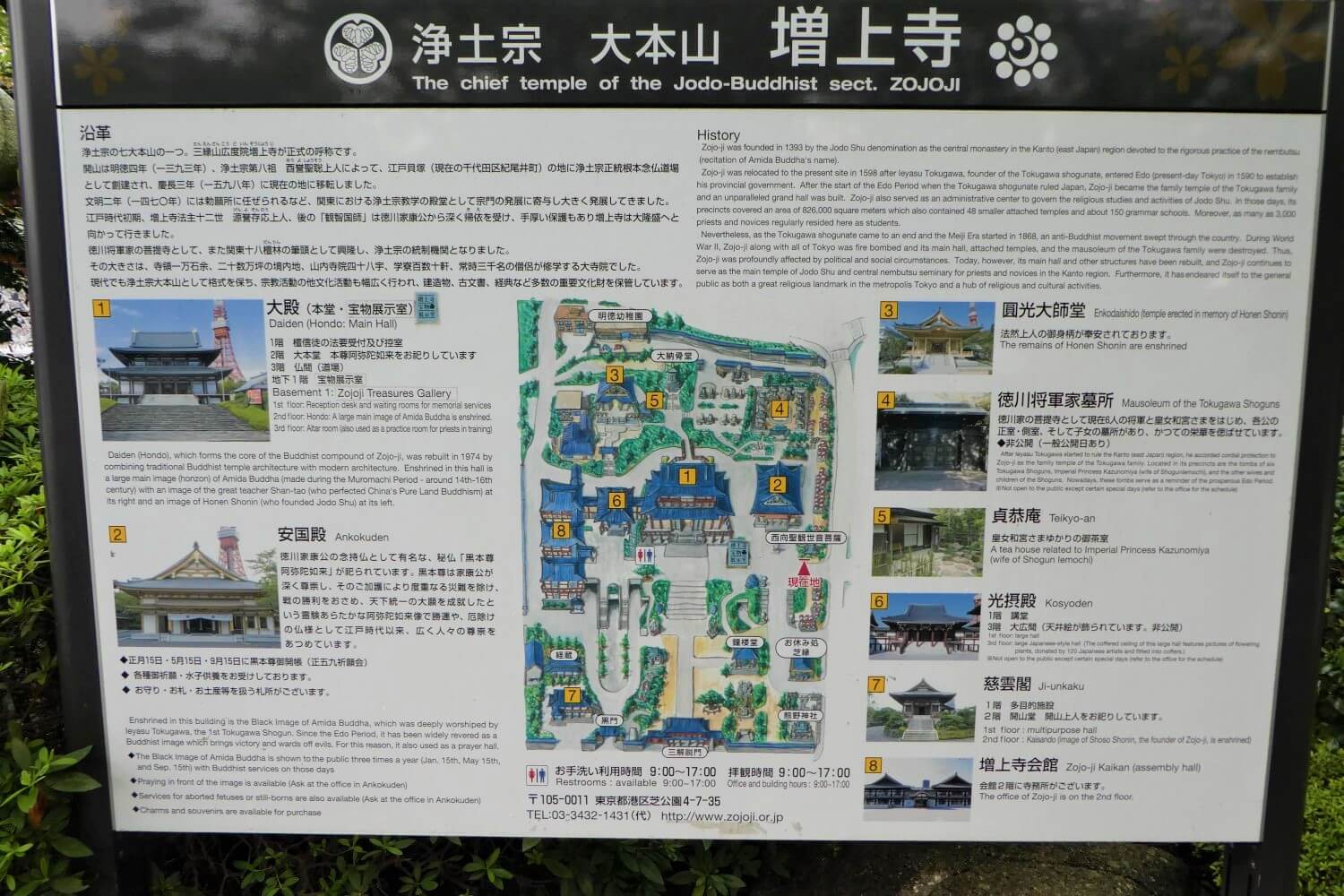
During the 17th century, the temple developed into one of the great religious centres of Edo. At its peak, the complex covered approximately 65 hectares and contained 48 sub-temples and around 150 other buildings. More than 3,000 priests are said to have lived and studied here. Imagine that the next time you stand in front of the temple with modern skyscrapers and Tokyo Tower in the background. The relatively compact complex you see today was once an enormous Buddhist city within Edo.
And there was another reason for Zojoji’s importance.
It became one of the family temples of the Tokugawa shoguns. Several generations of the dynasty were buried here, turning Zojoji into a place where religion and political power were closely intertwined.
Travel tip: Zojoji is one of the best places in Tokyo to photograph the contrast between old and new Japan. From the temple grounds, the 333-metre-high Tokyo Tower rises directly behind the traditional Buddhist buildings.
Jodo Shu and Pure Land Buddhism
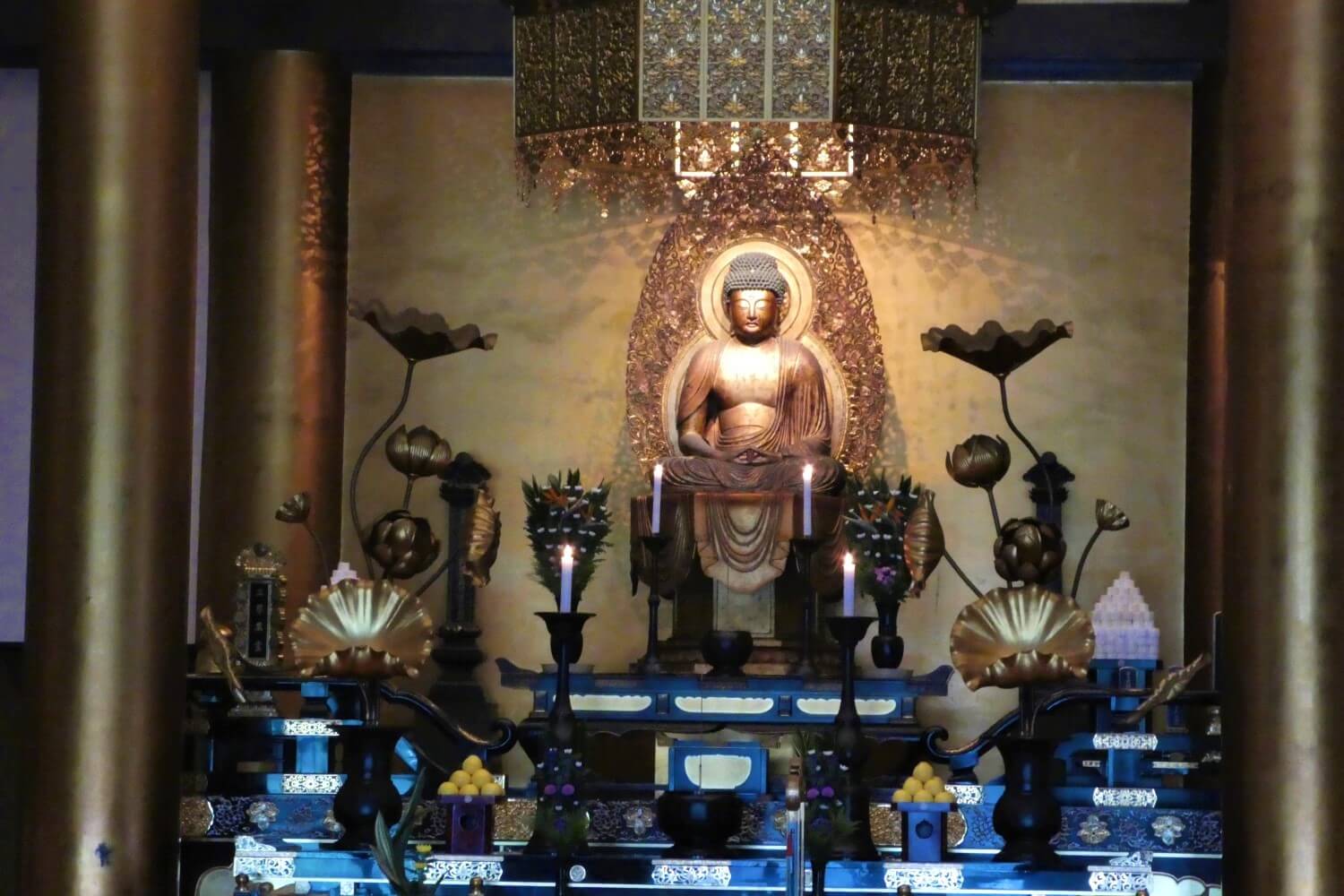
To understand Zojoji, it helps to know a little about the Buddhist tradition to which it belongs. Zojoji is one of the principal temples of Jodo Shu, or the Jodo school of Pure Land Buddhism. The movement is closely associated with the Buddhist monk Honen (1133–1212). His teachings offered an alternative to forms of Buddhism that required extensive study, strict discipline or long periods of meditation. Honen taught that ordinary people could seek rebirth in the Pure Land by placing their faith in Amida Buddha and reciting the Nembutsu:
Namu Amida Butsu: “I take refuge in Amida Buddha.”
This idea was remarkably accessible. Enlightenment was no longer something associated primarily with monks, scholars or members of the elite. Ordinary people could also follow a path towards salvation. That simplicity helped Pure Land Buddhism become enormously popular, but it also made Honen controversial among established Buddhist institutions. His movement faced opposition, and Honen was eventually exiled. Some of his followers suffered even harsher punishments.
Despite this difficult beginning, Pure Land Buddhism survived and flourished. Over the centuries, it developed into one of Japan’s most influential Buddhist traditions — and Zojoji became one of its most important centres. When you enter the temple’s main hall today, therefore, you are stepping into a religious tradition with more than eight centuries of history.
Reading tip: Want to discover another fascinating temple in Tokyo? Read more about the Sensoji Temple, Tokyo’s oldest Buddhist temple, and explore its history, highlights and centuries-old traditions.
What to See at the Zojoji Temple? 7 Tips!
1. Sangedatsumon Gate – A Survivor from the Edo Period
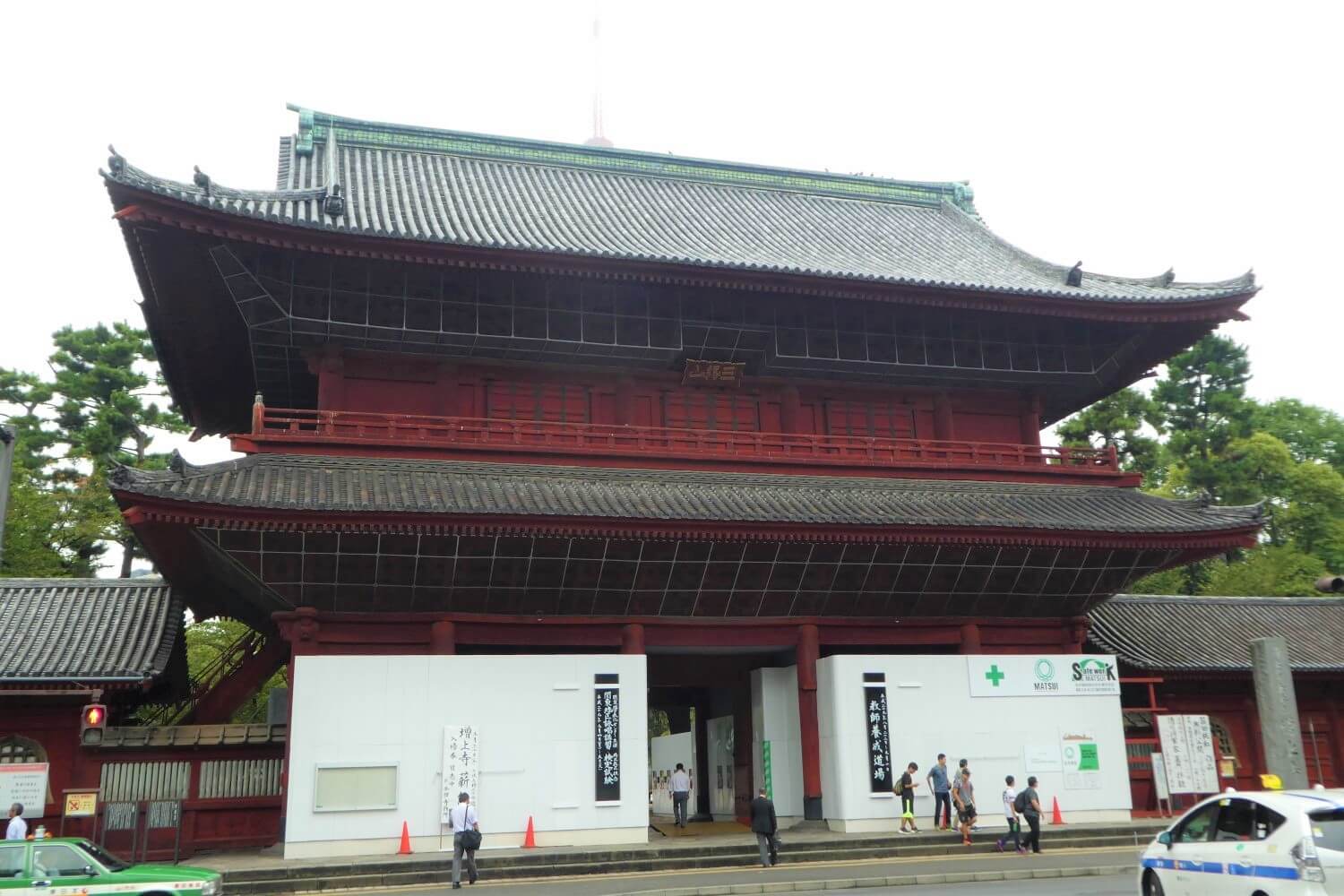
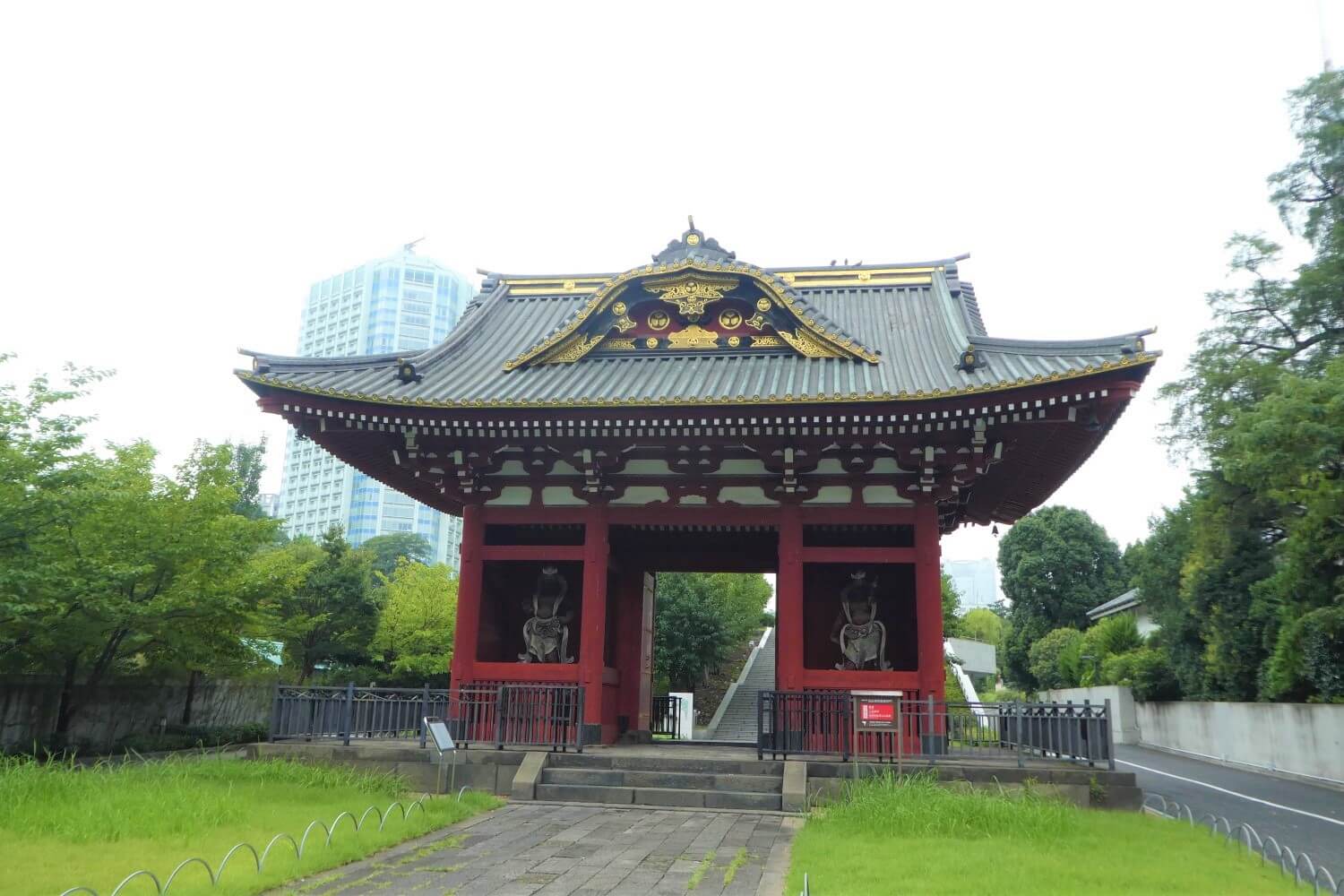
Before you even reach the main temple grounds, you encounter one of Zojoji’s greatest historical treasures: the enormous Sangedatsumon Gate. Dating from 1622, it is one of the few major structures from the early Edo Period to have survived the fires, earthquakes and wartime destruction that repeatedly transformed Tokyo. The gate measures approximately 21 metres wide and almost 18 metres high. Its survival is particularly remarkable when you consider how much of central Tokyo was destroyed during the Second World War.
The name Sangedatsumon refers to liberation from three human weaknesses or states of mind: greed, anger and ignorance. Passing through the gate therefore carries a symbolic meaning — leaving worldly desires behind before entering the sacred temple grounds. For history lovers, it is one of the highlights of a visit to Zojoji.
2. The Main Hall and Amida Buddha
Continue through the temple grounds and you will reach the Daiden, Zojoji’s main hall. Although the present building is relatively modern, having been reconstructed in 1974, it remains the spiritual heart of the temple. Inside you will find an image of Amida Buddha, the central figure of Pure Land Buddhism. Take a moment to step inside and experience the atmosphere.
Outside, you are surrounded by one of the busiest cities on earth. Inside, the mood changes almost instantly. It is this contrast between modern Tokyo and centuries-old religious tradition that makes Zojoji such a memorable place to visit.
3. Daibonsho – The Great Bell of Zojoji
Another impressive survivor is the temple’s enormous bronze bell, known as the Daibonsho. It dates from 1673, during the height of Tokugawa rule, and was one of the great temple bells of Edo. Temple bells have an important role in Japanese Buddhism. Their deep, resonating sound is associated with purification and reflection.
The bell is particularly significant during Joya no Kane, the Buddhist tradition on New Year’s Eve in which temple bells are rung 108 times. The number represents the earthly desires and passions that, according to Buddhist tradition, cause human suffering. Hearing a massive temple bell echo across the grounds is an experience that connects modern Tokyo with religious traditions that are centuries old.
4. The Tokugawa Shogun Graves
For history enthusiasts, this is arguably the most important part of Zojoji. Six Tokugawa shoguns were buried at the temple, together with members of their families. Originally, their mausoleums were far more elaborate than the graves you see today. They consisted of richly decorated buildings and formed one of the great funerary complexes of Edo. Much of this was destroyed during the bombing of Tokyo in the Second World War.
Today, the remaining graves have been brought together in a smaller mausoleum area behind the main temple. Among those buried here are six Tokugawa shoguns:
Hidetada, Ienobu, Ietsugu, Ieshige, Ieyoshi and Iemochi.
Walking among their graves is a reminder of just how closely Zojoji was connected to the rulers of Japan. The founder of the dynasty, Tokugawa Ieyasu, is not buried here. His magnificent mausoleum can be found at Toshogu Shrine in Nikko, north of Tokyo.
5. The Jizo Statues
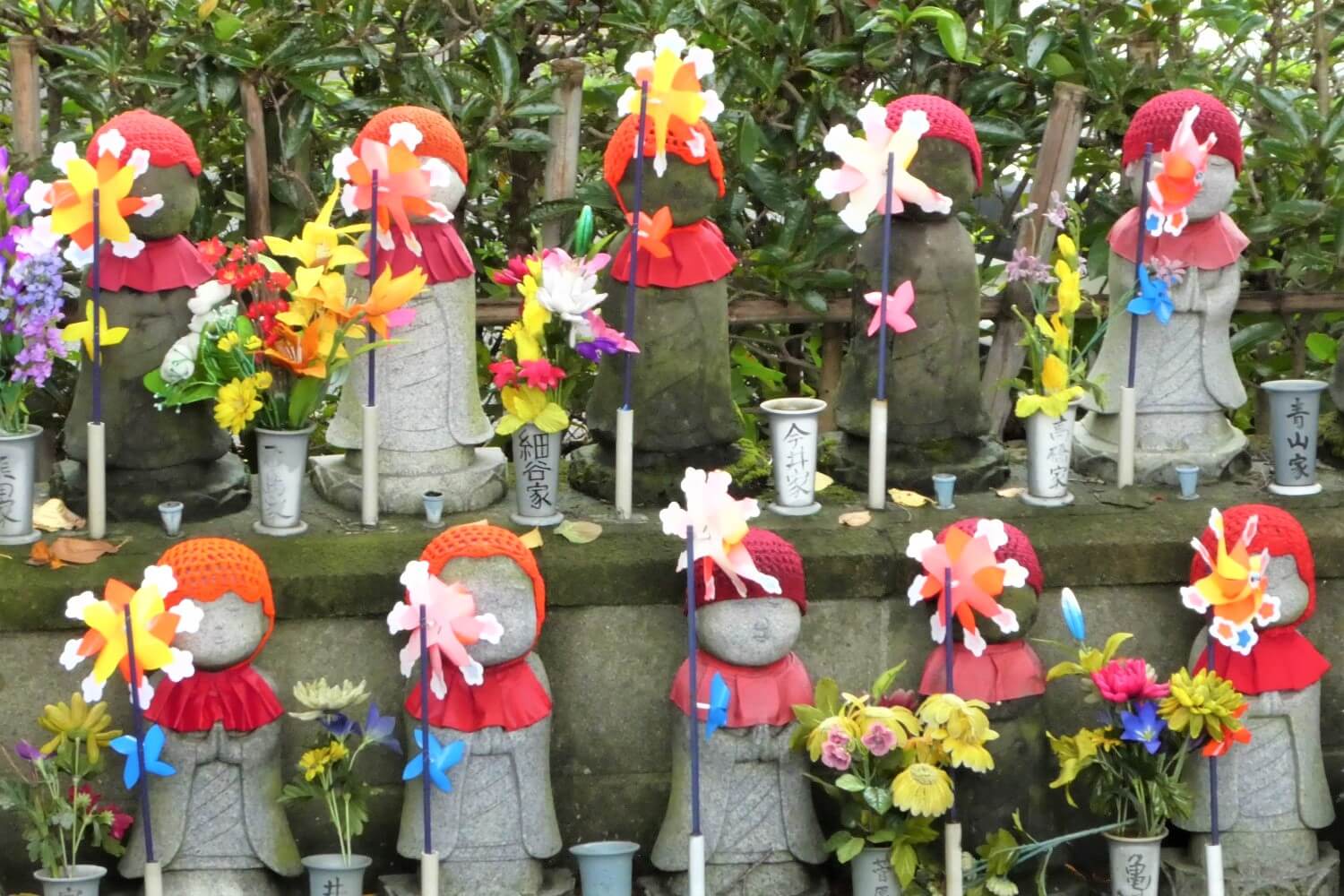
One of the most touching sights at Zojoji is the long row of small stone Jizo statues near the temple grounds. Many wear tiny red knitted caps, bibs or colourful clothing. Some are accompanied by small toys or pinwheels. Jizo is one of the most beloved figures in Japanese Buddhism and is regarded as a protector of children, travellers and vulnerable souls.
At Zojoji, many of these statues are connected with children who died before their parents, including miscarried, stillborn or aborted children. The colourful pinwheels can make this part of the temple appear cheerful at first glance, but the meaning behind the statues is deeply emotional. It is one of those places where understanding the story behind what you are seeing completely changes the experience.
6. Zojoji Treasure Gallery
If you want to dive deeper into the history of the temple and its relationship with the Tokugawa family, visit the Zojoji Treasure Gallery. The exhibition provides additional information about the temple’s past and the former Tokugawa mausoleums.
One of the most interesting exhibits is a scale model showing what the mausoleum complex once looked like before much of it was destroyed during the Second World War. It helps you imagine just how grand Zojoji must have been during the Edo Period.
7. Shiba Park
Zojoji is located beside Shiba Park, one of Tokyo’s oldest public parks. The area officially became a public park in 1873, during the early years of the Meiji Period. Today, it provides a pleasant green space around the temple and Tokyo Tower and is ideal for a short walk before or after visiting Zojoji.
The park also offers several excellent viewpoints for photographing the temple and Tokyo Tower together. If you have enough time, simply wander around. Tokyo is famous for its crowded streets and enormous railway stations, so finding a quiet green corner in the middle of the city can be surprisingly refreshing.
Zojoji Temple and Tokyo Tower: Old Meets New
There is perhaps no better visual representation of Tokyo than the view from Zojoji Temple towards Tokyo Tower. In the foreground stands a Buddhist temple whose history stretches back to the 14th century. Behind it rises a 333-metre steel tower completed in 1958, during Japan’s remarkable post-war economic recovery. One represents the age of shoguns, Buddhist monks and Edo. The other represents modern Japan.
Yet somehow, they fit together perfectly.
Tokyo Tower was inspired by the Eiffel Tower in Paris, although it is slightly taller. Its red-and-white appearance has become one of the most recognisable features of Tokyo’s skyline. Because the tower is located directly beside Shiba Park, combining the two attractions is easy. Visit Zojoji first to explore Tokyo’s feudal past, then walk towards Tokyo Tower for a completely different perspective on the city. Few places demonstrate Tokyo’s extraordinary mixture of history and modernity quite so clearly.
Is Zojoji Temple Worth Visiting?
Absolutely — especially if you are interested in Japanese history. Zojoji may not have the immediate visual spectacle of Sensoji Temple or the immense popularity of Meiji Jingu, but historically it is one of Tokyo’s most fascinating religious sites. This was once an enormous Buddhist complex, a centre of Pure Land Buddhism and a family temple of the Tokugawa shoguns — the dynasty that ruled Japan for more than two and a half centuries.
And unlike some of Tokyo’s busiest attractions, Zojoji often feels surprisingly peaceful. Come for the famous photograph of Tokyo Tower rising behind a traditional Japanese temple, but stay for the stories hidden throughout the grounds. Because once you understand Zojoji’s connection with the Tokugawa shoguns, the surviving Sangedatsumon Gate and the graves behind the temple, it becomes much more than another stop on a Tokyo sightseeing itinerary. It becomes a doorway into the history of Edo itself.
Practical Information for Visiting Zojoji Temple
Where is Zojoji Temple?
Zojoji is located in Minato, Tokyo, beside Shiba Park and within walking distance of Tokyo Tower. Its central location makes it easy to combine with several other attractions in this part of the city.
How to Get to Zojoji Temple
The temple can be reached easily by public transport. Onarimon Station and Shibakoen Station on the Toei Mita Line are both located nearby. Daimon Station and Hamamatsucho Station are also within walking distance. From the surrounding streets, simply head towards Tokyo Tower — Zojoji lies directly in front of it.
Opening Hours and Entrance Fees
The main temple grounds are generally free to enter, making Zojoji an easy addition to any Tokyo itinerary. Separate admission fees may apply to areas such as the Tokugawa mausoleum and Treasure Gallery. Opening hours and admission fees can change, so it is worth checking the latest information before your visit.
Tokyo may look like a city obsessed with the future, but beneath the skyscrapers, railway lines and neon lights lies the story of Edo. Zojoji Temple is one of the best places to discover it.
Maybe also interesting?
- Visit the 15 best sights in Tokyo
- Hachiko, the sweetest and most loyal dog in the world
- Imperial Palace | Discover history in the former Edo Castle
- Edo-Tokyo Museum | 5 facts about the history of Tokyo
- Meiji Jingu Shrine | Commemorate the Emperor of Modernisation
Do you have more tips, comments or ideas about Zojoji Temple in Tokyo? Feel free to leave a comment below.
Return to:
