
Nara gives travellers one of the clearest introductions to the origins of Japan’s classical state and Buddhist culture. Heijo-kyo became the national capital here in 710. For much of the eighth century, emperors governed from a planned city influenced by Tang-dynasty China. Great temples, imperial ruins and sacred forests still survive across the modern city.
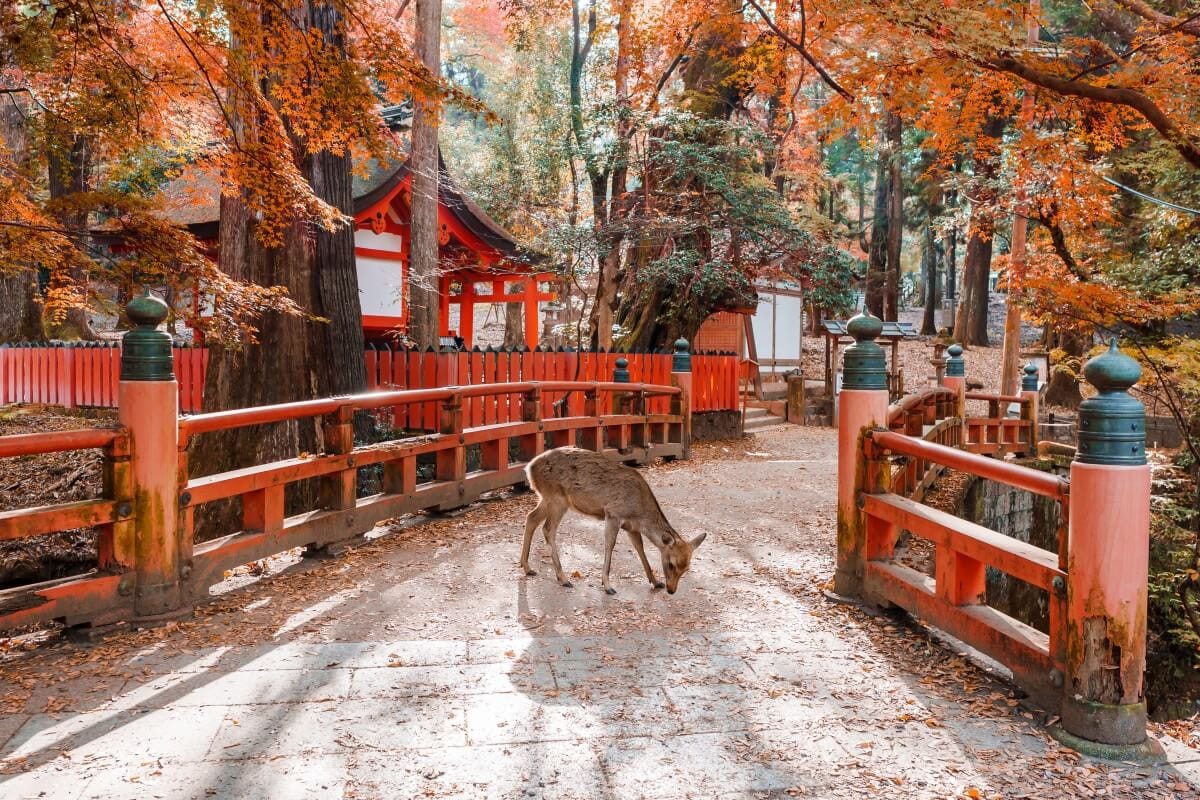
Nara’s famous deer add another cultural layer because they have long been associated with Kasuga Taisha Shrine. In 1998, eight components became the UNESCO-listed Historic Monuments of Ancient Nara. This Nara historical travel guide explores that heritage alongside accommodation, traditional food, historic attractions and practical travel advice.
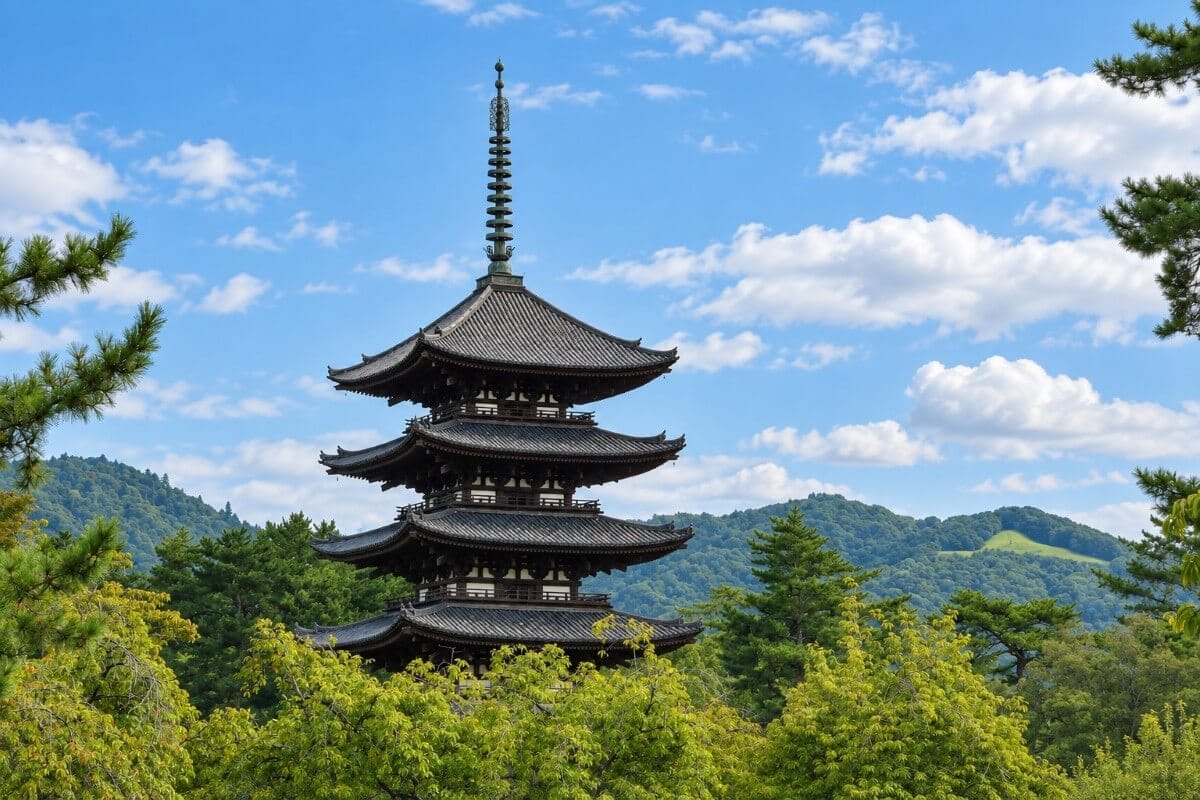
A Little Bit of History
Before Nara became the capital, Japan’s rulers frequently moved their courts between different palace sites. That changed in 710 with the establishment of Heijo-kyo. Planners created a grid influenced by the Chinese capital Chang’an, reflecting Japan’s close cultural engagement with continental Asia. The period from 710 to 784 later became known as the Nara period. Buddhism received strong imperial support and became closely connected with government.
Emperor Shomu commissioned Todaiji during years marked by epidemic, crop failures and political instability. Its immense bronze Great Buddha was completed and consecrated during the mid-eighth century. Nara consequently became a major centre of religious scholarship, monumental architecture and international cultural exchange.
The capital moved away in 784, eventually reaching Heian-kyo, modern Kyoto, in 794. Nara nevertheless remained an important Buddhist centre because its major monasteries retained extensive influence. In 1180, warfare associated with the Genpei conflict devastated Todaiji and Kofukuji, but both were subsequently rebuilt. Religious institutions continued shaping local society during the medieval and early modern periods. Naramachi later developed around former temple lands into a dense district of merchants, workshops and traditional townhouses.
Modernisation after the Meiji Restoration changed Nara, although many religious complexes survived or were carefully restored. Nara became a modern municipality in 1898 and increasingly attracted visitors interested in archaeology, religion and early Japanese culture. UNESCO recognised the Historic Monuments of Ancient Nara in 1998 for their exceptional testimony to eighth-century Japan.
Best Travel Time?
Spring and autumn provide the most comfortable weather for exploring historic Nara on foot. Late March and early April bring cherry blossoms, particularly around Nara Park and nearby temple grounds. These weeks are beautiful but also attract substantial crowds from Kyoto and Osaka. October and November offer cooler temperatures, autumn foliage and excellent conditions for walking between temples.
From March 1 to 14, Todaiji’s ancient Shuni-e ceremonies culminate in the celebrated Omizutori rituals. The ceremony has continued for more than twelve centuries, giving early March exceptional historical interest. Winter is quieter, while January’s Wakakusa Yamayaki adds fire, fireworks and one of Nara’s most distinctive seasonal traditions.
How Many Days?
Two days are ideal for travellers who want more than a hurried introduction to Nara. A day trip from Kyoto or Osaka can cover Todaiji, Nara Park, Kasuga Taisha and Kofukuji. However, most day visitors leave before the historic centre becomes pleasantly quiet. An overnight stay provides time for Naramachi, Gangoji and the former Heijo Palace site.
With three days, visitors can add the Nishinokyo temples or explore less crowded sections of the city. Excellent excursions include Horyuji, Asuka and the preserved merchant streets of Imaicho. Nara also combines naturally with Kyoto, Uji and Osaka on a longer journey through the Kansai region.

Accommodation in Nara
The area between Kintetsu Nara Station, Naramachi and Nara Park is the best base for most first-time visitors. It places major temples, restaurants and historic streets within comfortable walking distance. Staying near Kintetsu Nara also simplifies trips to Kyoto and Osaka. JR Nara Station is slightly farther from the park but offers excellent regional railway connections.
Travellers can choose from inexpensive business hotels, modern hot-spring properties and traditional ryokan. Naramachi offers more atmosphere, while properties beside Nara Park generally charge higher rates. Prices vary sharply by weekends and blossom season, so the following current-season figures are approximate starting rates.
Some Tips & Ideas for Hotels Include:
Nara Hotel – This historic hotel has welcomed guests for more than a century and retains an elegant early-modern atmosphere. It stands near Nara Park. Prices from approximately €140 per night.
Onyado Nono Nara Natural Hot Spring – A highly rated hotel three minutes from JR Nara Station. Natural hot-spring baths are a major advantage. Prices from approximately €70 per night.
Piazza Hotel Nara – This comfortable modern hotel stands beside JR Nara Station. It suits travellers planning several rail excursions. Prices from approximately €65 per night.
Kasuga Hotel – This established Japanese-style hotel lies two minutes from Kintetsu Nara Station. Public baths and traditional rooms add character. Prices from approximately €150 per night.
Book your preferred hotel, apartment, or hostel here.
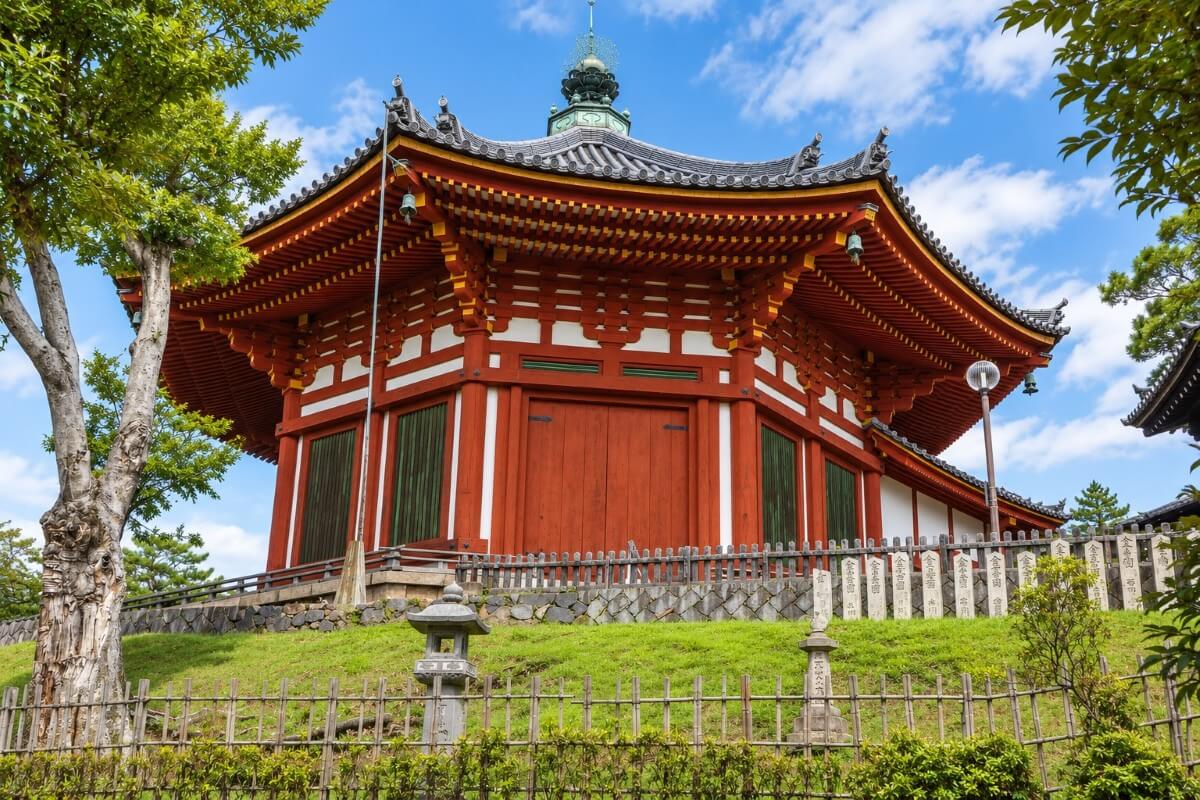
Sightseeing in Nara
Nara’s greatest historical sites date from a period when the city stood at the political centre of Japan. Imperial patronage financed enormous Buddhist institutions whose influence extended far beyond religion. Shinto traditions developed alongside them, creating landscapes where temples, shrines and sacred forests remain closely connected. Several monuments preserve architectural ideas transmitted through Korea and China before being adapted in Japan.
Others reveal how subsequent generations rebuilt important structures after fires and warfare. The former palace grounds show the remarkable scale of the planned eighth-century capital. These historical attractions in Nara together explain why the city occupies such an important place in Japanese history.
Below are some of the country’s most interesting historical attractions.
Todaiji Temple – Completed around 752, this monumental Buddhist complex contains the approximately 15-metre Great Buddha commissioned under Emperor Shomu.
Kasuga Taisha – Founded during the eighth century, this major Shinto shrine became closely associated with the powerful Fujiwara family and sacred deer.
Kofukuji Temple – Established in Nara when the capital moved here in 710, Kofukuji served as the influential clan temple of the Fujiwara.
Former Heijo Palace Site – Archaeological remains and reconstructions mark the administrative heart of Heijo-kyo, Japan’s capital from 710 until 784.
Gangoji Temple – Originating from an earlier temple in Asuka, Gangoji moved to Nara after the new capital was established and preserves exceptionally old roof tiles.
Looking for exciting tours and activities? Book them here through GetYourGuide.
Food & Drinks – Taste the Local Cuisine
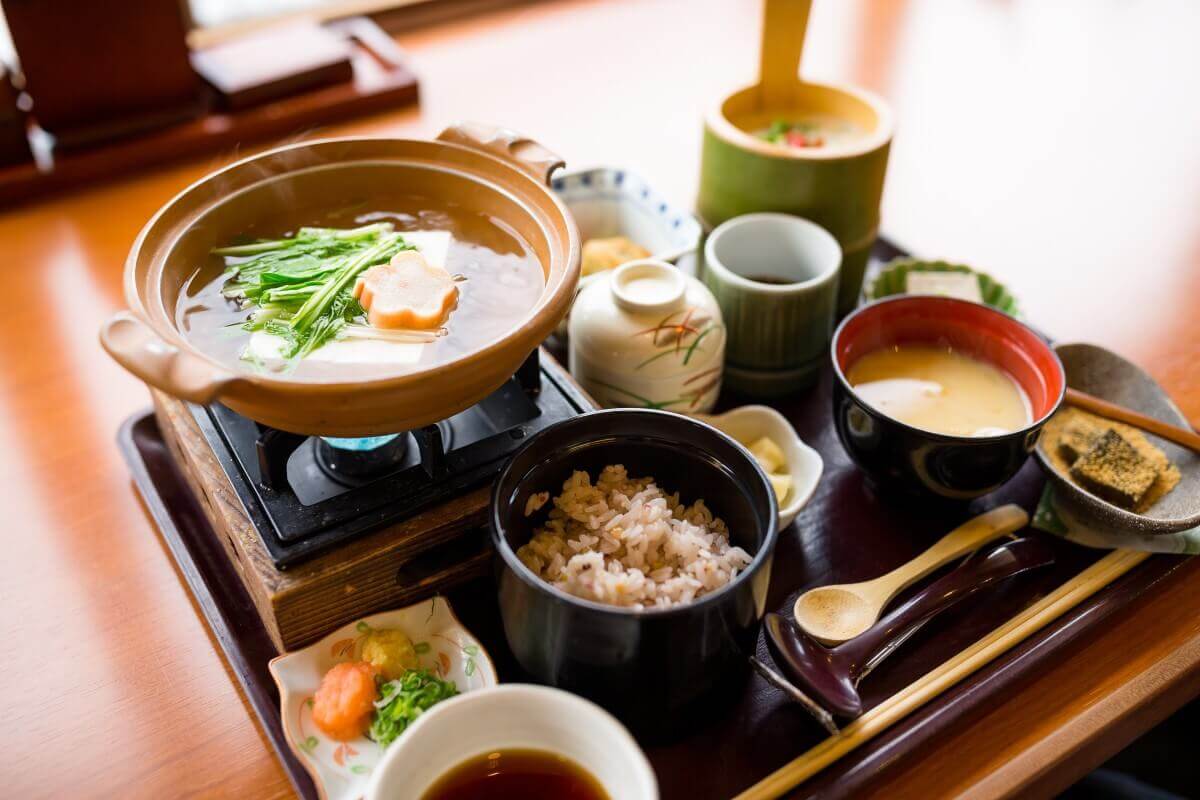
Nara’s food culture developed from temple cooking, mountain agriculture and centuries-old fermentation techniques. Kakinoha-zushi is a regional speciality in which pressed fish and rice are wrapped in persimmon leaves. The technique helped preserve fish while it travelled inland from coastal areas before refrigeration. Chagayu, a simple rice porridge prepared with tea, is another dish strongly associated with traditional Nara households.
Miwa somen, persimmons and locally grown Yamato vegetables also feature prominently throughout the prefecture. Nara is especially important in sake history because medieval temples developed techniques that influenced modern Japanese brewing. Today, visitors can combine historic sweets, preserved foods, craft beer, sake and Michelin-starred cuisine within a compact area.
Here are some restaurant ideas and recommendations:
Kakinohazushi Tanaka Nara Main Store – This central shop specialises in Nara’s famous persimmon-leaf sushi. Its small tea room provides an easy introduction to the dish.
Nakanishi Yosaburo – This Naramachi wagashi maker has operated for around 150 years. Seasonal sweets are served in a traditional townhouse setting.
Harushika Sake Imanishi Seibei Store – Established in 1884, this Naramachi brewery produces one of Nara’s best-known sake brands. Tastings introduce several brewing styles.
Naramachi Brewery – This small brewpub produces craft beer within Nara’s historic neighbourhood. Its house ales provide a modern contrast with older sake traditions.
Wine no Ojisama – A specialist wine bar in a converted historic sake-building setting. Its selection includes international wines and Belgian beers.
How to Get there?
Flights
For international travellers, Kansai International Airport is the most useful major airport for reaching Nara. The airport lies southwest of Osaka and handles extensive international services. Direct airport buses can reach Nara in roughly 90 minutes when traffic conditions are favourable. Rail travellers can alternatively connect through Osaka using JR or Nankai and Kintetsu services.
Osaka Itami Airport is closer but mainly handles domestic flights. International travellers arriving through Tokyo can continue by Shinkansen to Kyoto before transferring to Nara. Allow additional time after long-haul arrivals because airport immigration and regional connections can make same-day journeys unpredictable.
Looking for flights? Book your tickets here through Skyscanner.
Public Transport
Public transport is the easiest way to reach and explore Nara. Kintetsu trains connect Kyoto with Kintetsu Nara in roughly 35 to 50 minutes, depending on the service. JR services from Kyoto generally require around 45 minutes. From Osaka, both JR and Kintetsu routes commonly take approximately 35 to 50 minutes. Nara has no Shinkansen station, so long-distance travellers usually change at Kyoto or Shin-Osaka.
Kintetsu Nara Station lies about five minutes on foot from Nara Park, while JR Nara requires around 15 minutes. Walking, buses and occasional taxis cover nearly every important attraction once travellers reach the centre.
Looking for public transport tickets? Book your bus tickets here through Busbud
Car Rental
Renting a car is unnecessary for visitors concentrating on central Nara and its UNESCO monuments. Parking near Nara Park can become inconvenient during weekends, holidays and peak blossom seasons. A car becomes more useful when exploring rural Nara Prefecture, especially Yoshino, mountain villages or scattered archaeological sites. Asuka and Imaicho can also be combined efficiently during a driving itinerary.
International drivers must carry documentation recognised under Japanese law and should confirm requirements before travelling. Japan drives on the left, while narrow residential streets demand additional attention. For most first-time visitors, trains provide the simplest option, with a rental car reserved for excursions into the wider prefecture.
Would you like to rent a car in Japan? Book your all-inclusive rental here with DiscoverCars.
Relax! The Best Blogs about Nara
Do you have any tips, comments, or suggestions for this travel guide about Nara? Feel free to leave a message below.
Return to:
