
Few views of Japan are as instantly recognisable as Chureito Pagoda with Mount Fuji rising behind it. Add cherry blossoms in spring or autumn colours later in the year, and you have an image that seems to capture Japan in a single photograph.
But Chureito Pagoda is more than a famous viewpoint. The five-storey pagoda is actually a war memorial, built in the twentieth century to commemorate local people who died in war. It stands above the much older Arakura Fuji Sengen Shrine, whose history stretches back more than 1,300 years. Located in Fujiyoshida, north of Mount Fuji, the shrine and pagoda combine history, religion and one of the most celebrated views of Japan’s sacred mountain.
What Will You Discover?
- Arakura Fuji Sengen Shrine: More Than 1,300 Years of History
- The Climb to Chureito Pagoda Chureito
- Pagoda: A War Memorial
- Why Is Chureito Pagoda So Famous?
- Will You Actually See Mount Fuji?
- When Is the Best Time to Visit?
- How to Get to Chureito Pagoda
- Is Chureito Pagoda Worth Visiting?

Arakura Fuji Sengen Shrine: More Than 1,300 Years of History
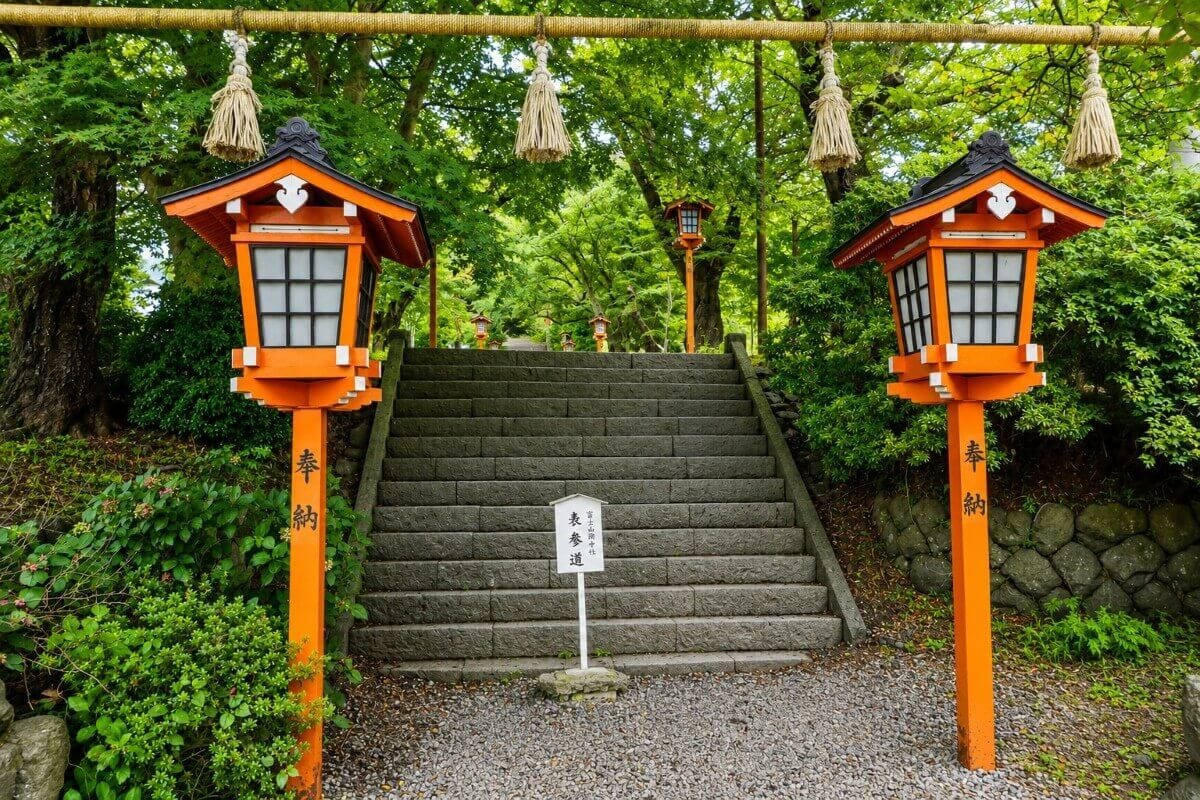
Before climbing to Chureito Pagoda, you first enter the grounds of Arakura Fuji Sengen Shrine (Arakura Fuji Sengen Jinja). According to the shrine’s traditional history, it was founded in 705, making the religious site considerably older than the pagoda for which it is now internationally famous. The shrine belongs to the wider tradition of Sengen shrines associated with the worship of Mount Fuji. For centuries, Japan’s highest mountain was not simply admired as a beautiful landscape. It was regarded as a sacred and potentially dangerous presence.
Mount Fuji’s long history of volcanic activity played an important role in the development of religious traditions surrounding the mountain. Sengen shrines became places where people could worship the deities associated with Fuji and pray for protection. Today, visitors come to Arakura Fuji Sengen Shrine for prayers connected with family happiness, childbirth and protection from misfortune, as well as to experience the historic shrine itself. And then there is, of course, the mountain.
From the grounds you begin climbing towards one of Japan’s most photographed viewpoints.

The Climb to Chureito Pagoda
Reaching Chureito Pagoda requires a little effort. From the shrine, a long staircase climbs the wooded hillside towards Arakurayama Sengen Park. There are roughly 400 steps between the lower shrine area and the pagoda. It’s a reasonably demanding climb, particularly on a hot or humid day, but there are places where you can stop along the way.
The higher you climb, the more Fujiyoshida begins to appear below you. Eventually, the trees open onto the striking red five-storey pagoda. But despite its traditional appearance, Chureito is much younger than you might expect.
Chureito Pagoda Is Actually a War Memorial
Chureito Pagoda was completed in 1963. Its official role is that of a cenotaph and peace memorial, commemorating people from Fujiyoshida who lost their lives in wars from the late nineteenth century through the Second World War. Plans for the memorial developed during the 1950s, and a five-storey pagoda was eventually constructed on the hillside overlooking the city.
This creates an interesting contrast at the site. Arakura Fuji Sengen Shrine represents a religious tradition stretching back centuries, while Chureito Pagoda reflects the memory of Japan’s much more recent history. Its architectural form may look ancient, but the structure itself belongs firmly to the post-war era. That historical background is easy to overlook when standing in front of one of Japan’s most famous panoramas.

Why Is Chureito Pagoda So Famous?
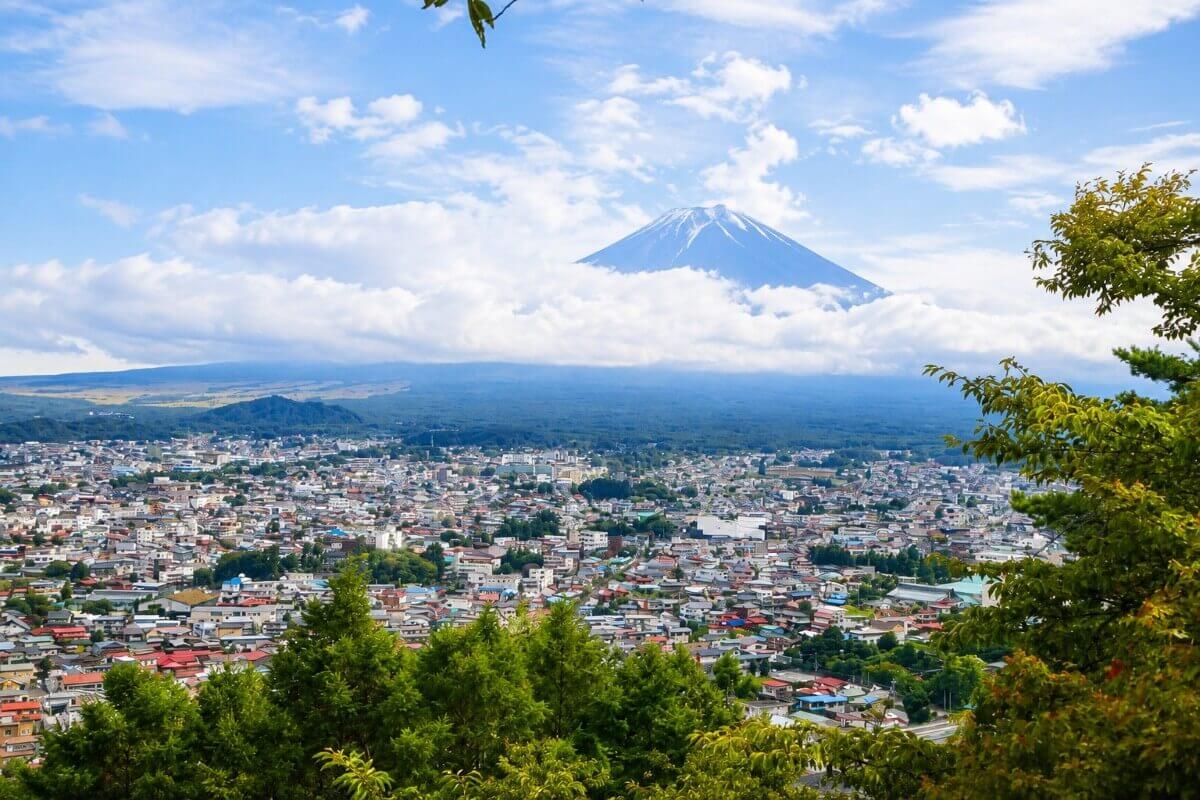
The answer becomes obvious when you walk a little beyond the pagoda to the observation area. From here, Chureito Pagoda appears in the foreground, Fujiyoshida spreads across the valley below and Mount Fuji dominates the horizon. It’s an almost perfectly composed Japanese landscape. The image became internationally famous through travel photography, guidebooks and tourism campaigns, and today the viewpoint attracts visitors from around the world.
Spring is particularly popular because hundreds of cherry trees grow around Arakurayama Sengen Park. When they bloom, photographers can capture three powerful symbols of Japan in one frame: cherry blossoms, a five-storey pagoda and Mount Fuji. Autumn brings another transformation as the surrounding trees turn red and gold. But there is one element no photograph can guarantee.
Will You Actually See Mount Fuji?
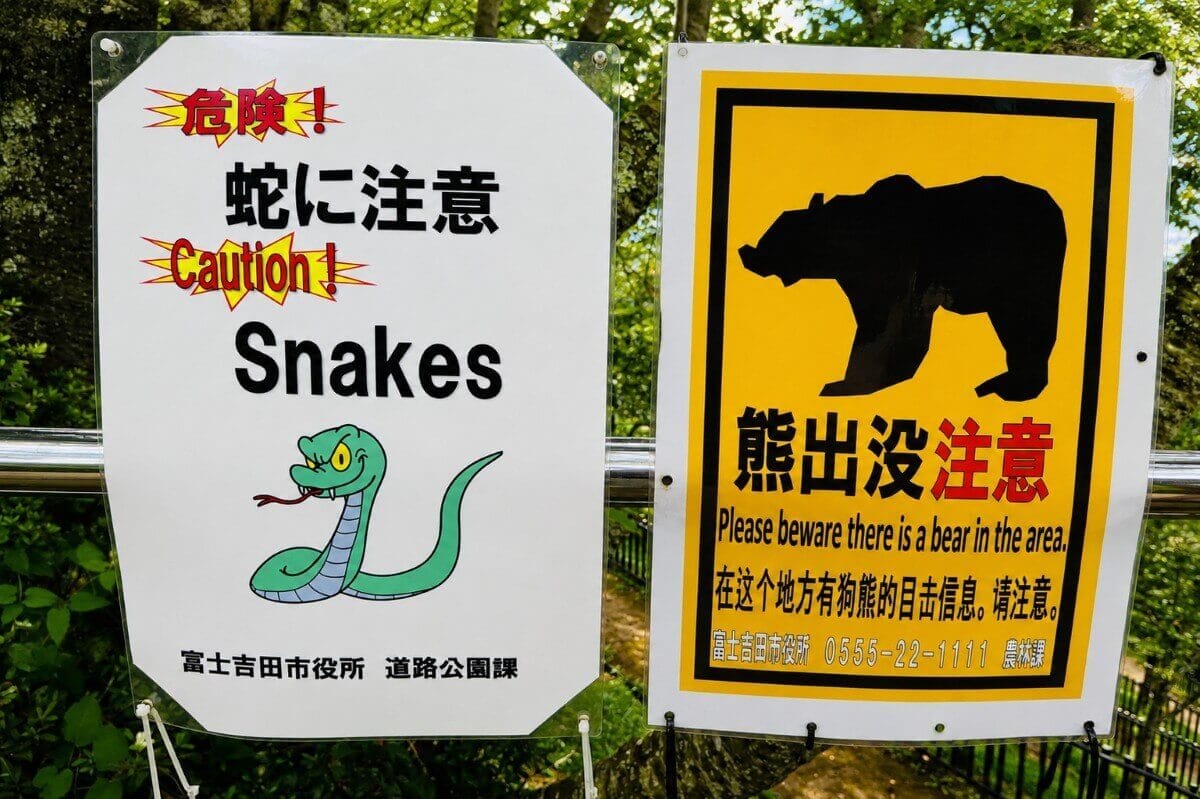
This is probably the most important thing to know before visiting. Mount Fuji can disappear completely behind clouds. I learned that during my own visit. I spent around an hour and a half at Chureito Pagoda, hoping the clouds would eventually clear. They didn’t. No perfect postcard photograph for me.
Yet I still enjoyed the visit. Even without Fuji, the elevated view over Fujiyoshida and the surrounding mountains is beautiful, and the shrine and memorial make the trip worthwhile in their own right. If seeing Mount Fuji is your priority, check the weather forecast beforehand and, when possible, visit early in the morning. Visibility is often better before clouds build around the mountain later in the day. Just don’t plan your entire visit around reproducing the famous photograph. Fuji decides for itself whether it wants to appear.

When Is the Best Time to Visit?
Every season offers something different. Spring is the classic choice. Cherry blossom season around the pagoda generally falls in April, although exact flowering dates vary from year to year. This is also one of the busiest periods. Autumn is another excellent time to visit, particularly when the surrounding trees change colour.
On clear winter days, the air can offer excellent visibility of snow-covered Mount Fuji, although temperatures are considerably lower. Whatever the season, early morning has two advantages: potentially clearer views and fewer visitors.
How to Get to Chureito Pagoda
The closest railway station is Shimoyoshida Station on the Fujikyu Railway Line. From the station, it takes roughly 10–15 minutes on foot to reach the entrance of Arakura Fuji Sengen Shrine. From there, allow additional time for the climb to Chureito Pagoda and the observation deck.
If you’re travelling from Tokyo, one common route is to travel towards Otsuki and continue on the Fujikyu Railway towards the Fuji Five Lakes area. Depending on your chosen train, transfers and ticket arrangements vary, so check the current timetable before travelling. Chureito Pagoda can also easily be combined with Lake Kawaguchiko and other attractions around the Fuji Five Lakes.
Is Chureito Pagoda Worth Visiting?
Absolutely — but not only for the photograph. Come for the famous view and you may leave with a better understanding of how many different layers of Japanese history exist on this single hillside. At the bottom stands a shrine whose traditions reach back more than a millennium and reflect the sacred relationship between people and Mount Fuji. Higher up stands a twentieth-century memorial to local people lost in war. Beyond both rises Fuji itself, a mountain that has shaped the religion, culture and landscape of this region for centuries.
And if the clouds cooperate, you’ll understand immediately why this particular view has travelled around the world. But even if Mount Fuji remains hidden — as it did during my visit — climb those 400 steps anyway. Chureito Pagoda is more than a viewpoint. It is a place where sacred landscape, local history and modern memory come together above the rooftops of Fujiyoshida.
Return to:
