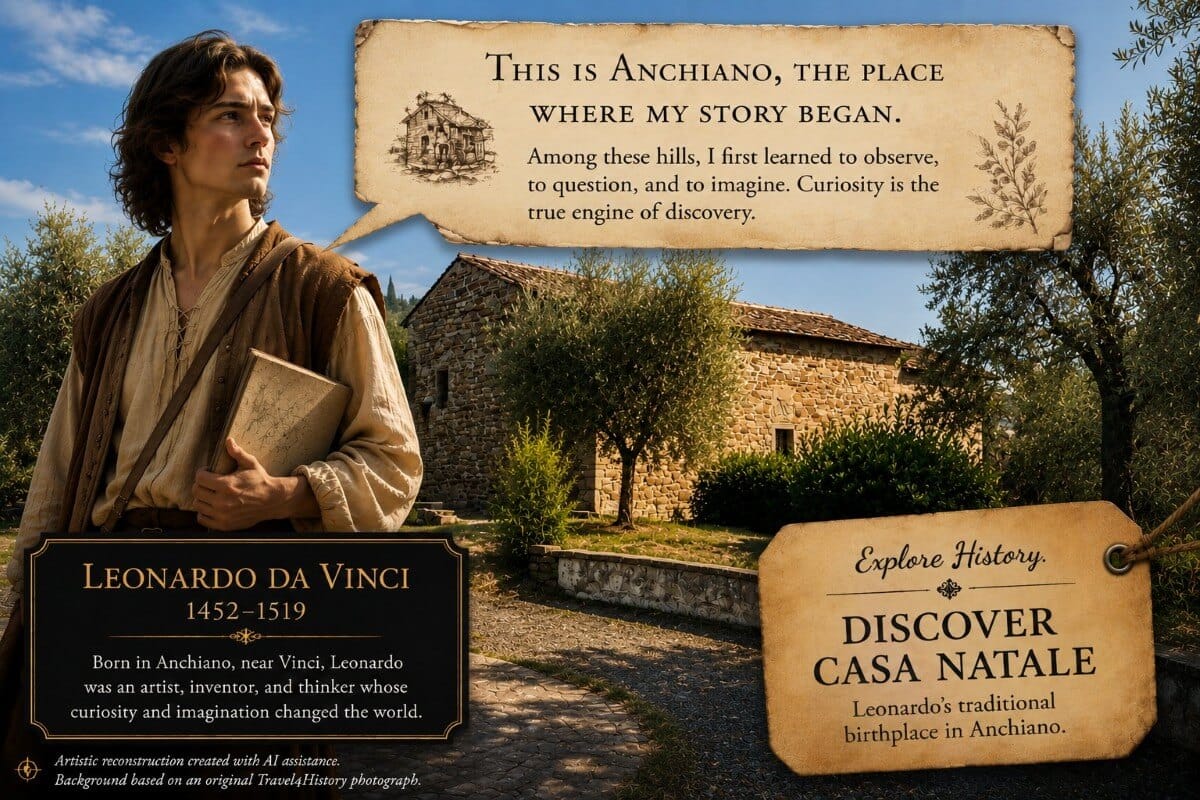
On 15 April 1452, Leonardo da Vinci was born somewhere around the small Tuscan town of Vinci. Today, an old farmhouse in Anchiano is known as his birthplace. But was the Renaissance genius really born inside these walls? The answer is more complicated than you might expect.
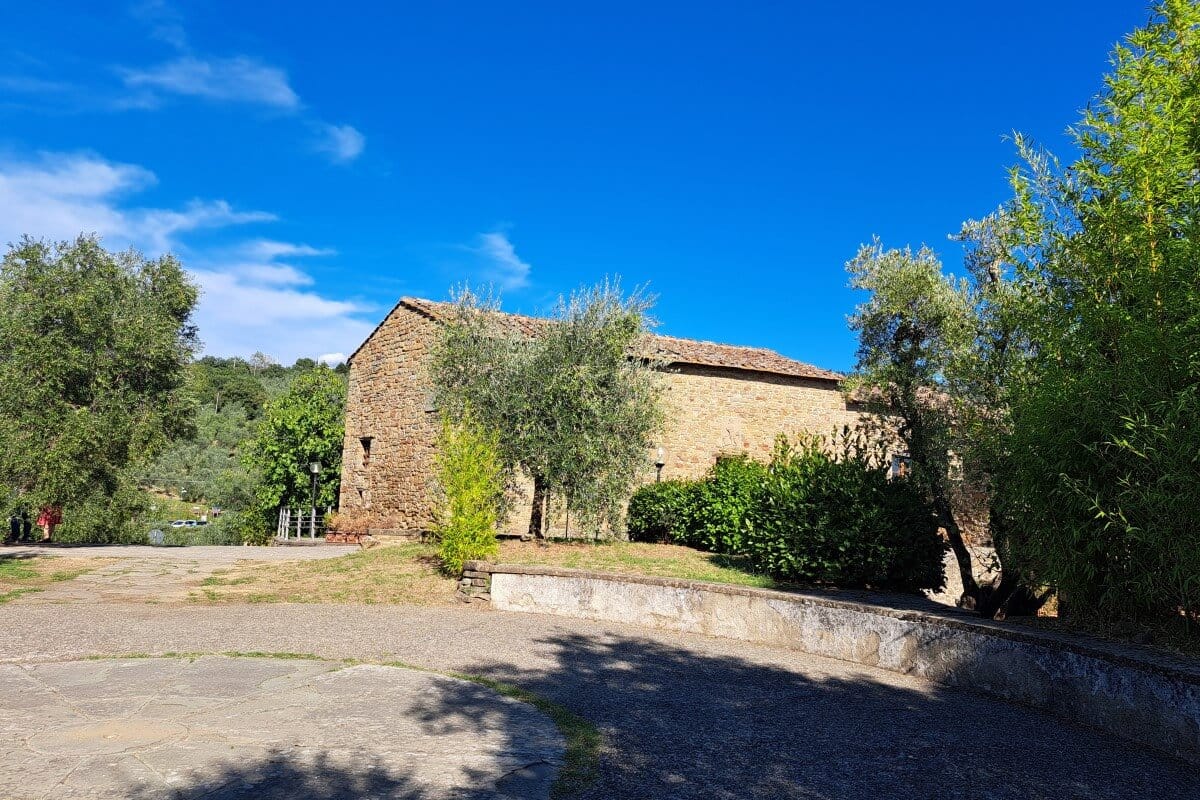
Among the olive-covered hills of Tuscany, about three kilometres from the medieval town of Vinci, stands a remarkably simple stone farmhouse. There is nothing palatial about it. Yet according to tradition, this is where one of the most extraordinary minds in history entered the world. Leonardo da Vinci was born on 15 April 1452. Today, the house in the tiny hamlet of Anchiano is known as the Casa Natale di Leonardo da Vinci, the Birthplace of Leonardo da Vinci.
But there is a problem. We know when Leonardo was born. We know who his father was. We even have a family record announcing his arrival. What we don’t know with absolute certainty is whether he was actually born inside this particular house. And that mystery makes Casa Natale far more interesting than a simple birthplace museum.
What Will You Discover at Leonardo’s Birthplace?
- A Child Is Born in Vinci: 15 April 1452
- Who Was Leonardo’s Mother, Caterina?
- Anchiano: Where Was Leonardo Actually Born?
- Is This Really Leonardo’s Birthplace?
- How the Farmhouse Became Casa Natale
- Inside Leonardo’s Birthplace
- Standing Where Leonardo’s Story Began
- Practical Information: Visiting Casa Natale di Leonardo da Vinci
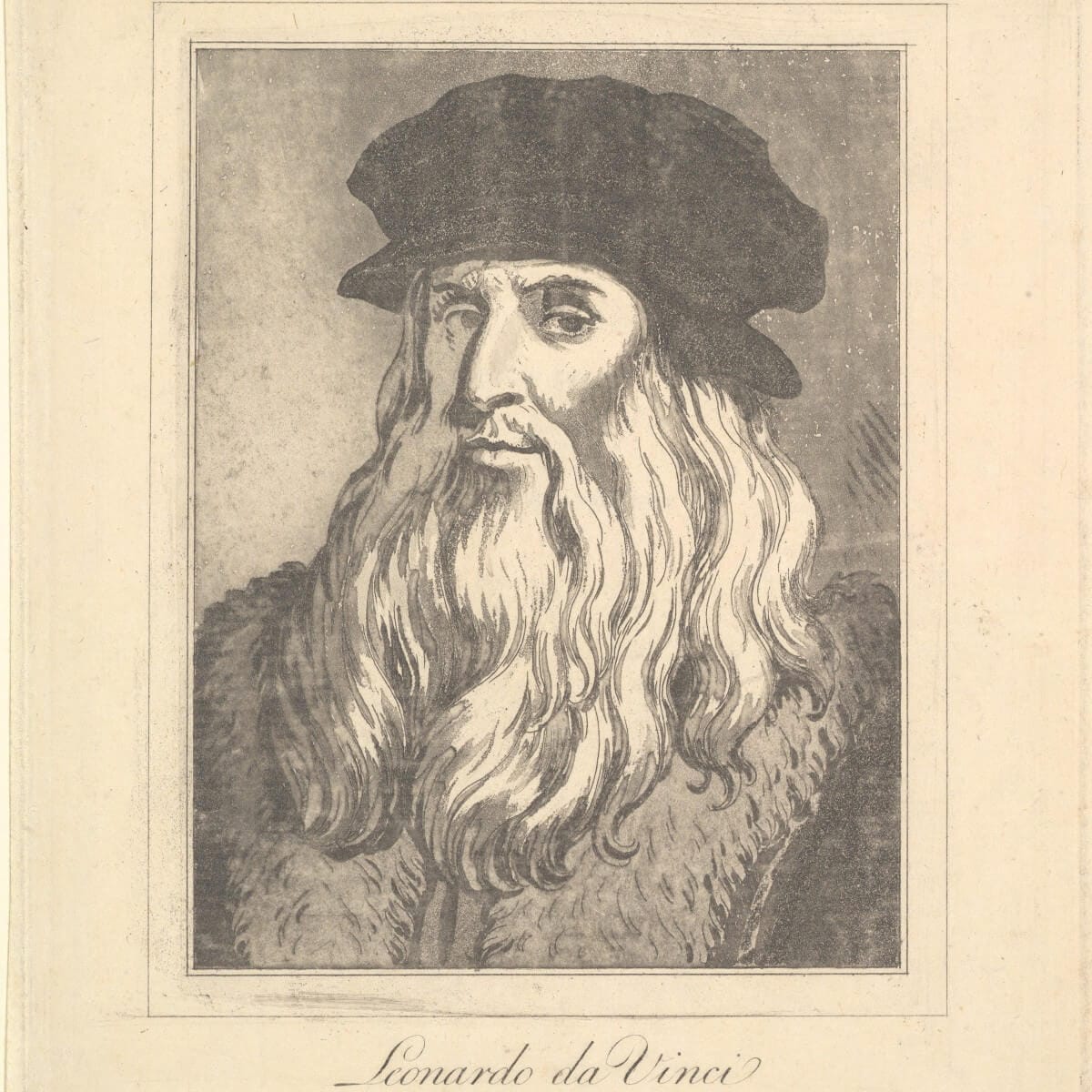
Source: Portrait of Leonardo da Vinci, 1786. The Metropolitan Museum of Art, New York. Public domain.
A Child Is Born in Vinci: 15 April 1452
Leonardo’s arrival was recorded by someone very close to him: his paternal grandfather Antonio da Vinci. Antonio wrote a short account of Leonardo’s birth and baptism on the final page of an old notarial register. Leonardo’s birth was recorded by his grandfather Antonio da Vinci on the final page of an old notarial register. The remarkable document survives today in the State Archives of Florence. It confirmed that Leonardo was born on 15 April 1452 in Vinci. But there was something unusual about his position within the family.
Leonardo was an illegitimate child. His father was Ser Piero da Vinci, a notary from an established local family. His mother was a woman named Caterina. Ser Piero and Caterina never married each other. That meant Leonardo’s childhood was rather different from the straightforward story we might expect of the man who would later become one of the defining figures of the Renaissance. And Caterina remains one of the most intriguing people in his early life.
Who Was Leonardo’s Mother, Caterina?
For such a famous man, surprisingly little is certain about his mother. Antonio’s record identifies Leonardo as the son of Ser Piero and a woman named Caterina. Historical research has produced competing theories about exactly who she was, and the question continues to attract scholarly debate. What is clear is that she and Ser Piero did not form a conventional married household. Ser Piero went on to marry other women, while Caterina also married and established a family of her own.
Leonardo, meanwhile, remained connected to his father’s family in Vinci. This is important when trying to identify his birthplace. If Leonardo had been the legitimate son of Ser Piero and his wife, the obvious assumption might be that he had been born in the da Vinci family’s residence. But he wasn’t. And that leaves us with a question historians have been debating for generations:
Where did Caterina give birth to Leonardo?

Anchiano: Where Was Leonardo Actually Born?
Ask for Leonardo’s birthplace in Vinci and you’ll be directed towards Anchiano. The farmhouse certainly has history on its side.The complex is documented as early as 1427, twenty-five years before Leonardo’s birth, and it remained connected with the da Vinci family for more than 150 years. The family coat of arms can still be seen there. But that doesn’t prove Leonardo was born inside it. By the nineteenth century, however, a strong local tradition identified Anchiano as his birthplace.
In 1845, Tuscan historian and geographer Emanuele Repetti travelled here specifically because the house was said to be where Leonardo had been born. Intriguingly, Repetti himself expressed doubts. Because Leonardo was illegitimate, he wondered whether Caterina had actually been living at Anchiano when she gave birth. In other words, the question we’re asking today isn’t a modern attempt to create controversy.
People were already asking it in the nineteenth century.

Is This Really Leonardo’s Birthplace?
This is where the story turns into a historical detective case. In 1939, Emil Möller’s research established Leonardo’s birth in Vinci through Antonio’s family annotation and information concerning his baptism. But instead of settling the question of the house, the discovery reignited it. Two possible locations emerged. One was the rural house at Anchiano. The other was a property belonging to the da Vinci family close to the Castello dei Conti Guidi in Vinci.
Möller and Renzo Cianchi, a scholar and librarian of the Biblioteca Leonardiana, became involved in a long-running debate over Leonardo’s actual birthplace. No surviving document says the equivalent of:
Leonardo was born in this room in this house in Anchiano.
That’s an important distinction. The official Museo Leonardiano itself describes Anchiano as the house where Leonardo was born according to tradition on its overview of Leonardo’s places. So should we stop calling it his birthplace? Not necessarily. The Anchiano tradition has deep historical roots, the property was connected with the da Vinci family, and the house belongs to the genuine landscape of Leonardo’s origins.
But history isn’t improved by pretending certainty exists where it doesn’t. Perhaps the most accurate description is also the most interesting: Casa Natale is the traditional birthplace of Leonardo da Vinci.

How the Farmhouse Became Casa Natale
By the nineteenth century, Leonardo’s birthplace had already become something of a pilgrimage destination. And one famous visitor supposedly came here hoping some of Leonardo’s genius might rub off on him. When historian Gustavo Uzielli and painter Telemaco Signorini visited Vinci in 1872, they recorded a story about Giuseppe Garibaldi, who had stayed nearby in 1867.
According to their account, Garibaldi would rise at four in the morning, take a cold shower and walk towards Leonardo’s house at Anchiano — joking that he hoped to acquire a little of the great man’s genius. But Casa Natale as we know it today didn’t yet exist as a museum. That happened in the twentieth century. In 1950, the owners of the Ferrale estate, the Counts Rasini da Castelcampo, donated the Anchiano house to the Municipality of Vinci so that it could become a museum dedicated to Leonardo.
A major restoration followed under architect Giulio Ulisse Arata and the supervision of the monuments authority. The timing couldn’t have been better. Two years later, the world would commemorate the 500th anniversary of Leonardo’s birth. On 15 April 1952, exactly five centuries after Leonardo was born, Casa Natale was ceremonially inaugurated in the presence of Italian president Luigi Einaudi and prime minister Alcide De Gasperi.
An old Tuscan farmhouse had officially become a place of memory.
Inside Leonardo’s Birthplace
Don’t expect a grand Renaissance residence. Casa Natale is small. And that’s part of its charm. The museum consists of the traditional birthplace, divided into three rooms, together with an adjoining farmhouse. A typical visit takes around an hour. Modern technology rather than a large collection of original objects tells the story. One of the most distinctive presentations is a life-sized multimedia reconstruction of an elderly Leonardo. Looking back from the final years of his life in France, he introduces visitors to his world and his connection with Vinci.
Elsewhere you’ll find reproductions and digital presentations, while the central room contains a fifteenth-century fireplace and the da Vinci family coat of arms carved in pietra serena. Another room contains a model representing Leonardo’s final journey from Rome to Amboise in 1516. But don’t come here expecting original masterpieces. The real exhibit is arguably the house itself.
Standing Where Leonardo’s Story Began
There’s something wonderfully appropriate about Casa Natale being so modest. Leonardo has become larger than life. We know the famous paintings, the notebooks filled with sketches and the almost mythical image of the universal Renaissance genius. Anchiano strips all of that away. Here there is just an old stone house surrounded by Tuscan countryside. And one unanswered question.
Was Leonardo actually born here?
Perhaps.
The tradition is centuries old and the house has genuine connections with his family. But the surviving historical evidence doesn’t allow us to point towards a particular room and declare with absolute certainty that Leonardo took his first breath there. For me, that uncertainty makes the place more interesting rather than less. History is rarely as tidy as the plaques we attach to historic buildings.
What we do know is that somewhere in this landscape, on 15 April 1452, a child named Leonardo was born. Nobody could possibly have known what that name would eventually mean. And more than five centuries later, people are still coming to Anchiano to find the place where his story may have begun.

Practical Information: Visiting Casa Natale di Leonardo da Vinci
Casa Natale is located on Via di Anchiano, approximately three kilometres from Vinci. You can reach it by car, and parking is available nearby. Visitors who prefer to arrive on foot can follow the Strada Verde, an approximately two-kilometre walking route from Vinci — a journey I cover separately in my guide to the Strada Verde. Allow around one hour for the house itself.
The birthplace forms part of the wider Museo Leonardiano visitor experience, but I recommend checking current opening hours and ticket combinations shortly before visiting, as these can change. At the time of writing, Casa Natale is open daily from 10:00 to 19:00, but always check the official information before travelling.
Official Museo Leonardiano website
And once you’ve finished inside, don’t immediately get back into the car. Take a moment outside the house. Look across the olive-covered hills towards Vinci. We may never know whether Leonardo was born within these exact four walls.
But this landscape unquestionably belongs to the world in which his story began.
Explore more about Leonardo & Vinci
- Chiesa di Santa Croce: Where Leonardo da Vinci Was Baptized
- Museo Leonardiano: Inside the Mechanical Mind of Leonardo da Vinci
- Strada Verde: Walking Through Leonardo da Vinci’s Tuscany
- Vinci, Italy: 7 Best Things to See & Do in Leonardo’s Hometown
- Who Was Leonardo da Vinci? 7 Facts About Leonardo and Vinci
Return to: